Engagement Rings
Choosing a Stone Shape You Will Still Like Later
Shapes move in and out of fashion. Which ones have never really left, and how to tell where you are in the cycle.
Written by the Mapple Gems workshop, Surat · Updated 13 September 2026
Short answer
The shapes that never date are round brilliant, emerald and oval — each has been continuously worn for a century or more. Shapes that move in cycles — pear, marquise, princess, heart — are not worse, they are just more strongly tied to a period. The useful test is not “is this in fashion?” but “would this have looked normal twenty years ago?” And remember the setting dates faster than the shape does — a classic stone in a very of-the-moment setting will look dated first.
Nobody wants to be told what to like. But it is worth knowing which choices carry a period signature and which do not, because a ring bought at the peak of a shape’s popularity reads differently in fifteen years than one bought outside the cycle.
Shapes by how strongly they date
| Shape | Period signature | Note |
|---|---|---|
| Round brilliant | None | Continuously worn; the only shape with a cut grade |
| Emerald | None | Reads calm in any era; best for moissanite restraint |
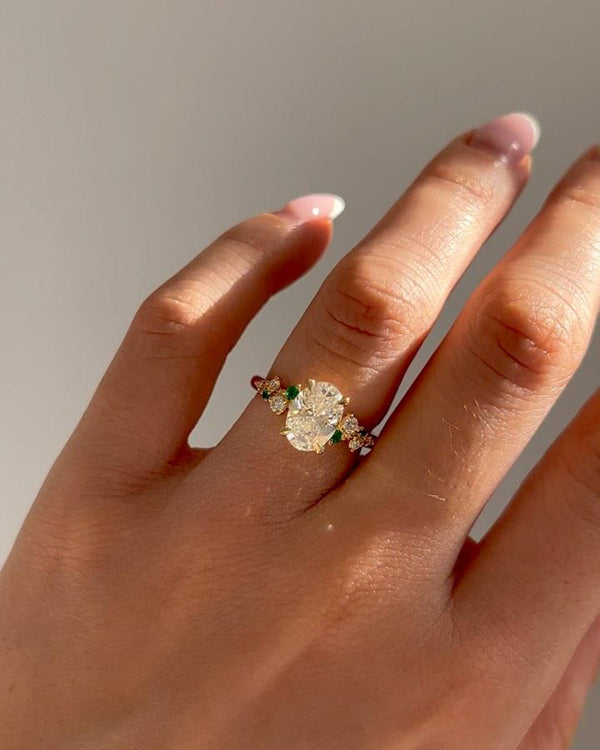
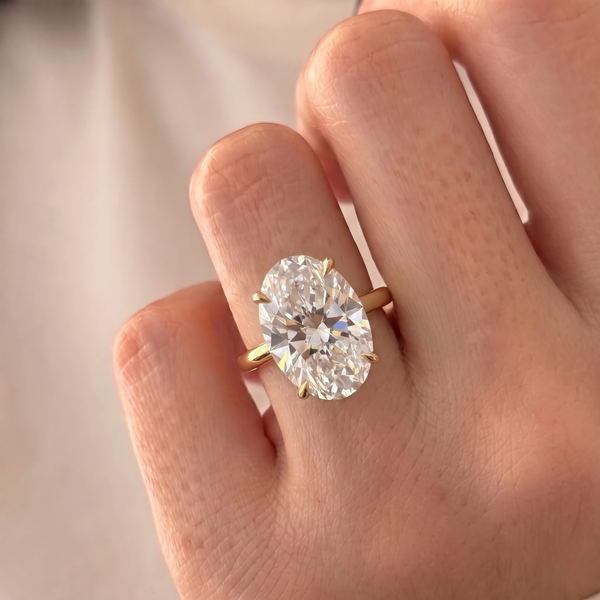
| Oval | Very light | Elongating; check the bow-tie in video |
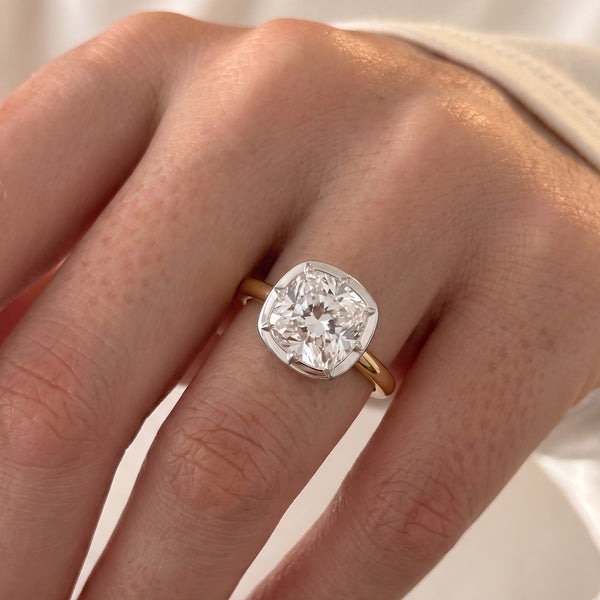
| Cushion | Light | Chunky reads antique; crushed ice reads modern |
| Pear | Moderate — cyclical | Needs a V-prong over the point |
| Princess | Strong — reads late 1990s/2000s | Corners need prong cover |
| Marquise | Strong — cyclical | Two points to protect |
| Heart | Strongest | A deliberate choice rather than a default |
None of this makes the lower rows wrong. It makes them a choice worth making knowingly.
The setting dates faster than the stone shape does — and this is where people get caught. A round brilliant is a round brilliant in any decade. But a round brilliant in whatever halo, band width and profile height happens to be everywhere right now is unmistakably a ring from this moment, and it will read that way in fifteen years. Look at rings from the 1980s and 2000s: the shapes are familiar, the settings are what date them. So if longevity matters to you, spend the caution on the setting rather than on the shape — a moderate profile, a shank in the 1.8–2.2 mm range, a simple head, and detail placed where it is protected. Then choose whatever shape you actually love, including the cyclical ones.
The twenty-year test
Two questions, and they take a minute.
“Would this have looked normal twenty years ago?” If yes, it will probably look normal in twenty years. Rings that would have been unremarkable in 2006 and unremarkable today tend to stay that way — not because they are safe, but because they sit outside whatever the current signature is.
“Am I choosing this because I like it, or because I have seen it a great deal recently?” Those feel identical in the moment. If it is the second, wait a week and look again with fresh eyes.
Practical consequences by shape
Beyond fashion, shapes differ in ways that matter for the next few decades.
- Points are the vulnerability. Pear, marquise and heart have exposed points that must be covered by a V-prong. That is a permanent maintenance consideration, not a one-off.
- Corners chip. Emerald, Asscher and princess need a prong over every cut corner.
- Only rounds get a cut grade. Every fancy shape is judged by video — no permanent dark zones, symmetrical outline, crisp facet junctions, dimensions matching the weight.
- Elongated shapes look larger per carat, because more of the weight sits in the face rather than the depth.
- Step cuts show everything. Emerald and Asscher need a grade higher on both colour and clarity, since there is no scatter to hide behind.
The moissanite consideration
One extra factor if the stone is moissanite: shape changes how obviously it reads as moissanite. Step cuts — emerald and Asscher — have few large facets, so they separate less dispersion at once and look the most diamond-like. Round brilliants and crushed-ice cushions show the most fire.
That interacts with size, since dispersion scales with depth. For maximum restraint, a step cut under about 7 mm. For maximum effect, a brilliant cut above 8.5 mm. Choosing one lever and ignoring the other is how people end up surprised.
If you love a cyclical shape
Buy it, and build it well. A marquise or a heart chosen deliberately is a record of a preference rather than a mistake — and plenty of people find the period character of an inherited ring is exactly what they love about it.
What makes the difference is construction. A cyclical shape in a well-built setting, with adequate shank thickness and proper point protection, ages into something with character. The same shape on a thin shank with an exposed point ages into a repair.
Keep reading
Frequently asked questions
Which engagement ring shapes never go out of style?
Round brilliant, emerald and oval — each has been continuously worn for a century or more and carries no strong period signature. Pear, marquise, princess and heart move in cycles, which does not make them worse, only more tied to a moment.
Does the stone shape or the setting date a ring faster?
The setting. A round brilliant is a round brilliant in any decade, but the halo style, band width and profile height that are everywhere right now will read as of this moment in fifteen years. Look at rings from the 1980s or 2000s — the shapes are familiar; the settings are what date them.
Which shapes need more protection in the setting?
Pear, marquise and heart, whose exposed points must be covered by a V-prong, and emerald, Asscher and princess, which need a prong over every cut corner. These are permanent considerations rather than one-off ones, and they are checkable on a render before casting.
Should I avoid a trendy shape?
Not if you love it — a cyclical shape chosen deliberately is a record of a preference, and period character is often what people love about an inherited ring. What matters is building it well: adequate shank thickness, proper point protection, and a setting that is not itself strongly of the moment.
Spend the caution on the setting, not the shape.
Moderate profile, 1.8–2.2 mm shank, simple head — then choose whatever shape you actually love.
Leave a comment