Oval engagement rings
The Pavé Band Under an Oval
The most popular oval build of the moment, and the one where the visible cost is small and the invisible one is structural.
Written by the Mapple Gems workshop, Surat · Updated 22 August 2026
Short answer
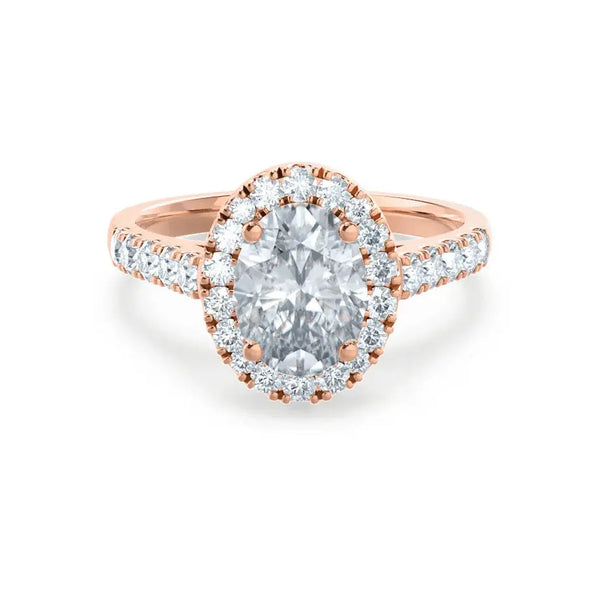
A pavé band sets small stones into the shank, usually two-thirds of the way round. It adds light without adding height. The real cost is not the stones — it is labour, and thickness: setting removes metal, so a pavé shank must start thicker than a plain one to end up as strong. Ask for 1.8mm minimum after the seats are cut.
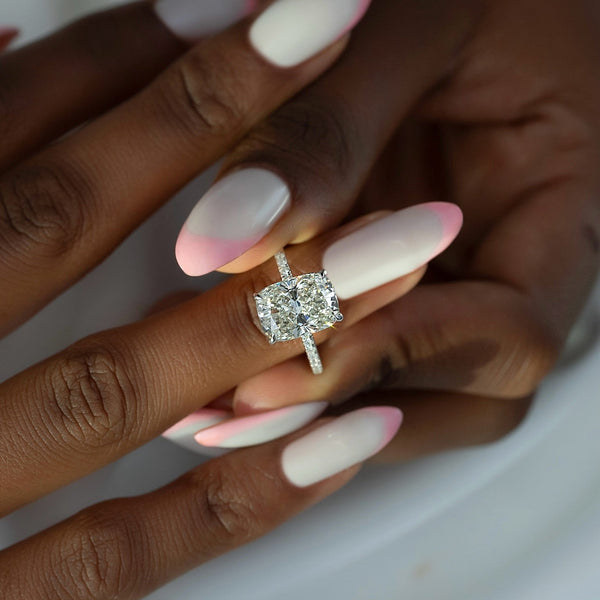
A thin pavé band under an oval centre is currently the most requested engagement ring build we quote. It photographs beautifully, it makes the centre look larger by contrast, and it does not raise the stone the way a hidden halo does.
It also has consequences that only appear years later, and they are worth understanding before the CAD is approved rather than at the first repair.
Why pavé costs what it costs
People assume they are paying for the small stones. They are not, mostly. Melee under about 0.2ct is inexpensive and is never individually certified in any material.
What you are paying for is labour. Each stone is a separate sequence at the bench: drill a hole, cut a seat into the metal, place the stone, and raise tiny beads of metal over its edge to hold it. Forty stones is forty of those sequences, by hand, under magnification. A pavé band is one of the most labour-dense things a workshop makes.
The visible evidence of whether that labour was done well is simple and free to check: is the stone row level? Look along the band from the side in daylight. Stones that sit at slightly different heights, or a row that wanders off the centre line, means seats cut at speed. It is the fastest quality read on any pavé piece.
The thickness problem
This is the part that matters and the part nobody mentions.
Setting stones into a band means removing metal from it. Each seat is a hole cut into the shank. So a 1.8mm pavé shank is not as strong as a 1.8mm plain shank — there is measurably less metal in it, concentrated exactly where the stones sit.
Meanwhile the oval head above it is loading the band unevenly, because an oval is heavier along one axis than a round of the same weight. Thin pavé shank plus oval head is the combination we see come back out of round soonest, and when a shank deforms the setting above it stops sitting square.
The specification to ask for is not "1.8mm". It is 1.8mm at the base after the seats are cut. Those are different numbers and only one of them is structural.
How far round should it go
| Coverage | Resizable? | Wear on the underside | Verdict |
|---|---|---|---|
| Half (top of the shank only) | Yes, easily | Plain metal where it counts | The sensible default |
| Three-quarter | Yes | Still plain at the base | Looks identical on the hand to full |
| Full eternity | No | Stones take the abrasion the palm delivers | Avoid on a ring worn for decades |
| Micropavé (very small stones) | Depends on coverage | Most delicate of all | Beautiful; highest maintenance |
Three-quarter coverage is the quiet winner. On the hand it is visually indistinguishable from full eternity, because the bottom of the shank faces your palm and nobody sees it. But it stays resizable, keeps solid metal where the ring takes most of its wear, and leaves a clean surface for engraving.
From our bench in Surat
When a pavé stone comes loose, it is almost never an isolated event. The beads holding neighbouring stones are frequently shared between two of them, and every bead on that section has taken the same years of wear. One gone usually means several are thin.
So the rule we give every pavé customer, and the one that saves the most: if you lose a stone, stop wearing the ring immediately and have the whole row checked rather than just that gap refilled. Replacing one stone in a weakened row buys a few months. And book a bench check every two years rather than five — a pavé band has forty things to inspect where a plain solitaire has four.
What it does for the oval above it
A pavé band adds apparent size to the centre stone by contrast — a narrow, busy band makes the oval read larger against it. It adds width to the ring without adding height, which is the right way round: apparent size should always be bought with width levers, never by lifting the stone.
It does not mask a bow-tie. Nothing on the shank affects what happens inside the pavilion. Only a full halo around the outline does that.
One aesthetic caution worth naming. A pavé band running up to a plain oval head is a clean design. A pavé band plus a hidden halo plus a decorated gallery is three ideas competing, and the result usually reads busier in the hand than it did on the screen.
Two rules for what sits next to it
Never put a stone-set band directly against a plain one. Diamonds at Mohs 10 against gold at roughly 2.8 is not a fair contest, and over a decade the stones will cut a visible track into the plain band beside them. If the engagement ring has a pavé shank, a pavé or plain-but-separated wedding band is kinder than a plain one pressed against it.
Match the fineness number. 14K next to 18K in the same colour is visibly different in tone, and adjacent rings are exactly where that shows.
What to specify at CAD
- Coverage: half or three-quarter, not full eternity, on a ring worn daily.
- 1.8mm minimum at the base after the seats are cut.
- Stone count, so you know what you are maintaining.
- Shared-bead or individual-bead setting — individual is more robust.
- Prongs on the oval at the shoulders; euro shank underneath.
- A clear plain section at the base if you want interior engraving.
- The contoured wedding band drawn from the same file.
Keep reading
Frequently asked questions
Is a pavé band strong enough for everyday wear?
Yes, if it is thick enough. Setting removes metal, so ask for 1.8mm at the base after the seats are cut rather than before. Half or three-quarter coverage also keeps solid metal at the underside, where a ring takes most of its wear.
Why is pavé expensive if the stones are small?
Because the cost is labour, not stones. Each stone requires drilling, cutting a seat, placing and beading by hand under magnification — forty stones is forty separate sequences. A level stone row is the visible evidence that work was done properly.
Can a pavé ring be resized?
Half and three-quarter pavé can be resized, because the plain section at the base is where the work happens. A full eternity band cannot be resized without remaking it — which is why three-quarter, visually identical on the hand, is usually the better choice.
What should I do if a pavé stone falls out?
Stop wearing the ring and have the whole row checked, not just the gap refilled. Beads are often shared between neighbouring stones and every bead in that section has taken the same years of wear, so one loss usually means several are thin.
Does a pavé band make the oval look bigger?
By contrast, yes — a narrow busy band makes the centre read larger against it, and it adds width without adding height, which is the right way to buy apparent size. It does not affect the bow-tie, since nothing on the shank changes what happens inside the pavilion.
Ask for the thickness after the seats are cut
Made to order in our Surat workshop — coverage, stone count and shank thickness are all specified before casting.
Leave a comment