Engagement Rings
What Actually Happens at the Setting Bench
The stone is not glued in. It is held by metal that has been cut, bent and burnished around it by hand.
Written by the Mapple Gems workshop, Surat · Updated 16 September 2026
Short answer
A setter cuts a seat into each prong — a small notch the stone’s girdle sits in — then bends the prong over and burnishes the tip down. The stone rests in the metal, not just under it. This is entirely hand work, it is where most of the skilled labour in a ring goes, and it is why a level stone row is the clearest evidence of workmanship you can judge from a photograph. It is also why setting carries a small, real risk of chipping a stone.
Setting is the least visible and most skilled part of making a ring. Understanding roughly what happens explains several things that otherwise look arbitrary — why pavé costs what it does, why a stone can chip during a repair, and why some rings look subtly wrong without anyone being able to say why.
The sequence for a prong-set stone
- Measuring. The stone is measured precisely, and the head checked against it. A head made for a slightly different stone is where poor seating begins.
- Cutting the seats. A tiny notch is cut into the inside of each prong with a rotating burr, at the exact height and angle for that stone’s girdle. All the seats must be at the same height, or the stone sits tilted.
- Placing and checking. The stone is dropped in and checked for level from several angles before anything is closed.
- Closing the prongs. Each is bent over the girdle with a tool, working opposite pairs so the stone is not pushed off-centre.
- Burnishing and shaping. The tips are pressed down onto the stone and shaped — rounded, claw or V — then smoothed so nothing catches.
- Final polish. Around the setting, carefully, avoiding any detail meant to stay crisp.
The seat is the part nobody knows exists, and it is what actually holds the stone. People picture prongs as fingers gripping a stone from outside, like a hand holding a ball. That is not how it works. The setter cuts a notch into each prong, and the stone’s girdle sits inside those notches — the prong tips then close over the top to stop it lifting out. So the stone is supported from below and retained from above, which is why a well-set stone does not move even before the tips are burnished. It also explains two things: why seats cut at uneven heights produce a stone that sits visibly tilted and can never be corrected without resetting, and why re-tipping worn prongs is quick — the seats are still there, only the retaining tips need rebuilding.
Why pavé costs what it does
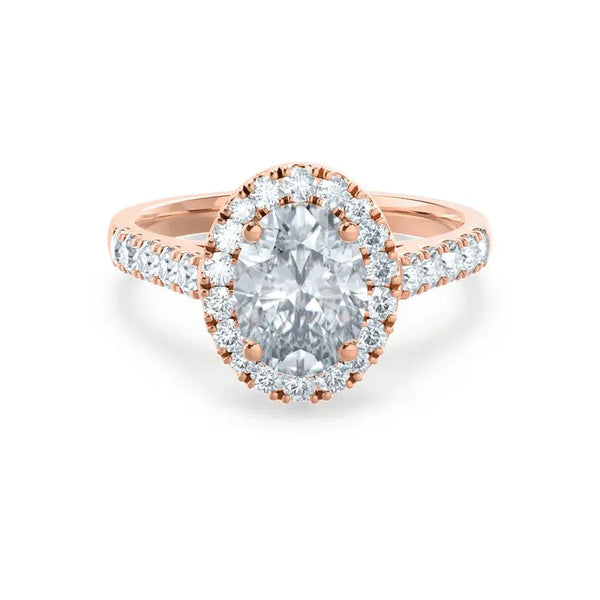
A pavé row is not one operation repeated cheaply. Each stone gets its own drilled hole, its own seat, and its own beads raised from the surrounding metal with a graver and then shaped with a beading tool.
Forty stones is forty of those sequences, done under magnification, by hand. That is why the cost of a pavé band is overwhelmingly labour rather than stones — and why reducing the stone count saves real money while upgrading the melee quality barely moves the price.
It is also why a level row is the clearest workmanship signal available. When every stone sits at the same height and angle, the row flashes as one line. When one or two sit proud, the row flickers unevenly. Almost nobody can name what is wrong; everybody sees it.
The risk, stated plainly
Setting applies force to a finished gemstone, so there is a small but genuine chance of a chip. It concentrates in predictable places: exposed points on pears, marquises and hearts, cut corners on emerald and princess shapes, and extremely thin girdles on any stone.
Two practical consequences. When one workshop supplies and sets the stone, that risk is theirs — if it chips, they replace it and you never hear about it. When a customer supplies a stone to a setter, most setters decline liability, because they did not choose the stone and cannot vouch for its girdle. Establish that position in writing before handing anything over.
Different settings, different work
| Setting | How the stone is held | Bench time |
|---|---|---|
| Prong | Seats cut into each prong, tips closed over | Moderate |
| Bezel | A collar is cut, then pushed and burnished over | Higher — precision fit |
| Pavé | Beads raised from the metal with a graver | Highest per stone |
| Channel | Grooves cut into two walls | High — unforgiving |
| Flush / gypsy | Stone sunk into a drilled seat, metal burnished around | Moderate; very secure |
What you can check from a photograph
- A straight-down shot in good light — look at the stone row rather than the centre. Level and even, or flickering unevenly.
- Prong tips of matching size and shape. Uneven tips mean uneven burnishing.
- The centre stone sitting square in its head, not fractionally rotated or tilted.
- No metal smeared onto the stone at the tips — a sign of heavy-handed burnishing.
- A photograph from underneath, where you can see whether prongs seat cleanly into the gallery rail rather than being tacked on.
Keep reading
Frequently asked questions
How is a diamond actually set into a ring?
A setter cuts a small notch — a seat — into the inside of each prong, and the stone’s girdle sits inside those notches. The prong tips are then bent over the top and burnished down to stop it lifting out. The stone is supported from below and retained from above, not simply gripped from outside.
Why is a pavé band expensive?
Because each stone gets its own drilled hole, its own seat, and its own beads raised from the surrounding metal with a graver — forty stones is forty of those sequences, by hand under magnification. The cost is overwhelmingly labour, which is why reducing the stone count saves real money while upgrading the melee quality barely moves the price.
Can a stone be damaged during setting?
There is a small but genuine risk, concentrated at exposed points, cut corners and extremely thin girdles. When one workshop supplies and sets the stone that risk is theirs. When a customer supplies a stone, most setters decline liability — get that position in writing before handing anything over.
Why does my stone sit slightly crooked?
Usually because the seats were cut at slightly uneven heights, so the girdle rests unevenly. It cannot be corrected by adjusting the tips — the stone has to be removed and the seats recut. It is worth checking on a straight-down photograph before the ring ships.
Ask for a straight-down shot in daylight.
Look at the row rather than the centre stone. It is the clearest evidence of setting quality you can judge yourself.
Leave a comment