Engagement Rings
Prong Types Explained: The Small Part That Holds Everything
Four prongs is not one thing. The shape of the tip decides how secure the stone actually is.
Written by the Mapple Gems workshop, Surat · Updated 1 September 2026
Short answer
Prong count gets discussed; prong shape almost never does, and shape is what determines security. Round tips are the standard and snag least. Claw (pointed) tips show more stone and catch more. V-prongs are mandatory on pointed shapes — pear, marquise, heart. Flat/tab prongs suit step cuts. And double prongs add security on large stones. Ask which shape you are getting; it is rarely stated and it is the part that fails.
A prong is a sliver of metal perhaps a millimetre across, and it is the only thing between your stone and the floor. Everything about ring durability comes back to how those few slivers are shaped, how thick they are, and where they sit.
The shapes, and what each is for
| Prong | Character | Use it for |
|---|---|---|
| Round / bead | Domed tip, smooth | The everyday default. Snags least. |
| Claw / pointed | Tapered to a point | Showing more stone; a sharper look. Catches more. |
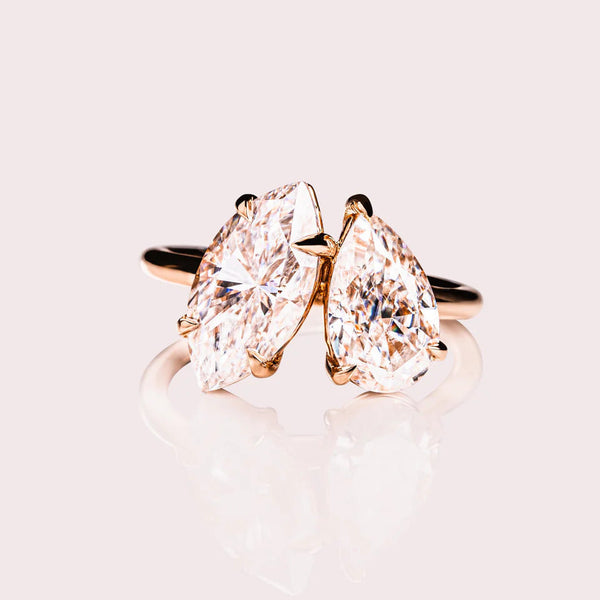
| V-prong | Wraps a point from both sides | Pear, marquise, heart, and emerald corners. Non-negotiable. |
| Flat / tab | Broad, low, squared | Step cuts — emerald and Asscher. Very secure. |
| Double prong | Two tips per position | Large stones; redundancy if one wears |
| Split prong | Divides into a V near the tip | Decorative, vintage character |
Prongs do not break. They thin. This is the part people misunderstand about stone loss. A prong almost never snaps suddenly — it wears down over years of contact until the tip no longer has enough metal to hold the stone, and then a small knock finishes it. That is why a stone is usually lost without any dramatic incident, and why the fix is a bench check every couple of years rather than caution. A jeweller can see a thinning prong long before it matters, and re-tipping is a fifteen-minute job. Replacing a lost centre stone is not.
Count: four, six, or eight
The familiar debate, and the answer is mostly about stone size.
- Four — more light in, more stone visible, and the outline reads slightly squarer on a round. Fine below about 7 mm.
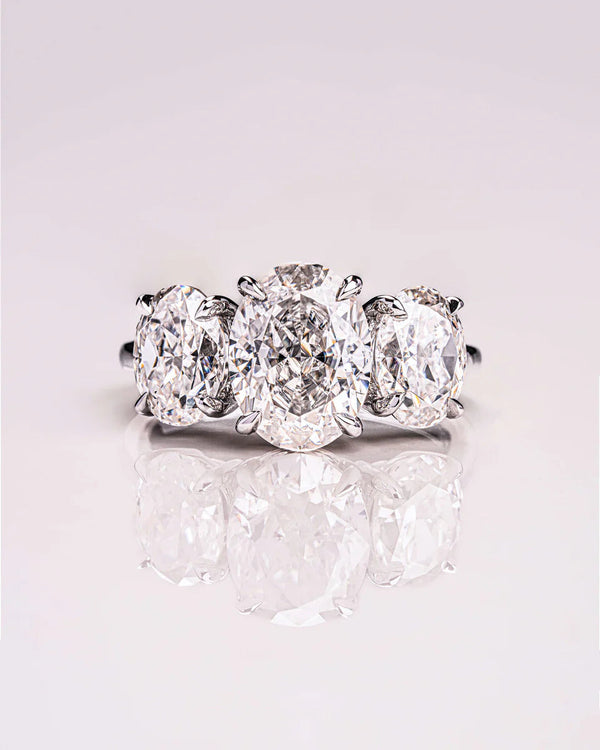
- Six — more even hold, redundancy if one prong is damaged, and it visually rounds the outline. The sensible default above about 8 mm.
- Eight — unusual outside very large stones or specific antique styles. Beyond six, additional prongs cost visible stone for diminishing security.
Note the interaction: six thin prongs are not more secure than four thick ones. Thickness matters more than count, and thickness is almost never stated.
Where prongs sit on fancy shapes
This is where construction goes wrong most often, and it is checkable on a render.
- Pear — a V-prong must cover the point. A round prong beside the point is a fault, not a style.
- Marquise — V-prongs at both points, for the same reason, doubled.
- Heart — a V at the point and prongs cradling the two lobes.
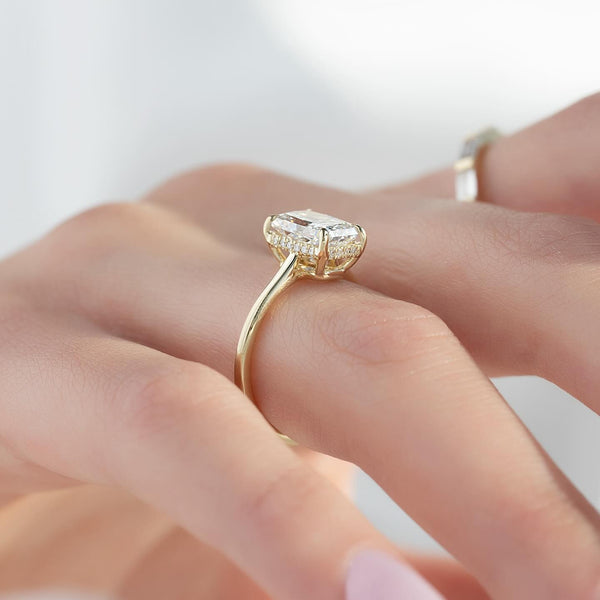
- Emerald and Asscher — a prong over each of the four cut corners. Corners exposed means eventual chipping.
- Oval — no points to protect, but prongs at the ends rather than only the sides help resist the stone shifting.
What makes a prong last longer
- Metal choice. Platinum prongs wear far better than gold, because platinum displaces rather than loses metal. This is the strongest practical argument for a platinum head even on a gold band — and it is a common, sensible build.
- Thickness. Ask for it. A visibly delicate prong is a prong you will be re-tipping sooner.
- Height. A lower setting keeps prongs out of contact. A tall setting puts them in the firing line.
- Shape. Round tips snag less than claws, and less snagging means less bending.
Signs a prong needs attention
Worth knowing, because these are noticeable before anything is lost.
- The stone moves slightly if you press it gently with a fingernail.
- You hear a faint rattle when you tap the ring near your ear.
- A prong catches on fabric where it did not before — a bent prong.
- A tip looks flattened or shorter than its neighbours.
Any of these means the bench, not the drawer. A moving stone is days away from being a lost stone.
Keep reading
- Bezel settings and everyday wear
- Pear cut rings — the V-prong requirement
- Profile height explained
Frequently asked questions
What is a V-prong and when is it needed?
A prong shaped to wrap a point from both sides. It is required on pear, marquise and heart shapes, where the tip is the only genuinely vulnerable part of the stone, and over the four cut corners of an emerald or Asscher. A round prong sitting beside a point rather than over it is a construction fault.
Do prongs break suddenly?
Almost never. They thin gradually over years of contact until the tip no longer holds the stone, and a small knock finishes it — which is why stones are usually lost without any dramatic incident. A bench check every couple of years catches a thinning prong, and re-tipping is a fifteen-minute job.
Are six prongs more secure than four?
Somewhat, mainly through redundancy — but thickness matters more than count, and six thin prongs are not safer than four thick ones. Six is the sensible default above about 8 mm; four shows more stone and lets in more light below about 7 mm. Ask for prong thickness, which is almost never stated.
How do I know if a prong needs repair?
The stone moves slightly under gentle fingernail pressure, you hear a faint rattle when tapping the ring near your ear, a prong newly catches on fabric, or one tip looks flattened or shorter than its neighbours. Any of these means a bench visit — a moving stone is days from being a lost one.
Ask for prong shape and thickness.
Two details almost no listing states, and the ones that decide whether your stone stays where it is.
Leave a comment