Engagement Rings
Rings and the Hand They Sit On
Proportion advice is mostly invented. Two things genuinely change how a ring reads, and neither is about flattering anybody.
Written by the Mapple Gems workshop, Surat · Updated 16 October 2026
Short answer
Two real effects. A stone looks larger on a narrower finger, because apparent size is relative — the same 6.5 mm round reads bigger on a slim hand than a broad one, which is a reason to judge size in millimetres against your own finger width rather than by carat. And elongated shapes lengthen the line of the finger while round and square shapes do not. Everything beyond that — which shape “suits” which hand — is preference dressed up as rules.
There is a lot of confident advice about hand shapes and it is mostly unfounded. Two things are real, useful, and worth knowing before choosing a size or an outline.
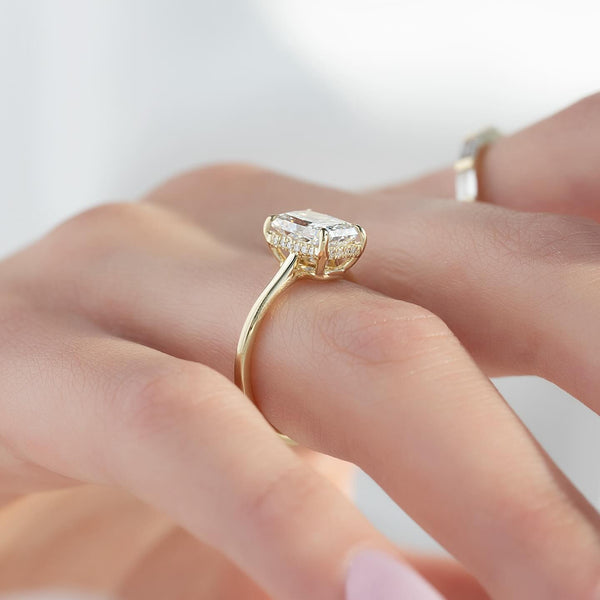
Apparent size is a ratio, not a measurement — a stone is read against the width of the finger under it, which is why the same ring looks like two different rings on two hands. A 6.5 mm round covers a large fraction of a narrow finger and a smaller fraction of a broad one, and the eye registers the fraction rather than the millimetres. The practical consequence is that carat is a useless way to choose size and comparison against your own hand is the only reliable one. Measure the width of the finger the ring will sit on — most fall somewhere between about 15 and 20 mm across the knuckle — and then look at the stone’s millimetre dimensions against that. It also means the standard advice runs backwards for a lot of people: a smaller stone on a slim hand can read larger than a bigger stone on a broader one, and buying up in carat to compensate for a wide finger is expensive and barely visible. The reliable trick is not more carat — it is more millimetres per carat, which is what elongated shapes and shallow-cut warnings are really about.
Getting more face for the same weight
| At about 1 carat | Dimensions | Reads as |
|---|---|---|
| Round | ~6.5 × 6.5 mm | Compact, classic |
| Princess | ~5.5 × 5.5 mm | Smallest face-up |
| Oval | ~7.7 × 5.7 mm | Larger, lengthening |
| Pear | ~8.0 × 5.5 mm | Directional |
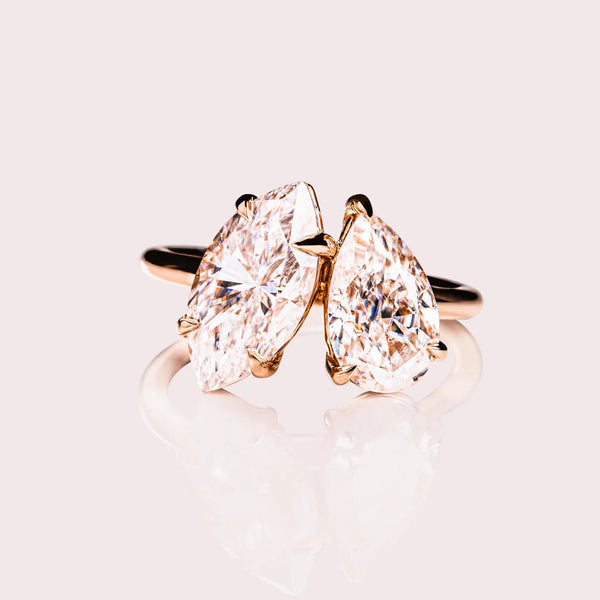
| Marquise | ~10.0 × 5.0 mm | Longest per carat |
Two cautions. Length is bought with width — a marquise is long and narrow, so it lengthens the finger but covers less of it. And a stone measuring larger than standard for its weight is not a bargain: it was cut shallow to spread, which returns less light and often shows as a flat centre.
Setting choices that change apparent size
- A halo adds roughly 2.6 mm across with a 1.3 mm row of melee — so a 6.5 mm centre reads close to 9 mm. The most effective size lever there is.
- A tapered shank makes the centre look larger by narrowing what sits beside it, and uses less metal.
- A wide bezel adds diameter in plain metal — a quieter alternative to a halo, and useful with moissanite where extra melee multiplies the fire.
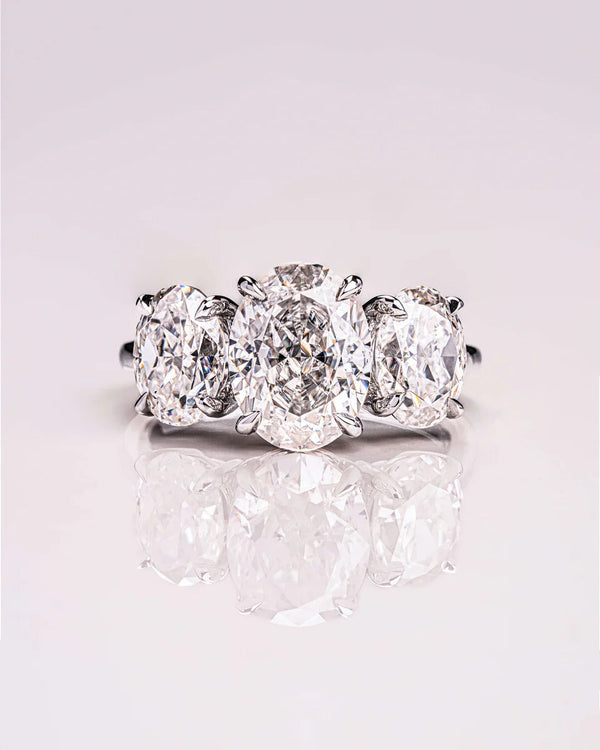
- Side stones widen the whole setting, which reads as scale without a larger centre.
- A thick shank does the opposite — it competes with the stone. If size is the priority, keep the band narrow at the top and the thickness at the base.
What actually matters more than proportion
Two constraints beat aesthetics on a hand that is used, and both are dimensions rather than shapes.
Profile height. A high setting catches on clothing, gloves and pockets, and it is fixed at casting — it cannot be lowered later without a new ring. If the hands work, ask for the side elevation and the height in millimetres before approving anything.
Points and corners. Pears, marquises, hearts and princess cuts all have a thin point or corner where the girdle runs to almost nothing, and each one needs a prong over it — on the corner, not the flat side. That is a setting decision, not a shape restriction, but it is the difference between a shape being a fine choice and a fragile one.
And one that is about the hand specifically: a ring spins when the setting is top-heavy or the finger is not round, which is common and has nothing to do with size. A euro shank — flattened underneath, invisible from above — fixes it permanently and costs nothing when designed in.
Fingers change, and that is a specification too
Sizes move with temperature, salt, activity, weight and time of day — and over decades in one direction more often than not. Measure at the end of a normal day, when fingers are largest, and remember that a loose ring can be worn and adjusted while a tight one cannot be worn at all.
Two design decisions follow. Avoid a full eternity unless the size is certain forever, because it cannot be resized — a three-quarter looks identical on the hand. And keep the underside plain, which preserves resizability and leaves room for flush-set stones later.
How to actually decide
Ignore the shape-for-hand rules and do this instead. Ask for the stone’s millimetre dimensions and the total width across the setting, then hold a ruler against the finger and look at those numbers on it. That takes thirty seconds and is more informative than any amount of advice.
Then ask for a hand video if the seller has the piece, in ordinary indoor light — a real ring correctly looks smaller and calmer than macro product photography, which is shot close under directional light. Expecting that difference is better than discovering it.
And choose the outline you like. There is no shape that a hand cannot wear — only settings that suit a life and settings that do not.
Keep reading
Frequently asked questions
Does the same ring look different on different hands?
Yes — apparent size is a ratio, read against the width of the finger beneath it. A 6.5 mm round covers more of a narrow finger than a broad one, which is why carat is a poor way to choose size and comparison against your own hand is reliable.
Which shape makes a finger look longer?
Elongated ones — oval, pear, marquise and elongated cushions or radiants — because they extend along the finger. A marquise gives the most length per carat but is narrow, so it covers less of the finger than an oval does.
How can I make a stone look bigger without paying for carat?
A halo adds around 2.6 mm across the setting; an elongated shape gives more millimetres per carat; a tapered shank narrows what sits beside the stone; and a wide bezel adds diameter in plain metal. A thick band does the opposite.
Are there shapes that do not suit certain hands?
Not really — that is preference dressed as rules. What genuinely matters is profile height, which is fixed at casting and decides whether a ring catches, and whether every point or corner has a prong over it.
Hold a ruler against the finger and look at the millimetres.
Thirty seconds, and more useful than every rule about which shape suits which hand.
Leave a comment