Lab Grown Diamonds
Diamond Size Chart: Millimetres by Carat and Shape
The face-up dimensions to buy from — and the price steps that sit just below the round numbers.
Written by the Mapple Gems workshop, Surat · Updated 18 September 2026
Short answer
A 1 ct round diamond measures about 6.5 mm across; 0.50 ct is 5.0 mm and 2 ct is 8.1 mm. Doubling the weight only widens the stone by about 30%, because weight scales with volume while the visible face scales with area. That is why buying just under a round weight — 0.90 at 6.2 mm rather than 1.00 at 6.5 mm — gives you three tenths of a millimetre nobody detects at a meaningfully lower price.
Carat is a weight, not a size, and the two do not track each other in a straight line. This page gives the dimensions to buy from, which is the only figure that compares fairly between stones, shapes and sellers.
Round brilliant
| Carat | Diameter | Note |
|---|---|---|
| 0.25 ct | 4.1 mm | Small stud size |
| 0.50 ct | 5.0 mm | “1 ct studs” usually means this per ear |
| 0.75 ct | 5.8 mm | A price step worth asking about |
| 0.90 ct | 6.2 mm | The best-value size on this table |
| 1.00 ct | 6.5 mm | A price threshold, not a size one |
| 1.50 ct | 7.4 mm | 1.40 sits just below the step |
| 2.00 ct | 8.1 mm | Six prongs from here up |
| 3.00 ct | 9.3 mm | Colour and clarity need a step up |
| 4.00 ct | 10.2 mm | Setting decides everything at this size |
Approximate, and dependent on cut proportions. Always ask for the measurements line on the report.
The round carat weights are price thresholds, not size thresholds — and that gap is the most reliable saving in diamond buying. Prices step up sharply at 0.50, 0.75, 1.00, 1.50 and 2.00 ct because those are the numbers people search for and ask for. The sizes do not step at all — they rise smoothly. So a 0.90 ct stone at 6.2 mm sits three tenths of a millimetre below a 1.00 ct at 6.5 mm, a difference no one has ever detected on a hand, at a price set below a psychological threshold rather than a physical one. The same gap exists at 0.45, 0.70 and 1.40. Ask specifically for stones just under the round weights — and put the difference into shank thickness, where it buys something you can actually feel in thirty years.
Fancy shapes at 1 carat
| Shape | Typical mm | Ideal ratio |
|---|---|---|
| Marquise | 10.0 × 5.0 | 1.90 – 2.10 |
| Pear | 8.0 × 5.5 | 1.45 – 1.55 |
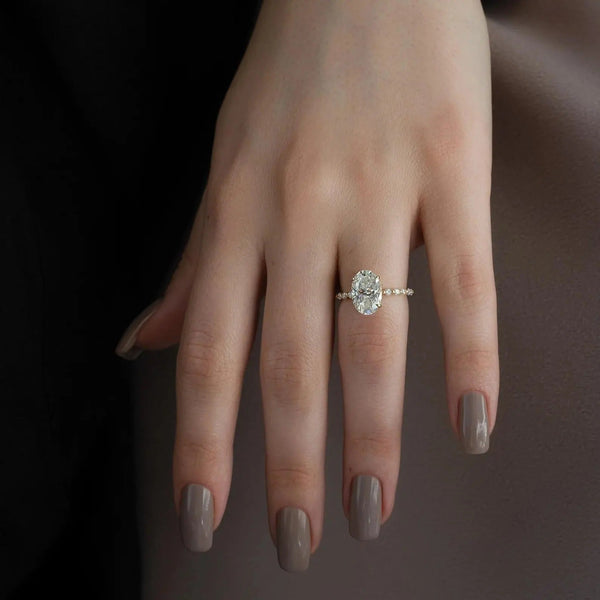
| Oval | 7.5 × 5.5 | 1.35 – 1.45 |
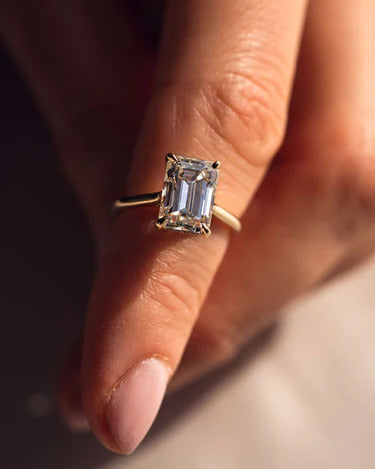
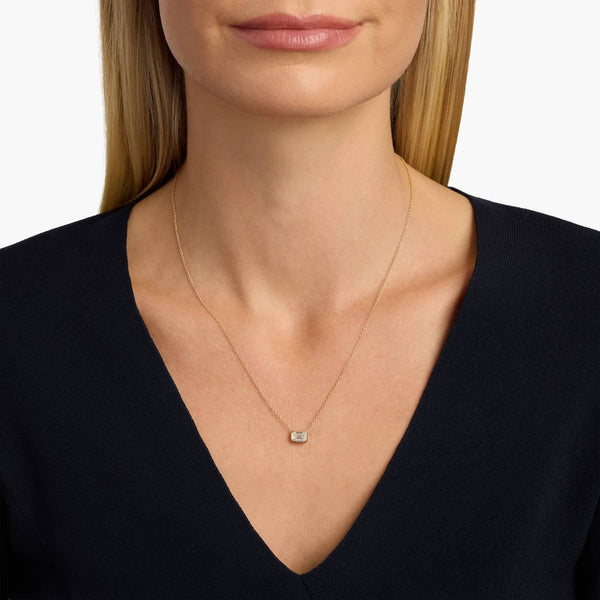
| Emerald | 7.0 × 5.0 | 1.35 – 1.50 |
| Radiant | 6.5 × 5.0 | 1.20 – 1.40 |
| Cushion | 6.0 × 6.0 | 1.00 – 1.20 |
| Princess | 5.5 × 5.5 | 1.00 – 1.05 |
| Asscher | 5.5 × 5.5 | 1.00 – 1.05 |
The same nominal weight spans 10 mm as a marquise and 5.5 mm as an Asscher. Elongated shapes carry weight in the face; square ones hide it in the depth. If visible size is the priority, that difference is larger than any grade decision you will make.
Accent and melee sizes
- 1.0–1.3 mm — micropavé and halo rows (roughly 0.005–0.01 ct each).
- 1.5–2.0 mm — standard pavé on a band (0.015–0.03 ct).
- 2.5–3.0 mm — tennis bracelet stones (0.06–0.10 ct).
- 3.0–4.0 mm — everyday studs and second piercings.
Everything under about 0.20 ct is melee and is never individually certified, in any material. Ask for the parcel specification — material, colour and clarity range, millimetre size and count — rather than a report that does not exist.
Using this while shopping
- Read the measurements line on the report and check it against this table.
- A stone larger than standard for its weight has been spread shallow — more face, less light returned. Treat it as a warning.
- A stone smaller than standard is carrying weight in an over-thick girdle or excess depth you cannot see.
- Cut a paper circle at the stated size and try it on the actual finger before ordering.
- Remember the finger factor. Apparent size is a ratio — 5.8 mm on a size 4 hand reads as 7 mm does on a size 7.
Keep reading
Frequently asked questions
How many millimetres is a 1 carat diamond?
About 6.5 mm across for a round brilliant. A 0.50 ct is 5.0 mm, 0.90 ct is 6.2 mm, 1.50 ct is 7.4 mm and 2.00 ct is 8.1 mm. Fancy shapes vary widely at the same weight, from 10 mm for a marquise to 5.5 mm for an Asscher.
Is a 0.90 carat diamond much smaller than a 1 carat?
Three tenths of a millimetre — 6.2 mm against 6.5 mm — which nobody detects on a hand. Prices step sharply at the round weights because those are the numbers people ask for, while the sizes rise smoothly, so just under a round number is the most reliable saving in diamond buying.
Does doubling the carat double the size?
No — it widens the stone by roughly 30%. Going from 0.50 to 1.00 ct takes a round from 5.0 mm to 6.5 mm, because weight scales with volume while the visible face scales with area. Most of the extra weight is depth you never see.
What if the measurements do not match the chart?
Larger than standard means the stone was spread shallow — more face, less light returned — which is a warning rather than a bonus. Smaller than standard means weight is hidden in an over-thick girdle or excess depth. Either way, ask for video in ordinary light before deciding.
Ask us for stones just under the round weights.
0.90 instead of 1.00, 1.40 instead of 1.50. Same ring on the hand, and the difference goes into the shank.
Leave a comment