Engagement Rings
Stone Shapes Compared on the Things That Are Not Looks
Size per carat, vulnerable points, band fit and whether a cut grade exists — four practical differences behind an aesthetic choice.
Written by the Mapple Gems workshop, Surat · Updated 27 September 2026
Short answer
Four practical differences. Face-up size per carat — at 1 ct a marquise spans 10 mm and an Asscher 5.5 mm. Vulnerable points — pear, marquise, heart and princess have corners or tips that each need a prong. Wedding band fit — elongated shapes usually need a contour. And only round brilliants receive a cut grade, so on every other shape you are the cut grader and rotating video is mandatory. Pick the shape you love, then handle its specific requirement.
Shape is chosen emotionally, which is entirely right — it is the most visible thing about a ring. What is worth knowing is that each shape brings a different set of practical obligations, and none of them are dealbreakers if they are handled at the design stage.
The comparison at 1 carat
| Shape | Face-up | Needs |
|---|---|---|
| Round | 6.5 mm | Nothing special — and it is cut-graded |
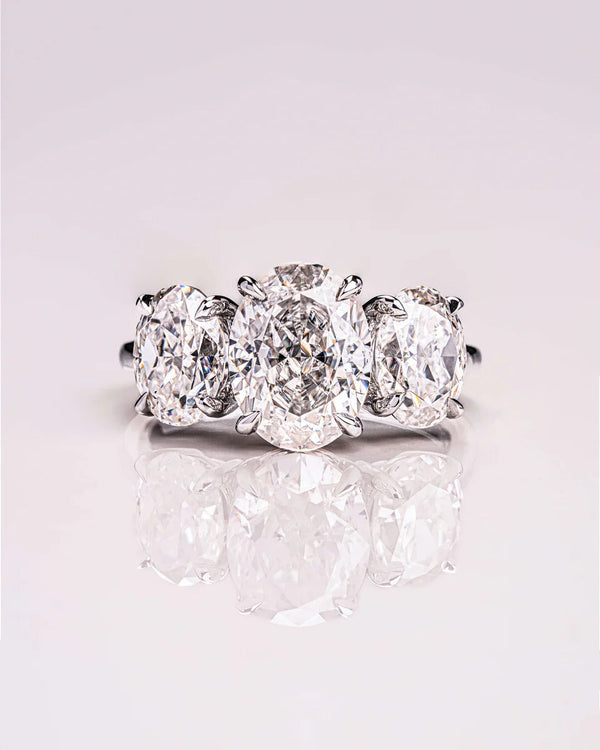
| Oval | 7.5 × 5.5 mm | Video — bow-tie shows nowhere else |
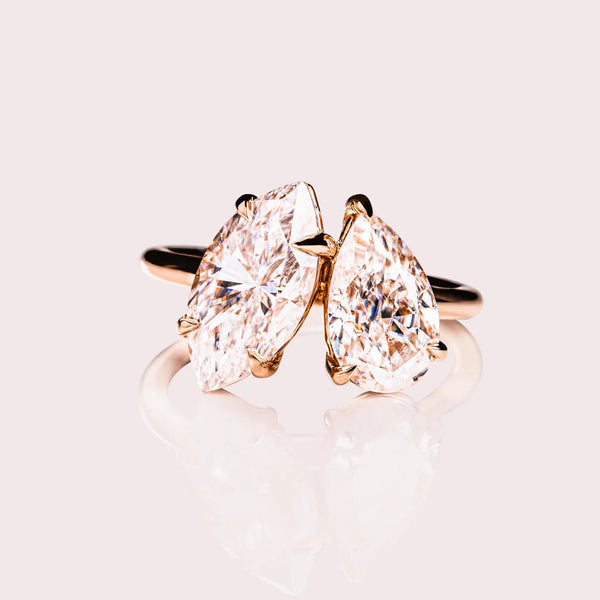
| Pear | 8.0 × 5.5 mm | V-prong on the point; contour band |
| Marquise | 10.0 × 5.0 mm | V-prongs on both points |
| Emerald | 7.0 × 5.0 mm | One grade up on clarity and colour |
| Radiant | 6.5 × 5.0 mm | Prong on each cropped corner |
| Cushion | 6.0 × 6.0 mm | Ask crushed-ice or chunky — they differ |
| Princess | 5.5 × 5.5 mm | Corners are the chip risk — cover them |
| Asscher | 5.5 × 5.5 mm | One grade up; hides nothing |
Note the spread. The same weight is a 10 mm stone or a 5.5 mm one depending only on shape — elongated cuts carry weight in the face, square ones hide it in the depth. If visible size is the priority, that difference is larger than any grade decision you will make.
Only round brilliants receive a cut grade — and on every other shape that responsibility quietly transfers to you. Laboratories grade cut on rounds because their proportions are standardised enough to assess consistently. No laboratory grades cut on any fancy shape, so two ovals with identical carat, colour and clarity can perform completely differently and nothing on either report will say so. Each shape then has its own characteristic fault: the bow-tie on ovals, pears and marquises — a dark band across the centre caused by your own head blocking light — uneven shoulders on pears, asymmetric points on marquises, and a dead flat centre on badly cut cushions. None of these appear on a report, and none of them are visible in a still photograph, which is chosen from hundreds of frames at the angle where the fault shows least. Rotating video in ordinary indoor light is the only way to see any of it — so on any shape except a round, it is not a nice-to-have, it is the grading.
Points and corners are a setting question
Diamonds have cleavage planes and can chip; moissanite has none but still chips at thin edges. Either way, the risk lives at points and corners, and the answer is always the same: metal over every one of them.
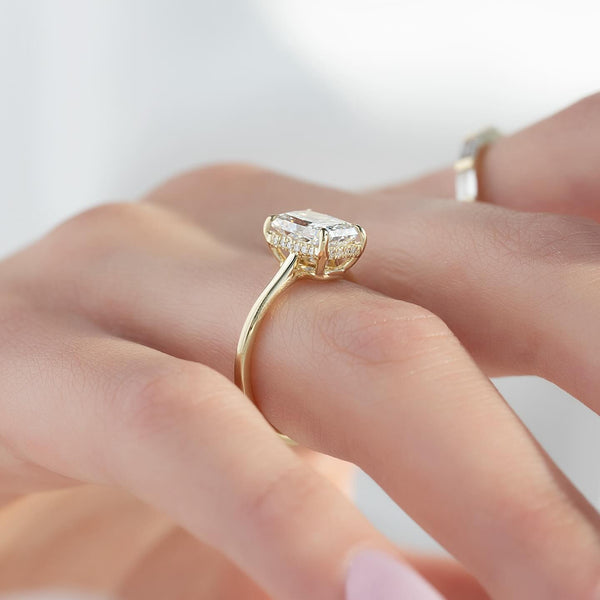
V-prongs on pear tips and marquise points. A prong on each cropped corner of a radiant, emerald, Asscher or princess — not on the flat sides, which is a surprisingly common error. And a bezel or half-bezel is the most protective option for anyone who would rather not think about it again.
Round and oval are the forgiving shapes here, having no points at all. That is a genuine practical advantage and it rarely appears in shape guides.
Band fit, decided by shape
An elongated stone extends along the finger past where a straight band wants to sit. So pear, oval, marquise and emerald usually need a contour band; round and cushion usually do not; princess and Asscher depend on the setting.
Test it before casting: hold a straight edge against the side of the ring as worn, or against the side elevation on the CAD. Visible daylight means a contour — and ordering the band with the ring is both cheaper and a better fit than commissioning one later.
If the stone is moissanite
One extra dimension, running the opposite way from size. Shapes differ substantially in how much fire they show, because dispersion depends on how far light travels inside the stone.
Most to least: round and crushed-ice cushion → oval, pear, marquise, heart → radiant → princess → chunky cushion → Asscher → emerald.
So an emerald cut at a 1.40–1.50 ratio is the shape for someone who wants length and presence with the least rainbow — and a round is the shape for someone who wants all of it. Shape and size multiply, which is why a large round moissanite is the most conspicuous combination available.
Two things that apply to every shape
Ask for the ratio, not just the millimetres. An oval at 1.35 reads rounder and at 1.45 reads distinctly elongated; the visual difference is larger than the numbers suggest, and it is the thing people react to on arrival.
Buy just under a round weight. A 0.90 ct round measures 6.2 mm against 6.5 mm at 1.00 — three tenths of a millimetre nobody detects, at a price set below a psychological threshold rather than a physical one. The same step exists on every shape.
Keep reading
Frequently asked questions
Which diamond shape looks biggest for its weight?
Marquise, at roughly 10 × 5 mm at one carat, followed by pear and oval. An Asscher or princess at the same weight measures about 5.5 mm. Elongated shapes carry weight in the face while square ones hide it in the depth, and that difference exceeds any grade decision.
Which shapes get a cut grade?
Only round brilliants. No laboratory grades cut on any fancy shape, so two ovals with identical carat, colour and clarity can perform completely differently with nothing on either report to say so. Rotating video in ordinary light is the grading on every shape except a round.
Which shapes chip most easily?
Those with points or corners — pear, marquise, heart, princess and the cropped-corner step cuts. It is a setting question rather than a shape objection: V-prongs on points, a prong on each corner rather than the flat sides, or a bezel. Round and oval have no points at all.
Which shapes need a contour wedding band?
Pear, oval, marquise and emerald usually do, because the stone extends along the finger past where a straight band sits. Round and cushion usually do not. Test it by holding a straight edge against the side of the ring as worn — visible daylight means a contour.
Choose the shape you love, then tell us.
Every one of them has a specific requirement, and every one of those is solved at the design stage rather than lived with.
Leave a comment