Trend report · 2026
Engagement Ring Trends 2026: What Couples Are Actually Buying
Most trend lists are opinion. This one starts with what couples bought, then sorts the looks into the ones that will last and the ones that will date.
Written by the Mapple Gems workshop, Surat · Updated 12 October 2026
Short answer
The defining engagement ring trends of 2026 are lab grown centre stones (61% of US engagement rings, per The Knot’s 2026 Real Weddings Study), elongated shapes led by oval, which is now nearly level with round, yellow gold settings, bezel settings, wider sculptural gold bands, and east-west and toi et moi designs. The average centre stone is close to two carats.
Engagement ring taste used to change slowly. Since lab grown diamonds became affordable, it has changed fast, because the same budget now buys a much bigger stone and leaves more money for the metal around it. Almost every 2026 trend traces back to that one shift.

2026 at a glance
| Measure | 2026 figure | What it tells you |
|---|---|---|
| Lab grown share of centre stones | 61% (up 239% since 2020) | Lab grown is now the default, not the alternative |
| Most popular shape | Round 26%, oval 25% | Oval has almost caught the classic |
| Average centre stone | About 1.9 carats | Bigger stones are normal now |
| Leading metal | Yellow gold, roughly two in five rings | The long white-metal era has ended |
Sources: The Knot 2026 Real Weddings Study and published 2026 trade reports. Figures describe US couples.
1. Lab grown becomes the default
Six in ten engagement rings now have a lab grown centre stone. Buyers choose it to get a larger, cleaner stone for the budget, and the trade is still arguing about what to call it: in September 2026 the World Jewellery Confederation moved to the word ‘synthetic’, while US rules still allow ‘lab grown’. Moissanite remains the leading non-diamond choice for buyers who want size and fire at a lower price again. See Lab Grown or Synthetic?
2. Elongated shapes, led by oval
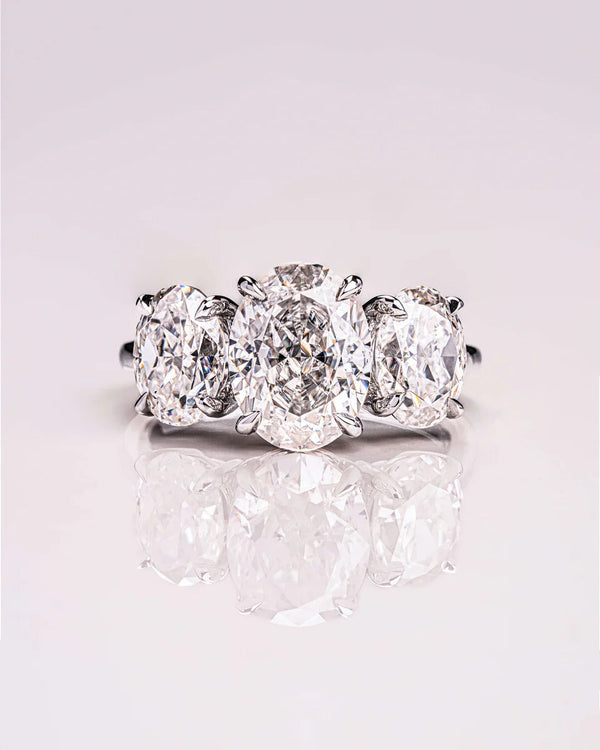
Oval has gone from a niche shape a decade ago to a near tie with round. It looks larger than a round of the same weight and lengthens the finger. Close behind are elongated cushion, elongated radiant, marquise and pear, plus the ‘moval’, a very slim oval popularised on social media. The elongated cushion in particular has grown since the most talked-about celebrity engagement of 2025. See Oval or Round at the Same Budget? and Elongated Cushions.
3. Yellow gold returns
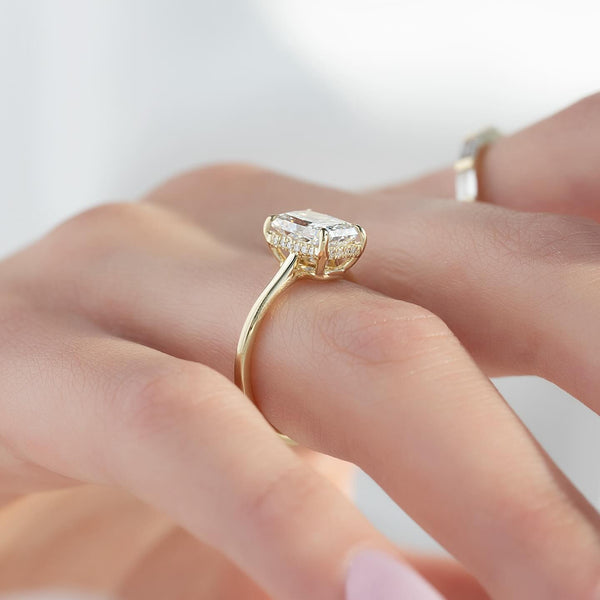
Yellow gold is now the single most chosen engagement ring metal. It suits warmer skin tones, pairs well with vintage-style details, and partly hides the faint warmth of near-colourless stones, which lets buyers spend less on colour grade. See Why Yellow Gold Is Winning in 2026.
4. Bezels and lower settings
As stones got bigger, the tall prong setting started to look exposed. Bezels, full and half, wrap the stone’s edge in metal, sit lower, catch less and suit an active life. See Bezel Settings and Everyday Wear.
5. Wider, sculptural gold bands
The thin pavé shank of the last decade is giving way to flat, domed and sculpted gold bands of four millimetres and more. With the stone cheaper, buyers are putting budget into metal. See Chunky Gold Bands.
6. East-west and toi et moi
Turning an elongated stone sideways (east-west) and pairing two stones side by side (toi et moi) are the two most visible ways couples are making a ring look less standard without giving up a classic stone. See East-West Settings and Toi et Moi Rings.
7. Hidden halos, colour and vintage detail
A hidden halo adds sparkle from the side without changing the look from above. Champagne and coloured stones, once expensive in natural diamonds, are now accessible in lab grown. And milgrain, antique-style cuts and two-tone builds remain steady favourites. See Hidden Halo vs Full Halo and Champagne & Colored Diamonds.
From the workshop
On our bench in Surat the clearest change this year is not a shape, it is the order of the conversation. Customers used to start with the stone and treat the band as an afterthought. Now many start with the band, its width, colour and thickness, and fit the stone to it. That is a healthy shift: the band is the part you wear against your skin every day, and the only part of the ring you cannot easily swap later.
Which trends will last, and which may date
| Likely to last | Wear well with care | Most likely to date |
|---|---|---|
| Oval and round solitaires; yellow gold; plain or softly domed bands; bezels | East-west; hidden halo; elongated cushion; two-tone | Extreme ratios such as very thin ‘moval’ shapes; heavily sculpted bands; very large toi et moi pairs |
The pattern is simple: shapes and metals that have come back before tend to come back again. The more a look depends on a single proportion or a single moment, the faster it can date. If you love a trend, put it in the part of the ring that is easiest to change, or balance it with a classic element.
How to use these trends when you buy
- Pick the shape first; it drives the setting, band and wedding band fit.
- Choose stone size for the hand, not the average. A stone that stays within the finger width looks right on most hands.
- Decide metal colour with your skin tone and the jewellery you already wear.
- For stones near two carats or more, consider a bezel or a low head.
- Plan the wedding band at the same time, especially with east-west, toi et moi or wide bands.
Keep reading
Frequently asked questions
What is the most popular engagement ring shape in 2026?
Round is still narrowly the most popular at about 26% of US engagement rings, with oval close behind at about 25%, according to The Knot’s 2026 Real Weddings Study.
What percentage of engagement rings are lab grown in 2026?
About 61% of US engagement ring centre stones were lab grown in The Knot’s 2026 study, up 239% since 2020.
What engagement ring metal is trending in 2026?
Yellow gold is the leading engagement ring metal in 2026, chosen for roughly two in five rings, often in wider, sculptural bands.
Which engagement ring trends will not go out of style?
Round and oval solitaires, yellow gold, plain bands and bezel settings have all been popular before and are the least likely to date. Extreme proportions and heavily sculpted bands are the most likely to.
What is the average engagement ring carat size in 2026?
The average centre stone in 2026 is close to two carats, about 1.9, largely because lab grown diamonds made larger stones affordable.
On trend, built to last
Oval, east-west, bezel and toi et moi designs with moissanite or IGI certified lab grown diamonds, in 925 silver or solid 10K, 14K and 18K gold. Made to order in Surat.
Browse engagement rings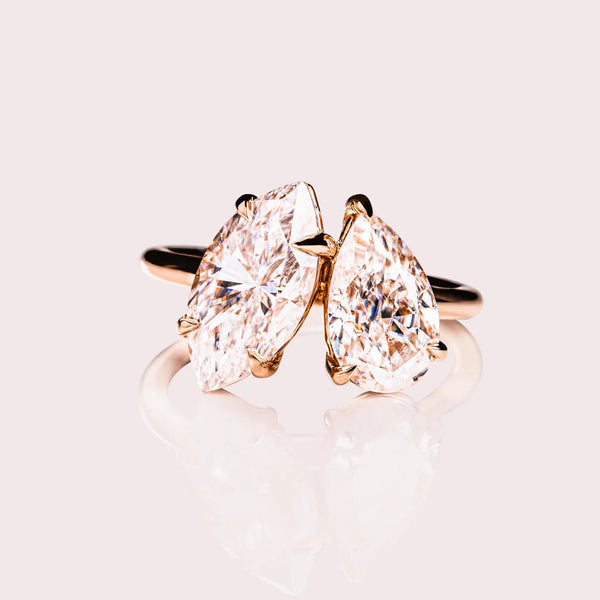
Leave a comment