Lab Grown Diamonds
Why Cut Quality Matters More in Lab Grown Than People Expect
When colour and clarity stop separating stones, cut is the only thing left doing the work.
Written by the Mapple Gems workshop, Surat · Updated 1 September 2026
Short answer
Because lab grown production clusters at high colour and clarity, those two Cs no longer separate stones the way they do in mined diamonds — almost everything on offer is already good. Cut is the remaining variable, and it is the one that actually changes how a stone looks. Take Excellent or Ideal on rounds, where it is graded. On fancy shapes, where no cut grade exists, judge by video. Cut is also where sellers cut corners, because it is the only C most buyers do not check.
There is a reasonable question underneath this: if lab grown stones are consistently high quality, why does anything matter? The answer is that consistency applies to growth, not to cutting — and those are different businesses done by different people.
Why the other Cs stopped separating stones
In mined diamonds, colour and clarity vary enormously because geology varies. A parcel of rough contains everything from near-colourless and clean to visibly tinted and heavily included, and grading exists to sort that.
Lab growth is a controlled process. Producers optimise for the grades that sell, so the output clusters — a large share of lab grown production lands in a fairly narrow band near the top of both scales. That is precisely the reasoning GIA gave when it moved to a Premium or Standard assessment for lab grown stones in October 2025 rather than continuing letter grades.
So when you compare two lab grown stones, colour and clarity are frequently close to identical. Cut is where they diverge.
Cut is where weight gets protected at your expense. A cutter facing a piece of rough has a choice: cut for maximum beauty, or cut to retain weight. Cutting shallow, or leaving a thick girdle, or deepening the pavilion keeps carat weight that would otherwise be polished away — and carat weight is what the price is quoted on. So a poorly cut stone is not usually an accident; it is a rational decision by someone paid on weight rather than on performance. This applies to lab grown exactly as it does to mined, and it is the reason a stone can be “F, VS1, 1.5ct” and still look flat.
Rounds: take the grade seriously
Round brilliant is the only shape that receives a formal cut grade, from IGI, GCAL and GIA alike. That makes it the easiest shape to buy well.
- Excellent or Ideal — take it. The price step down to Very Good is small and the visual step is not.
- Check polish and symmetry too. They are graded separately and both should be Excellent or Very Good. Poor symmetry undermines a good cut grade.
- Do not pay extra for proprietary “super ideal” labels without seeing evidence. Some are genuinely precision-cut; some are marketing on top of an ordinary Excellent.
Fancy shapes: you are the cut grader
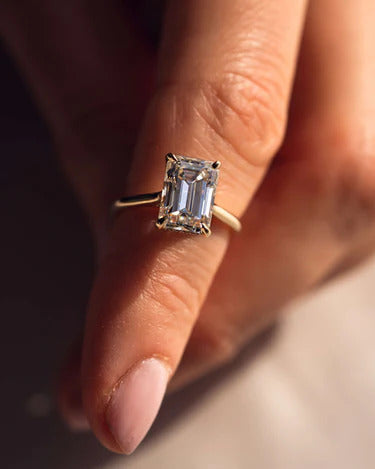
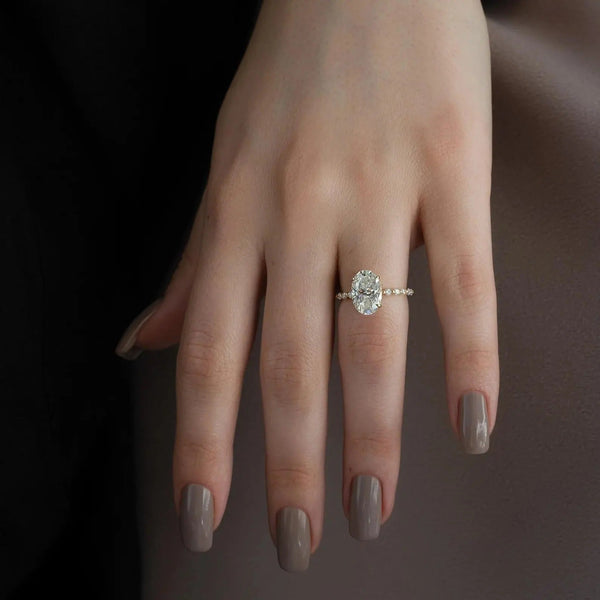
Oval, pear, marquise, emerald, cushion, radiant, Asscher — none of these receive a cut grade from any laboratory, because their proportions are not standardised enough to grade consistently.
So the checks fall to you, and they are the same four regardless of shape:
- No permanently dark zones as the stone rotates. Flashing on and off is correct; staying dark means light is escaping through the bottom.
- Symmetrical outline. Halve it mentally — the two sides should mirror. Uneven shoulders make a correctly set stone look crooked.
- Clean facet junctions. Crisp meeting points rather than a slightly blurred pattern.
- Dimensions that match the expected size for the weight. Noticeably larger than standard means shallow cutting — spread at the cost of life.
All four require video. A still photograph of a fancy shape is chosen from hundreds of frames, at the angle that shows least.
The girdle: a small detail with real consequences
Worth naming because it appears on reports and almost nobody reads it.
The girdle is the stone’s outer edge. Extremely thin is a chipping risk, particularly on shapes with corners. Extremely thick hides weight in a band of material you cannot see, so the stone measures smaller than its carat suggests — you paid for weight that is doing nothing.
Reports state this. Aim for the middle of the range, and treat either extreme as a reason to look at another stone.
Where to spend, given all this
A practical allocation for a lab grown centre stone:
- Cut first, always. It is the only C that changes appearance in ordinary light.
- Clarity: eye-clean, not maximal. VS1–VS2 in brilliants, VS2 as a floor in step cuts.
- Colour: matched to your metal. G–H disappears in yellow gold; F–G suits white metal.
- Carat last. Just under a round number buys the same visible size for less.
Done in that order, the money goes to what you see rather than to what appears on paper.
Keep reading
Frequently asked questions
Why does cut matter more in lab grown diamonds?
Because lab grown production clusters at high colour and clarity, so those two Cs no longer separate stones the way they do in mined diamonds. Cut becomes the remaining variable, and it is the one that determines how a stone actually looks in ordinary light. Growth consistency does not imply cutting consistency — they are different businesses.
Why would a cutter cut a stone badly on purpose?
To retain carat weight. Cutting shallow, leaving a thick girdle or deepening the pavilion preserves weight that would otherwise be polished away, and price is quoted on weight. It is a rational decision by someone paid on carats rather than on performance — which is why a stone can be graded F, VS1 and still look flat.
Do oval and pear lab grown diamonds have a cut grade?
No. Only round brilliants receive a formal cut grade, because their proportions are standardised enough to grade consistently. For every fancy shape you judge by video — checking for permanently dark zones, outline symmetry, clean facet junctions, and dimensions matching the expected size for the weight.
What girdle thickness should I look for?
The middle of the range. Extremely thin is a chipping risk, especially on cornered shapes, while extremely thick hides weight in material you cannot see, so the stone measures smaller than its carat implies. Grading reports state it, and either extreme is a reason to consider a different stone.
Buy the cut, then the rest.
We will send video in ordinary light and the full report, including the girdle line most people skip.
Leave a comment