Customer Favourite
Radiant Hidden Halo Solitaire in 14K or 18K Gold
Same ring, two golds. What actually changes between 14K and 18K, and which one suits a large radiant worn every day.
Written by the Mapple Gems workshop, Surat · Updated 13 October 2026
Short answer: This radiant cut moissanite solitaire sits in four prongs above a hidden halo, in sizes from 2 carats (8.2 × 6.2 mm) to 5 carats (11 × 9 mm). It is most often ordered in solid 14K or 18K gold. 18K is richer in colour and contains more gold; 14K is harder and holds prongs better. For a large stone worn daily, 14K is the practical choice; 18K is the luxurious one.
We have written separately about the design and sizes of our radiant hidden halo rings. This guide answers the question customers ask most about this particular listing: 14K or 18K? Our latest order was a 4 carat (10.2 × 8.2 mm) in 18K white gold.

14K and 18K compared
| 14K gold | 18K gold | |
|---|---|---|
| Gold content | 58.5% (stamped 585) | 75% (stamped 750) |
| Hardness | Harder, holds prongs longer | Softer, marks more easily |
| Yellow colour | Bright, slightly paler | Rich, deep |
| White gold base colour | Warmer under plating | Usually a little whiter under plating |
| Price | Lower | Higher |
One practical rule: match your wedding band to the same karat. “Yellow gold” is not one colour — 14K beside 18K shows a visible difference.
What this means for a radiant hidden halo
A radiant has four corners, each held by a prong, and a hidden halo raises the stone. Those prongs carry a large stone’s weight and take its knocks. In harder 14K they keep their shape longer; in 18K they need checking a little more often. Neither is unsafe — it is a question of upkeep.
From the workshop
Our latest customer chose a 4 carat radiant in 18K white gold. All white gold is rhodium plated, and that plating, not the alloy, is the bright white you see; it needs renewing every one to two years whatever the karat. 18K’s main advantage in white is more gold and often a whiter base when the plating thins. Its trade-off is softness: for a 4 carat stone on four prongs, we suggest a prong check every year rather than every two. Look at the prong tips yourself every few months — rounded is healthy, flattened means it is time.
Before you order: a short checklist
- Decide what matters most: hardness (14K) or richness (18K).
- Choose the radiant size by millimetres and do a paper test.
- Match your wedding band’s karat.
- Check the head height on the CAD side view.
- Plan prong checks: two years in 14K, yearly in 18K for large stones.
Keep reading
Frequently asked questions
Is 14K or 18K better for an engagement ring?
14K is harder and holds prongs longer; 18K has more gold and a richer colour. For a large stone worn every day, 14K is the practical choice.
Does 18K white gold need plating?
Yes. All white gold is rhodium plated, and the plating needs renewing every one to two years.
How big is the 4 carat radiant?
10.2 × 8.2 mm.
Should my wedding band match the karat?
Yes. 14K and 18K differ visibly in colour side by side.
How do I know if a prong is worn?
A healthy prong tip looks rounded and defined; a worn one looks flattened. Have it checked when you see that change.
The radiant hidden halo solitaire, made to order in Surat
2 to 5 carats, solid 14K or 18K gold (or silver), CAD preview before production.
See the ring All engagement rings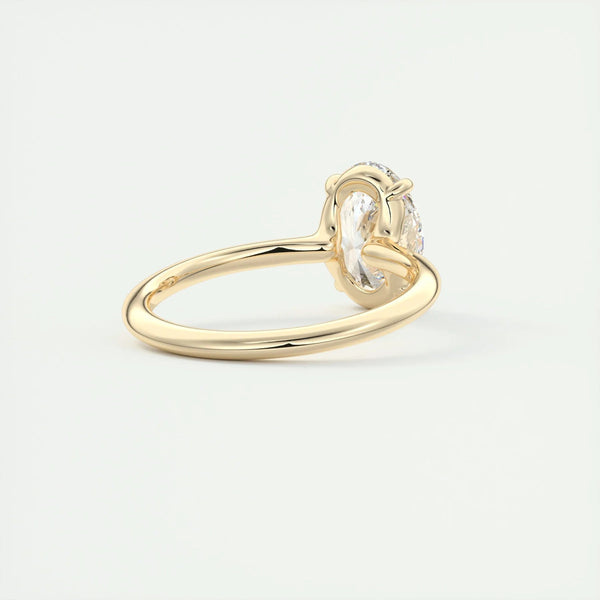
Leave a comment