Engagement Rings
Engagement Rings for Small Hands
A smaller finger changes every proportion in the ring — usually in your favour.
Written by the Mapple Gems workshop, Surat · Updated 5 September 2026
Short answer
On a size 4–5 finger, a stone reads about one step larger than the same stone on a size 7 — so 5.5–6.5 mm often gives the presence that needs 7 mm elsewhere. Scale the rest down with it: a 1.6–1.9 mm shank, a lower profile, and elongated shapes that lengthen rather than widen. The two things that go wrong are a stone that overhangs the finger’s edges and a shank so thin it bends.
“Small hands” is usually treated as a limitation. It is closer to the opposite: apparent size is a ratio of stone width to finger width, so a narrower finger makes every stone work harder for you. The care needed is in proportion rather than in restraint.
What size actually reads as what
| Round stone | On size 4–5 | On size 7 |
|---|---|---|
| 5.0 mm (0.50 ct) | Neat, clearly present | Discreet |
| 5.8 mm (0.75 ct) | Substantial | Modest |
| 6.5 mm (1.00 ct) | Generous — reads like a statement | The classic look |
| 7.4 mm (1.50 ct) | Large; starts to span the finger | Substantial |
| 8.1 mm (2.00 ct) | Overhangs; a deliberate statement | A statement |
The saving is real: 5.8 mm on a size 4 does the job 7 mm does on a size 7, and the price difference between those two stones is considerable.
The thin-shank trap, which small hands walk into most often. A narrow finger looks best with a narrow band, so people go to 1.4 or 1.5 mm to keep the proportion — and that shank will bend. It is not about the finger; a thin band is thin regardless of who wears it, and grip pressure is the same. 1.6 mm is the floor for a small hand, and 1.8 mm is safer — and because the finger is narrower, 1.8 mm still reads as delicate there when it would read as ordinary on a size 8. You get the proportion and the strength. Do not let anyone build below 1.6 mm for daily wear, however elegant it looks in the render.
Shape: lengthen rather than widen
Small hands often come with shorter fingers, and where they do, shape does more work than size.
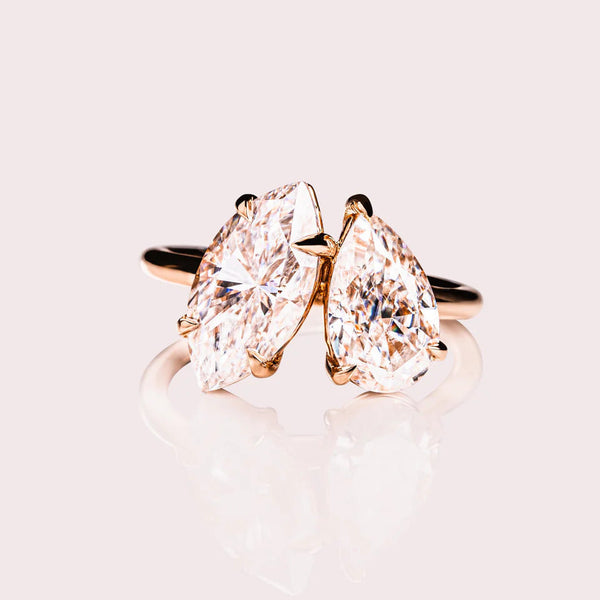
- Best: oval, pear, marquise, elongated cushion, emerald at 1.40–1.50 ratio. Each draws the eye along the finger and visually extends it — and each shows a larger face than a round of the same weight.
- Fine: round, at a size that does not overhang.
- Harder: wide square shapes — princess, Asscher, square cushion — which emphasise width across an already narrow finger.
- Consider carefully: east-west settings, which deliberately widen. Striking, but working against you here.
Profile height matters more, not less
A tall setting reads proportionally larger on a small hand — and it rolls more, because a smaller finger gives a high-set stone more leverage relative to the band holding it.
Aim for the lower end: 5–7 mm from finger to the top of the stone. Ask for the number in millimetres before casting, since it cannot be changed afterwards.
If the ring does turn, the fix is not soldering. A euro shank — flattened along the underside — resists rotation by design, is invisible from above and needs no maintenance. Sizing beads are the reversible alternative.
Settings that suit
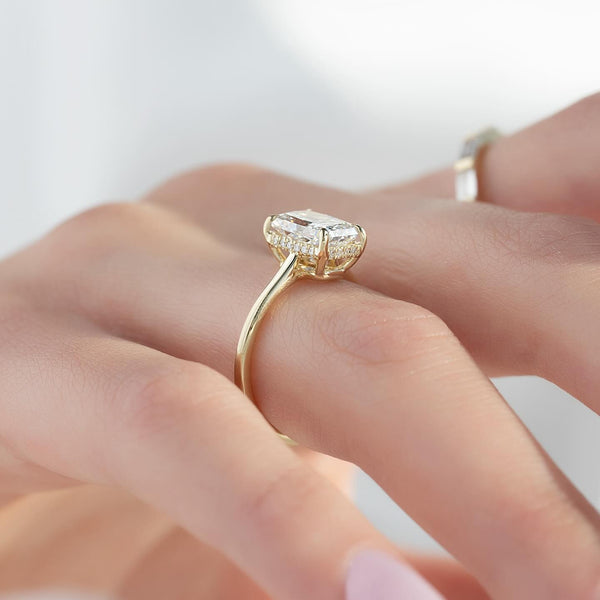
- Low-set solitaire on a tapered shank. The taper narrows toward the head, so the stone gains by comparison — and it uses less gold, so it costs slightly less.
- Bezel or half-bezel. Lowest profile, nothing to catch, and the clean outline suits a smaller scale.
- Hidden halo — adds sparkle from the side without adding width. Check the height, though, since it raises the setting.
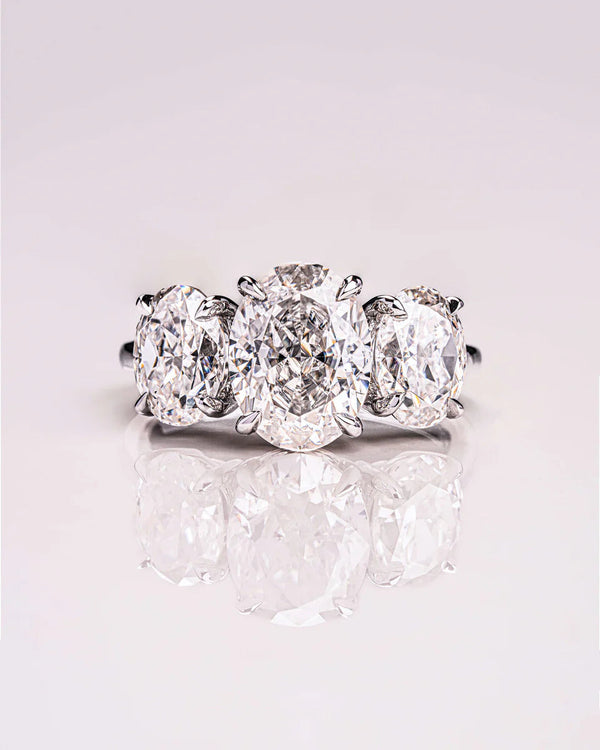
- Three stone with slim side stones — works if the total width still sits inside the finger. Get the combined millimetre span before agreeing.
What to be cautious of: a wide halo, which adds width in every direction, and a full eternity band, which cannot be resized — and small fingers change size more noticeably in heat and cold.
Sizing on a small finger
Two practical points that matter more at this end of the scale.
Proportional variation is larger. Half a size of daily fluctuation is the same absolute amount on any finger, but on a size 4 it is a bigger share of the circumference — so a small hand notices the difference between morning and evening more. Size at the end of the day.
Knuckle clearance. Slim fingers with proportionally larger knuckles are common, and the ring must pass the knuckle while sitting at the base. Comfort fit helps in both directions, and sizing beads stop the resulting looseness below.
Frequently asked questions
What carat size suits a small hand?
On a size 4–5 finger, 5.5–6.5 mm usually gives the presence that needs about 7 mm on a size 7 — apparent size is a ratio of stone width to finger width, so a narrower finger makes every stone read larger. Above roughly 7.4 mm a stone begins to span the finger, which is a deliberate look rather than a default.
How thin can a band be on a small finger?
1.6 mm is the floor for daily wear and 1.8 mm is safer. A thin shank bends regardless of finger size, because grip pressure is the same — and because a narrow finger makes proportions read smaller, 1.8 mm still looks delicate there when it would look ordinary on a larger hand.
Which ring shapes suit short fingers?
Elongated shapes — oval, pear, marquise, elongated cushion and emerald at a 1.40–1.50 ratio. They draw the eye along the finger and show a larger face than a round of the same weight. Wide square shapes such as princess and Asscher emphasise width instead, as do east-west settings.
Why does my ring spin more on a small finger?
Because a high-set stone has more leverage relative to a smaller band, and daily size fluctuation is a larger share of a small circumference. Keep the profile height to 5–7 mm, size at the end of the day, and ask for a euro shank — flattened along the underside — which resists rotation by design.
Smaller stone, better built.
On a small hand that trade goes further than almost anywhere else — and we will quote the shank and profile in millimetres first.
Leave a comment