Engagement Rings
Choosing a Setting for the Life You Actually Have
Start from what your hands do all day, not from what looks best in a photograph.
Written by the Mapple Gems workshop, Surat · Updated 4 September 2026
Short answer
Work backwards from three questions. Do you wear gloves or work with your hands? Then low profile, bezel or half-bezel, rounded edges, no exposed points. Will you take it off for work? Then almost anything is fine — buy what you love. Do you want minimal maintenance? Then few stones, plain shank, nothing raised. Most regret comes from choosing a setting for how it photographs and then wearing it somewhere photographs do not go.
Setting guides normally start with styles and describe each one. This one starts from the other end, because the style question is easy once the practical constraints are settled — and because the constraints are the part that cannot be changed afterwards.
Question one: what do your hands do?
| If your days involve | Choose | Avoid |
|---|---|---|
| Gloves — healthcare, labs, trades, cold climates | Bezel, low profile, rounded edges | Claw prongs, high baskets, points |
| Lifting, gripping, tools | Thick shank (2 mm+), flush or bezel | Thin shanks, full pavé, eternity bands |
| Small children | Low profile, smooth outline | Anything that catches hair or skin |
| Keyboard and meetings | Almost anything | Very tall settings, which knock desk edges |
| Gardening, climbing, water sports | A silicone band on those days | Wearing the real ring at all |
The question we ask that changes the design most often: “will you take it off for work?” If the answer is yes — and for a great many people it is — then almost every durability consideration on this page stops applying, and you should simply buy the ring you find most beautiful. A halo, fine pavé, a high cathedral setting: all fine, because the exposure is a fraction of what a constantly-worn ring gets. If the answer is no, the constraints are real and worth designing around. We ask this before anything else, and roughly half the time the answer makes the rest of the conversation much simpler.
Question two: how much maintenance are you willing to do?
Not all settings age the same way, and this is a genuine long-term difference rather than a matter of taste.
- Lowest maintenance: a plain solitaire or plain band. One stone or none, nothing raised, nothing to loosen, resizes easily, cleans in seconds.
- Low: bezel settings, three-stone rings, half pavé. Few stones, secure, and the plain metal at the back keeps resizing simple.
- Moderate: full pavé, hidden halos, milgrain detail. Beads and detail wear, and cleaning under the stones matters.
- Highest: halos, clusters, full eternity bands. Twenty to sixty small settings, and a full eternity generally cannot be resized at all.
None of these is wrong. But if you already know you will not book a jeweller visit every two years, choose from the top of that list rather than the bottom.
Question three: is your finger size stable?
Often overlooked, and it eliminates whole categories of design.
If your size fluctuates — through pregnancy, weight change, joint changes, medication, or simply living somewhere hot — you need a design that can be resized. That means a plain or half-set shank, and it rules out full eternity bands, which have no bare metal to cut, and makes fully pavé shanks difficult.
It also argues for comfort fit, which slides over a knuckle more easily in both directions, and against very high settings, which roll more when a ring is even slightly loose.
The settings, matched to answers
- Bezel or half-bezel — hands-on work, gloves, minimal maintenance. The most protective build there is.
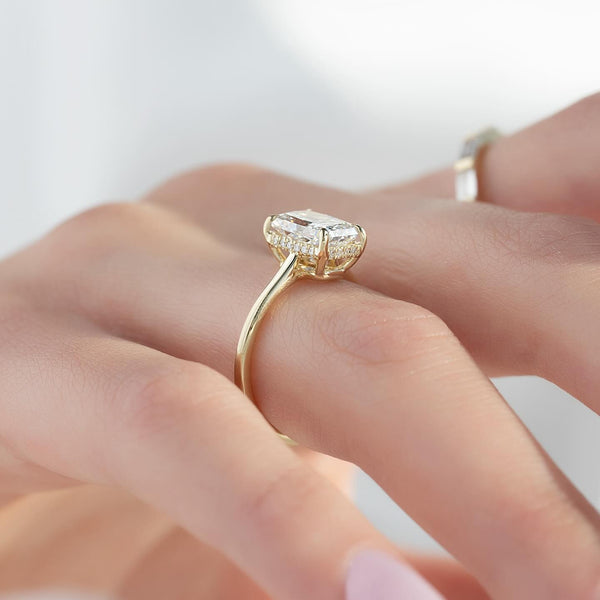
- Low-set solitaire — the all-rounder. Suits nearly everyone, takes a straight band flush, resizes easily.
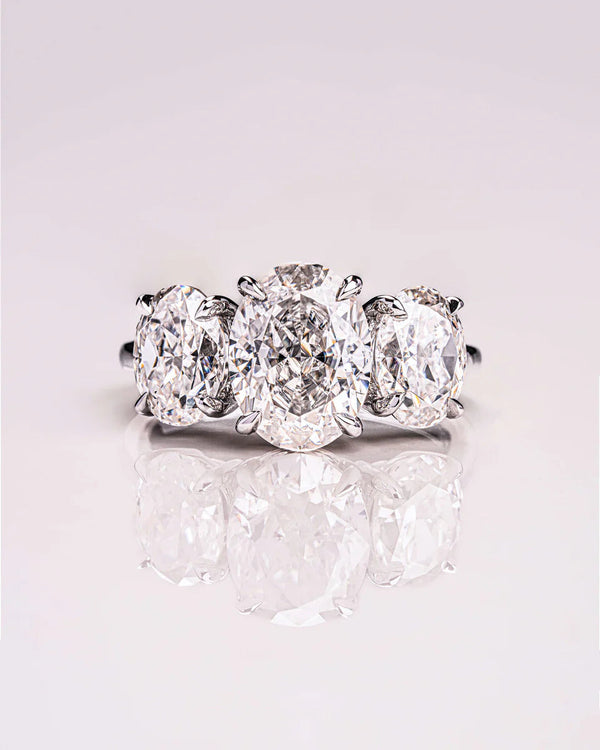
- Three stone — presence with only three settings to maintain. Order the contour band with it.
- Halo or cluster — maximum apparent size per pound, if you accept the upkeep and take the ring off for work.
- Cathedral — elegant profile, but plan for a contoured band and expect more contact wear.
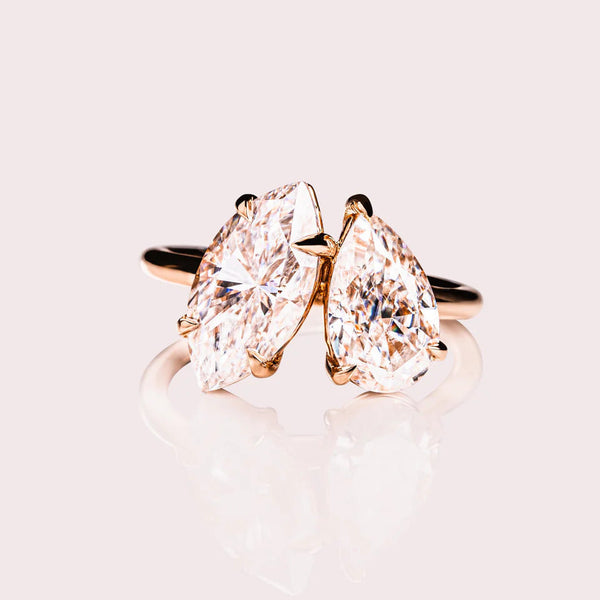
- East-west — low, wide, band-friendly, and genuinely practical as well as distinctive.
Two things worth deciding at the same time
The wedding band. Whether a straight band will sit flush is decided by the setting, so deciding both together is cheaper and produces a better fit than solving it afterwards.
The profile height. It is fixed when the ring is cast and cannot be changed later. Ask for it in millimetres and picture it against your own hand rather than a render.
Keep reading
Frequently asked questions
What is the most practical engagement ring setting for everyday wear?
A bezel or half-bezel on a low profile with rounded edges. It protects the stone’s girdle completely, catches on nothing, and has no exposed points. A low-set plain solitaire is the next most practical, and it also takes a straight wedding band flush and resizes easily.
Which settings need the most maintenance?
Halos, clusters and full eternity bands, because they carry twenty to sixty small settings that can loosen over decades — and a full eternity generally cannot be resized at all. Plain solitaires and plain bands need the least; bezels, three-stone rings and half pavé sit in between.
What if my ring size changes over time?
Choose a design with plain metal at the back — a plain or half-set shank — because resizing works by cutting and rejoining that section. Full eternity bands have none and generally cannot be resized. Comfort fit also helps, sliding over a knuckle more easily in both directions.
Can I have a delicate setting if I work with my hands?
Yes, if you take it off during work. That single decision removes most durability constraints, because the exposure is a fraction of a constantly-worn ring’s. Many people wear a plain or silicone band on shift and the real ring the rest of the time, which is a completely legitimate arrangement.
Tell us whether you will take it off for work.
It is the first thing we ask, and about half the time the answer makes everything else simpler.
Leave a comment