Cushion cut
The Cushion Solitaire
There is a commercial reason so many cushions arrive wrapped in a halo, and it is worth understanding before you decide to go without one.
Written by the Mapple Gems workshop, Surat · Updated 30 August 2026
Short answer
Cushions are commonly cut deep to hold weight and produce sparkle, so they face up smaller per carat than most shapes. A halo covers that; a solitaire does not. Ask for depth percentage and millimetres before anything else — the difference between a well-proportioned cushion and a deep one is roughly half a millimetre of face-up width at two carats, and on a bare setting you will see it.
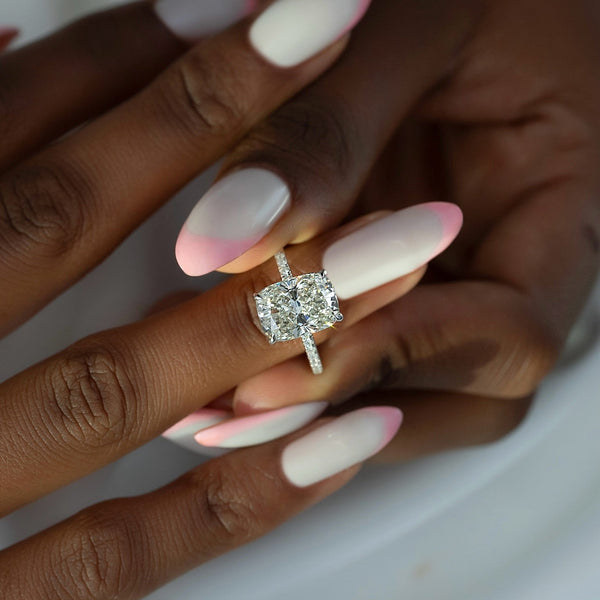
A solitaire is the most honest setting there is. Nothing borders the stone, nothing runs down the shank, and no accent stones add apparent size. Whatever the stone measures is what the ring measures.
On most shapes that is simply a design preference. On a cushion it is a real test, because the cushion is the shape most likely to be carrying weight you cannot see.
The depth problem
A cushion's sparkle — particularly the crushed ice variety — comes from a deep pavilion with a lot of faceting in it. Depth is weight below the girdle: paid for, invisible from above, and doing nothing for apparent size.
Two 2.00ct cushions of the same ratio can differ by a noticeable margin in face-up width because one was cut shallower and one was cut to preserve rough. Both certificates read 2.00ct. Both are correctly graded. One gives you visibly more stone.
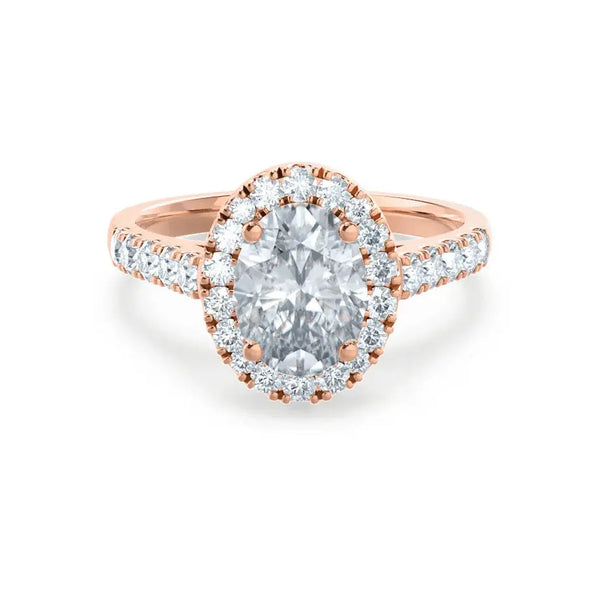
This is why the halo is so common on this shape. A halo adds roughly 2.5mm of apparent width, which more than compensates for a deep centre and lets a smaller or deeper stone read large. That is a legitimate design, and we build a great many of them — see cushion cut halo rings. But it does mean that if you want a solitaire, the stone's proportions matter more than they would on almost any other shape.
The four specifications that carry it
1. Depth percentage. The number to ask for first. Compare the millimetre measurements against the carat weight: if the stone measures small for its weight, the depth is where the weight went. This is not a defect and does not appear as a fault on any report, but on a solitaire it is what you are buying.
2. Prong style. Cushions have rounded corners rather than points, so there is nothing fragile to protect — a genuine advantage over an emerald or princess cut. That frees the choice to be aesthetic. Four single prongs read modern and clean; double prongs at each corner read antique and suit a chunky-faceted stone. Both are secure.
3. Profile height. A deep stone in a high head becomes a tall ring. Cushions are already deep, so this compounds. Ask for the height in millimetres on a side elevation; it is fixed at casting and it is the specification people most often wish they had asked about.
4. Gallery. Open. A deep pavilion needs light entering from below, and on a crushed ice stone especially, an enclosed gallery is a straightforward way to make a bright stone go grey.
Solitaire against halo, on this shape
| Consideration | Cushion solitaire | Cushion halo |
|---|---|---|
| Apparent size | Exactly what the stone measures | Around 2.5mm wider |
| Tolerance for a deep stone | None | High — the halo covers it |
| Settings to check every 2 years | 4–8 | 30–50 |
| Straight wedding band | Often possible | Rarely |
| Changing your mind later | Open — a halo can be added | Largely spent |
| Where the budget goes | All into the centre stone | Split with the halo and its labour |
The last row is the honest case for the solitaire. A halo costs real money in stones and in bench time, and on a cushion that money could instead buy a shallower, better-proportioned centre stone that needs no help looking large. Which of those two rings you prefer is taste; that it is a genuine either-or is not.
From our bench in Surat
When someone asks us for a cushion solitaire we spend longer choosing the stone than building the ring, and it is always the same conversation: we are looking for the one that measures largest for its weight, not the one with the best letters on the report. On a solitaire a 7.4mm G VS2 beats a 7.0mm F VS1 nearly every time, and the second stone will usually be the more expensive one.
The concession: our product pages do not publish millimetres or depth percentage, so you cannot make that comparison from a listing — ours or anyone's. Ask, for any specific stone. On a halo ring you can get away without the number. On a solitaire it is the whole purchase.
Faceting on a bare setting
One more thing changes without a halo. A halo puts a ring of small round brilliants around the centre, and those accents sparkle in a fine, busy way that visually blends with a crushed ice centre. Remove them and the centre's own faceting is the entire visual character of the ring.
That cuts both ways. A chunky-faceted cushion on a plain band is a beautiful, calm, distinctly antique object. A crushed ice cushion on a plain band can read as slightly indistinct, because there is no defined pattern anywhere on the piece. If you are choosing a solitaire, it is worth deciding the faceting deliberately — crushed ice or chunky covers how to tell them apart.
What to specify
- Millimetre measurements and depth percentage — before grades, on this setting.
- Faceting style, chosen rather than inherited.
- Prong style: four single for modern, double at the corners for antique.
- Shank 1.8mm at the base, 2mm from two carats up. Taper the width, not the thickness.
- Open gallery beneath the stone.
- Profile height in millimetres on a side elevation.
- Straight-edge test on that elevation if a plain band matters to you.
Keep reading
Frequently asked questions
Why do cushion cuts look smaller than their carat weight?
Because they are usually cut deep. A cushion's sparkle comes from a deep pavilion with a lot of faceting, and that depth is weight sitting below the girdle where you cannot see it. Compare millimetres rather than carats, and ask for the depth percentage.
How many prongs does a cushion solitaire need?
Four is enough. Cushions have rounded corners rather than points, so there is no fragile tip to protect and the choice is mainly aesthetic. Four single prongs read modern; double prongs at each corner read antique and suit a chunky-faceted stone.
Is a solitaire or a halo better for a cushion cut?
It depends what the budget is doing. A halo adds around 2.5mm of apparent width and disguises a deep centre stone. A solitaire puts the entire budget into the stone itself, which on a cushion can buy a shallower, better-proportioned diamond that needs no help. Price both before deciding.
Can I add a halo to a cushion solitaire later?
Usually yes, and it is a real advantage of starting plain — the upgrade path runs from simple to decorated, not the reverse. It generally means a new head built around the existing stone rather than modifying the current one.
Does a cushion solitaire take a straight wedding band?
Often, and more easily than a halo version. The stone's curve is gentle, so a straight band frequently sits flush if the setting is not too high. Elongated cushions manage it slightly better than square ones. Check with a straight edge against the side elevation before casting.
Ask for the millimetres first
On a solitaire the stone is the whole ring. We will find you the cushion that measures largest for its weight, not the one with the best letters.
Leave a comment