Buying Fine Jewelry You Can't Try On First
How to judge scale, colour and finish from a listing — and which photographs quietly mislead.
The honest answer to "can I come and see it first" at a made-to-order workshop is no — the piece does not exist yet. That is not a dodge. It is the same reason you get to choose the metal, the karat and the size in the first place.
Which leaves a real question: how do you buy something you cannot hold? The answer is that a listing carries more reliable information than a five-minute try-on does, provided you read the right parts of it. Photographs are the least trustworthy thing on the page.

Read the numbers, not the photograph
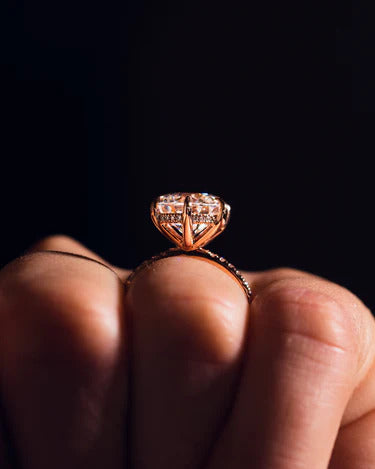
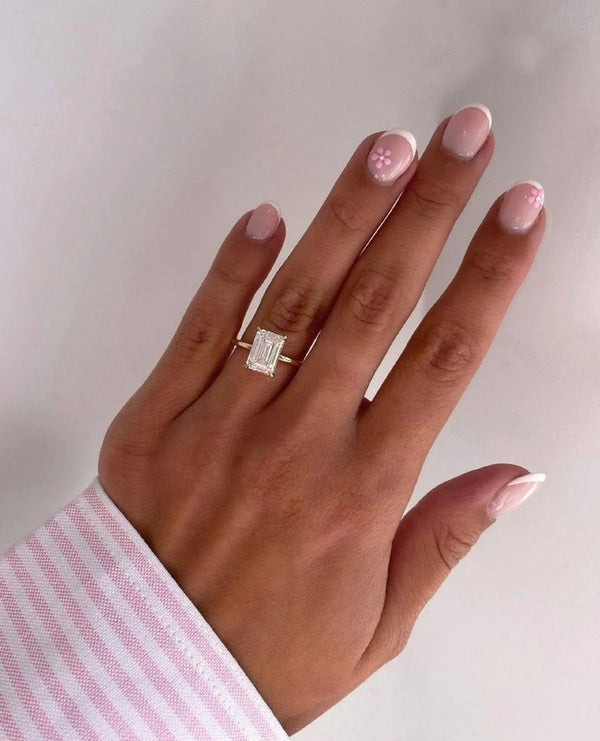
A product image is shot to flatter: lit hard, cropped close, often enlarged well past life size. Two rings that look identical online can differ by a third in actual width. The specification does not have that problem.
| What you want to know | What to look at |
|---|---|
| How big will it look? | Carat weight and shape together — not the photo |
| How chunky will it feel? | Band width in millimetres |
| What colour is the metal really? | The stated karat and metal, not the on-screen tone |
| Will it snag or catch? | Setting type — bezel sits flush, prongs sit proud |
Shape changes apparent size more than carat weight does. An elongated cut spreads across the finger and reads larger than a compact cut of the same weight — see Moissanite Carat Sizes: What They Look Like.
Three things you can do at home in ten minutes
Print it at life size. Take the stated stone dimensions, draw that oval or square on paper, cut it out and rest it on your finger. It looks crude and it is startlingly accurate — far better than any photograph at telling you whether a stone is bigger than you pictured.
Measure a ring you already own. Find the band width of a ring that feels right on you and compare it to the listing in millimetres. If your favourite band is 2mm and the listing says 4mm, you now know exactly how different it will feel.
Check the metal against something in your jewelry box. Screens shift colour badly, and yellow gold in particular photographs warmer or paler depending on the lighting. A piece you already own in the same karat is a far better reference than any image.
Where the real risk sits
People worry about the stone. In practice the stone is the most predictable part of the order — it is specified, graded and consistent. The variable that actually goes wrong is fit.
A made-to-order ring is cast in your size rather than adjusted to it, so the measurement you supply is the measurement you get. Spend your caution there: measure properly with How to Measure Your Ring Size at Home, understand that fingers change through the day and the year in Why Ring Size Changes, and confirm the terms around size changes before you order rather than after.
For bracelets, measure your wrist rather than guessing — how to do it takes about a minute. For necklaces, measure one you already wear flat, end to end; the necklace length guide explains what each length does.
Questions worth asking before you order
A workshop that will answer these clearly is a workshop worth ordering from. One that will not is telling you something.
What exactly is the metal — solid, or plated over something else? What are the stone's dimensions in millimetres, not just its carat weight? What is the band width? What happens if the size is wrong when it arrives? How long will it actually take, start to finish?
Ask them by message before ordering. The reply time and the specificity of the answer tell you as much about the seller as the answer itself does.
Keep reading
→ How to Buy Fine Jewelry Online With Confidence
FAQs
Can I try on a made-to-order ring before buying?
No — the piece is created after the order is placed, so there is nothing to try on. That is also why the metal, karat and size are yours to choose.
How can I tell how big a stone will look?
Use the stated millimetre dimensions rather than the photo. Draw the shape at life size on paper and rest it on your finger — it is a far better predictor than any image.
Do product photos show the true metal colour?
Not reliably. Lighting and screen calibration both shift gold tones. Compare against a piece you already own in the same karat instead.
What should I check before ordering online?
The metal and karat, the stone's dimensions in millimetres, the band width, the production and shipping timeline, and the terms covering a size that turns out to be wrong.
Specifications, Not Guesswork
Every listing carries the metal, karat and stone detail you need to decide.
Browse the Collection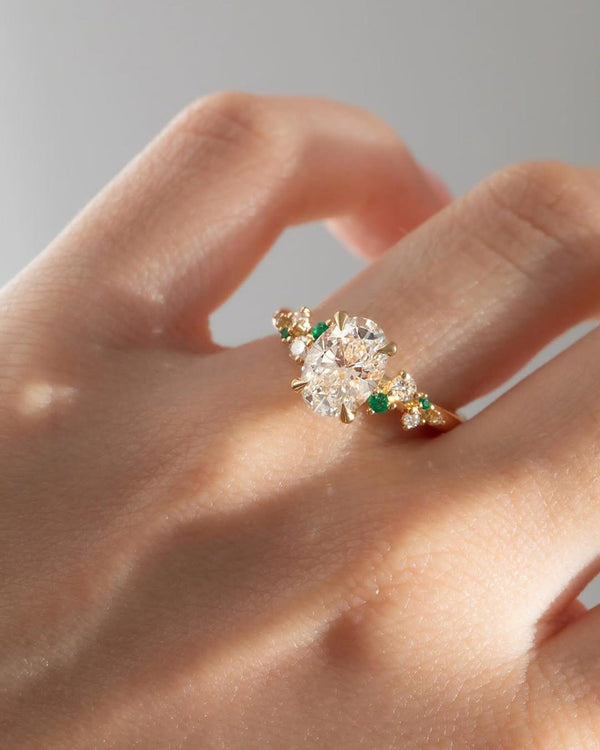
Leave a comment