Moissanite 101
What to Say When Somebody Asks
You do not owe anyone an explanation — but having a sentence ready makes the moment easier.
Written by the Mapple Gems workshop, Surat · Updated 14 October 2026
Short answer
Say “it’s moissanite” in the same tone you would say “it’s sapphire” — as a fact about the material rather than a confession. It is a distinct gemstone in its own right, not an imitation of anything, and it has been used in fine jewellery for decades. If you would rather not discuss it at all, “thank you” is a complete answer to “it’s beautiful”. Nobody is entitled to know what you paid for anything you wear.
This question comes up more than any technical one, and it is rarely really about gemmology. It is about anticipating a conversation and not wanting to be caught flat.
Almost all of the awkwardness comes from one framing error — treating moissanite as a substitute for something else rather than as its own material. A substitute invites comparison and comparison invites justification, which is why “it’s a moissanite, but honestly you cannot tell” lands badly: the sentence concedes that something is being got away with. Nothing is. Moissanite is silicon carbide, a distinct gemstone with its own properties — Mohs 9.25, and dispersion more than twice diamond’s, which is why it throws more coloured fire. Those are not deficiencies measured against diamond; they are its characteristics, in the same way an emerald’s inclusions are characteristics rather than faults. People take their cue from your tone, not your information. Said plainly — “it’s moissanite, I love the fire” — the reply is almost always “oh, it’s gorgeous”, because you have told them what to think about it. Said apologetically, you have invited them to have an opinion. The material has not changed between those two sentences. Only the framing has.
Sentences that work
| If they say | You can say |
|---|---|
| “It’s beautiful!” | “Thank you.” That is the whole answer |
| “What is the stone?” | “Moissanite — I love the fire in it.” |
| “Is it a real diamond?” | “It’s a real moissanite.” |
| “Isn’t that fake?” | “No — different stone, not an imitation.” |
| “How much was it?” | “We were really happy with it.” |
| “Why not a diamond?” | “This is what we wanted.” |
Notice that none of them are defensive and none require a lecture. A short answer delivered comfortably ends the topic; a long one signals that there is something to discuss.
The facts, if you do want them
Worth knowing even if you never use them, because confidence usually comes from knowing you could answer.
It is a genuine gemstone. Silicon carbide, first identified in a meteorite crater in the 1890s, and grown for jewellery since the 1990s. It is hard enough for daily wear at Mohs 9.25, second only to diamond among common gem materials — the practical consequence being that the metal around it wears out long before the stone does.
It does not cloud, fade or change colour over time; it is chemically inert. And no laboratory grades moissanite for cut, colour or clarity, which is why any grades attached to one are a seller’s assessment rather than a certified fact — useful to know, and rarely necessary to say out loud.
If somebody is genuinely rude
It happens occasionally, usually from someone who has just learned the word. Two things help.
Do not argue the gemmology. A person being rude about your ring is not going to be persuaded by refractive indices, and engaging turns a moment into a discussion. “I know what it is, and I love it” closes it without conceding anything.
And remember the asymmetry: they raised the subject of somebody else’s money. The awkwardness belongs to them, not to you. A pleasant, unbothered answer leaves it there.
If you would rather nobody knew
Also a legitimate position, and worth saying plainly: you are not obliged to disclose what your jewellery is made of. No more than you would announce a coat’s price.
Practically, the thing that draws attention is not the material but the fire — moissanite disperses light more than twice as strongly as diamond, and that is what people register even when they cannot name it. If you want it to read quieter, the levers are real and cost nothing at the design stage: a warmer metal, which competes with the dispersed colour; a step cut such as emerald or Asscher, which produces broad flashes rather than scattered fire; a calmer faceting style; and avoiding a moissanite halo around a moissanite centre, which multiplies the one property that makes it recognisable.
Size matters too: fire scales with the stone, so a 1 ct reads far more quietly than a 3 ct of identical quality.
And if it was a gift
One situation worth naming, because it is the hardest. If someone else chose the ring and you learn afterwards what the stone is, the question people quietly ask is whether it means something about how much thought went into it.
It does not. Where the money went is a choice, not a shortfall — and a great many people deliberately put it into the parts that decide whether a ring survives twenty years: gram weight, a 1.8 mm shank, a properly made head, a prong over every corner. Those are the things that fail on cheap rings with expensive stones, and they are invisible in every photograph.
Keep reading
Frequently asked questions
Do I have to tell people my ring is moissanite?
No. You are not obliged to disclose what your jewellery is made of, any more than a coat’s price. “Thank you” is a complete answer to a compliment, and nobody is entitled to know what you paid for anything you wear.
Is moissanite a fake diamond?
No — it is silicon carbide, a distinct gemstone with its own properties, not an imitation of anything. It sits at Mohs 9.25 and disperses light more than twice as strongly as diamond, which is a characteristic rather than a deficiency.
How do I answer “is it real?”
“It’s a real moissanite.” Said plainly, in the tone you would use for “it’s sapphire”, it ends the topic. People take their cue from tone rather than information, so a short comfortable answer works better than an explanation.
Can I make a moissanite less noticeable?
Yes, and the levers cost nothing at design stage: a warmer metal, a step cut such as emerald or Asscher, a calmer faceting style, and no moissanite halo around a moissanite centre. Fire also scales with size, so a smaller stone reads far quieter.
Tell us if you want it quieter or louder.
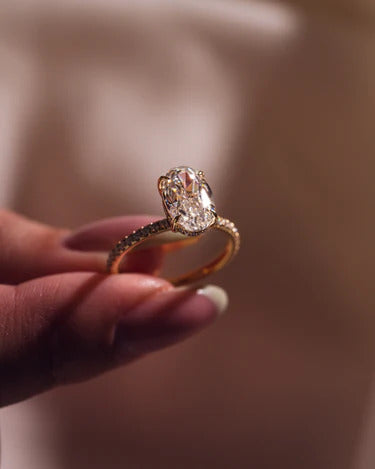
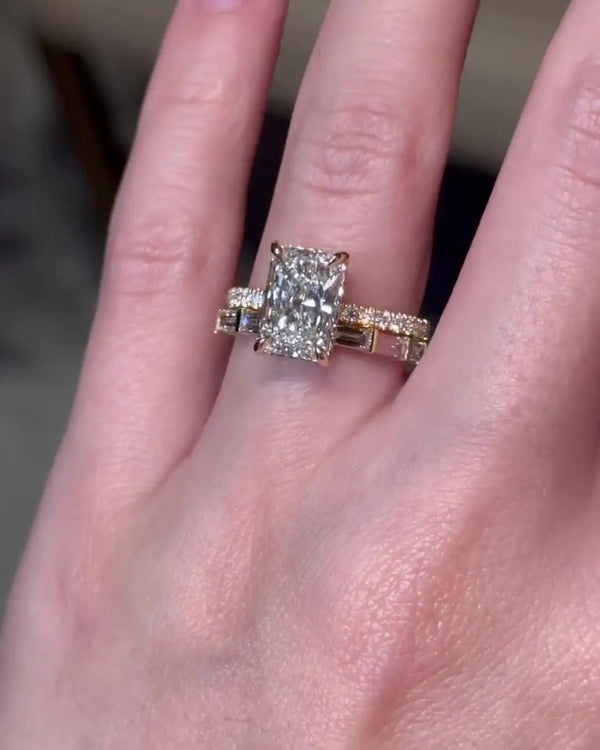
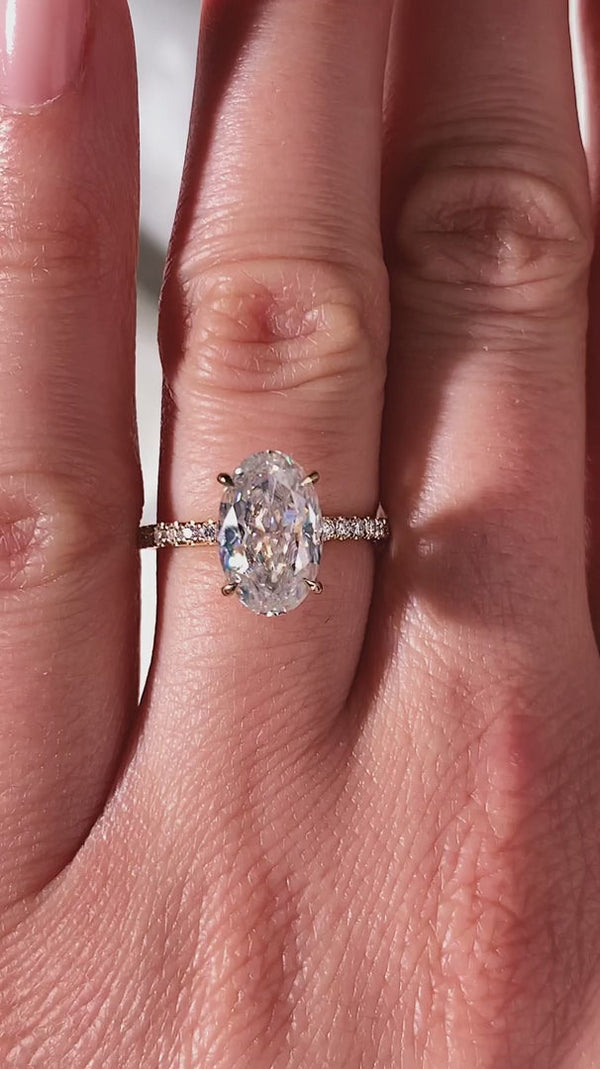
Metal, cut and faceting change how much a moissanite announces itself — and all three are decided before anything is made.
Leave a comment