Moissanite 101
Choosing the Metal Around a Moissanite
The cheapest way to change how a moissanite behaves is not the stone — it is what you set it in.
Written by the Mapple Gems workshop, Surat · Updated 19 October 2026
Short answer
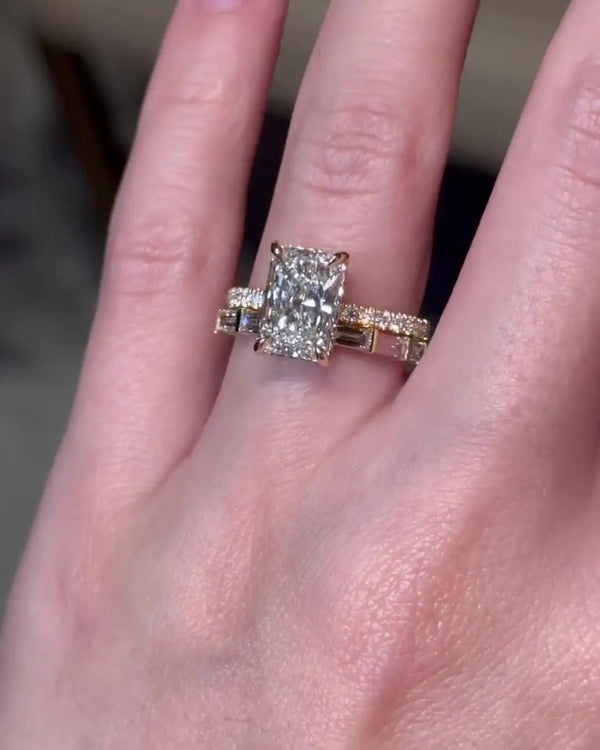
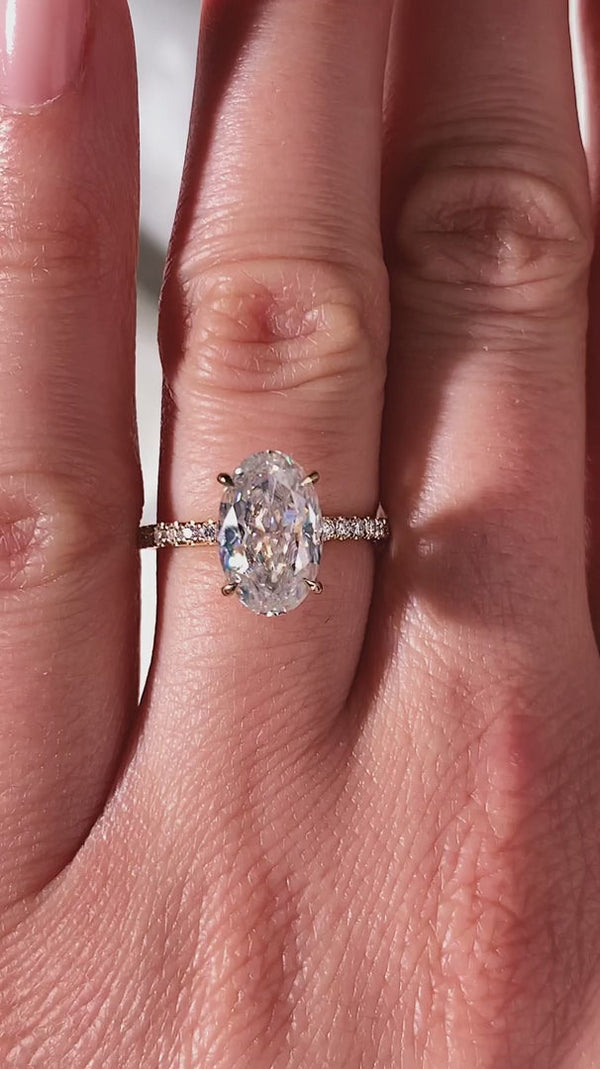
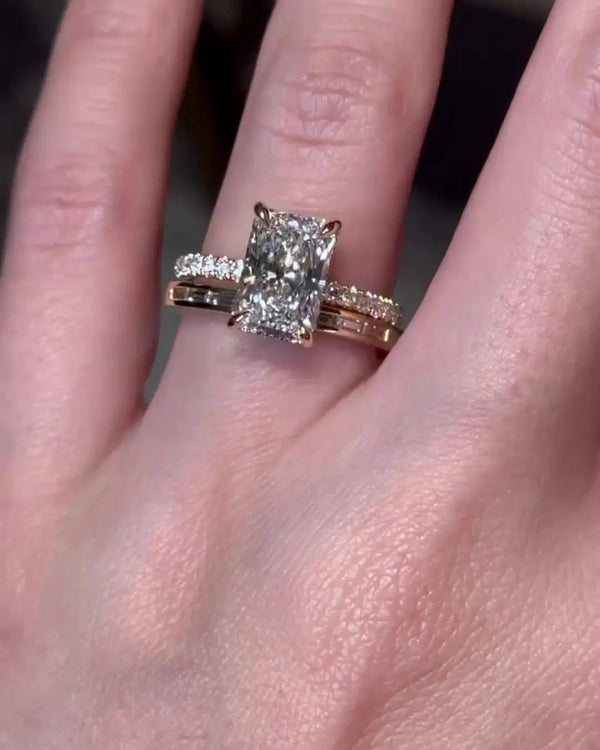
Warm metal calms a moissanite; white metal sharpens it. Yellow and rose gold reflect into the pavilion and soften the dispersed colour, so the stone reads quieter and more like a diamond in the same setting. White gold and platinum do the opposite — they give nothing back and let the fire read at full strength. Neither is right or wrong. It is a free lever, decided before anything is made, and it changes the ring more than half a millimetre of stone size would.
People choose metal on taste and then wonder why the stone looks different from the one they saw online. Often the stone is the same and the setting is not.
A stone returns whatever light reaches it, and a substantial share of that light arrives after bouncing off the metal directly underneath it — which is why the same moissanite in yellow gold and in platinum are effectively two different stones. Light enters through the crown, travels down into the pavilion and comes back out. In an open setting, some of it enters from below and from the sides, and what it meets there is the gallery, the prongs and the shank. Warm metal returns warm light, which mixes with the spectral colours moissanite produces and mutes them — the flashes become less distinct, more golden, closer to what a diamond does. White metal returns neutral light, which leaves the dispersion untouched and lets it read at full strength. This is the same mechanism that lets a warmer diamond colour grade look white in yellow gold, working on a different property. The practical value is that it is free. Metal is chosen at the start of every order anyway, so a buyer who knows this gets to decide how conspicuous their stone will be at no cost — and a buyer who does not simply finds out afterwards.
What each metal does
| Metal | Effect on the stone | Upkeep |
|---|---|---|
| Yellow gold | Calms the fire most | No plating ever |
| Rose gold | Calms; adds warmth | No plating; most copper |
| White gold | Fire at full strength | Replate every 1–2 years |
| Platinum | Fire at full strength | No plating; wears best |
| Two-tone (warm gallery) | White above, calmer below | As white gold |
The last row is the option almost nobody is offered: a white head and shank with a warm gallery underneath. The ring reads as white metal, and the warmth sits exactly where it affects the light. It costs nothing extra to specify at CAD.
Choosing by what you want
If you want it to read quietly: yellow or rose gold, a bezel or heavier setting so more warm metal surrounds the stone, and a step cut such as emerald or Asscher, which produces broad flashes rather than scattered fire. Avoid a moissanite halo around a moissanite centre, which multiplies the one property that makes the material recognisable.
If you like the fire: white gold or platinum, an open gallery, fine prongs rather than a bezel, and a brilliant cut. That is the combination that shows the stone at its most alive — and plenty of people choose moissanite precisely for it.
And remember size drives it more than anything: dispersion never develops below about 3 mm and grows with the stone. A 1 ct in white gold is quieter than a 3 ct in yellow.
The maintenance side of the decision
Worth weighing alongside the optical one, because it is a recurring cost.
White gold is not naturally white. It is a warmer alloy plated with rhodium, and that plating wears — typically needing replacement every one to two years, faster in heat and with frequent handwashing. Platinum needs none of that: it is white throughout, and it displaces rather than loses metal as it wears, which is why platinum prongs outlast gold ones.
Yellow and rose gold also need no plating. Rose gold carries the most copper, which makes it the most reactive to chlorine and salt — a rinse after swimming is sensible.
One option worth knowing: a platinum head on a gold ring. It puts the hardest-wearing metal where the prongs are, keeps the warm shank, and looks entirely deliberate.
If you are matching to something else
Match by fineness number rather than colour word — 585 or 750. Two yellows at different karats read as two slightly different colours in daylight, and the softer one abrades where they touch. The same applies to platinum against gold, which wears the gold one-directionally.
And if a wedding band will follow, decide the metal now and write the number down. It is one line of text that quietly guarantees everything bought over the next twenty years will sit together properly.
Keep reading
Frequently asked questions
Which metal makes moissanite look most like a diamond?
Yellow or rose gold. Warm metal reflects into the pavilion and mutes the dispersed colour, so the flashes become less distinct and closer to what a diamond does. White gold and platinum leave the fire at full strength.
Can I have white metal but a calmer stone?
Yes — a white head and shank with a warm gallery underneath. The ring reads as white metal while the warmth sits exactly where it affects the light. It costs nothing extra to specify at the CAD stage and is rarely offered.
Does white gold need replating?
Yes, typically every one to two years, because white gold is a warmer alloy plated with rhodium. Platinum, yellow gold and rose gold need no plating at all — worth weighing as a recurring cost alongside the optical choice.
Does the metal matter more than the stone size?
Size drives dispersion more — it never develops below about 3 mm and grows with the stone. But metal is the free lever: it changes how conspicuous a given stone reads, at no cost, and it is decided at the start of every order anyway.
Tell us whether you want it loud or quiet.
Metal, gallery and cut all pull in the same direction — and all three are free to choose before anything is made.
Leave a comment