Short answer: Lab-grown diamond prices have fallen roughly 28% over the past year, and the drop is driven by scaled-up production and falling wholesale costs — not by any problem with the diamonds themselves. For buyers, this is good news: you get a real, certified diamond for far less than a few years ago. It is not a "bubble bursting" in a way that should worry you as a shopper; it simply means today's prices are the best they have ever been.
What's actually happening to lab-grown prices?
The benchmark 1-carat round lab-grown diamond now sits around $770, down close to 28% year over year. A stone that might have cost $3,000–$5,000 a few years ago is well under $1,500 today at excellent quality. As growing capacity expanded and production methods (HPHT and CVD) matured, supply rose and prices fell — a normal pattern for any technology-driven product.
Is this a "bubble"?
Industry analysts describe the market as being at an inflection point, with the narrative around lab-grown shifting. But "inflection point" is about margins for retailers, not about value for you. A lab-grown diamond is still chemically, physically, and optically identical to a mined diamond. Lower prices mean the savings that used to sit in retailer margins now reach the customer.
What the price drop means if you're buying in 2026
Three practical takeaways. First, your budget goes further — the same money buys a larger or higher-quality stone than it did in 2023. Second, don't buy a lab-grown diamond as an investment; like most jewelry, it holds limited resale value, and that's fine when you're buying for beauty and meaning. Third, focus on cut quality and shape rather than chasing the lowest price per carat — a well-cut stone outperforms a poorly cut larger one.
How to shop smart right now
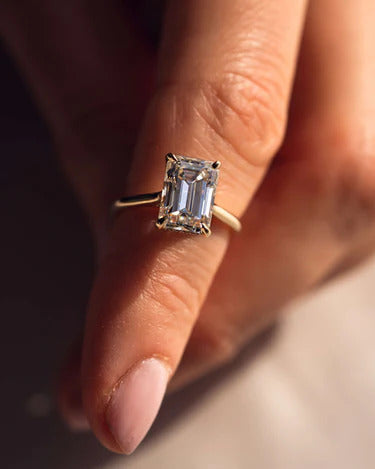
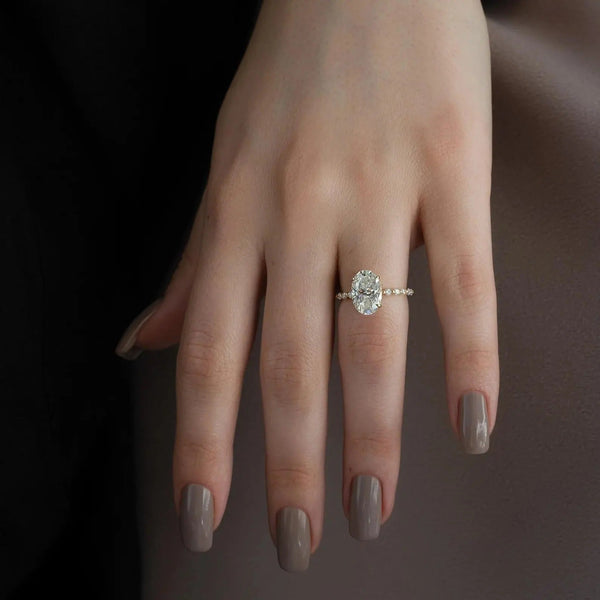
Prioritize an IGI- or GIA-certified stone, choose a shape that maximizes visual size (elongated shapes look larger per carat), and buy from a maker who prices transparently. At Mapple Gems, every piece is made to order, so you choose the exact stone, carat, and setting for your budget. Explore our lab-grown diamond collection or engagement rings to see current options.
Frequently asked questions
Are lab-grown diamonds going to keep getting cheaper?
Prices have been falling but the rate of decline has slowed. Nobody can guarantee future pricing, but 2026 prices are already dramatically lower than a few years ago, so waiting indefinitely for a better deal carries its own risk.
Does a cheaper price mean lower quality?
No. The price drop reflects cheaper production and thinner retail margins, not lower-quality stones. You can still buy D-color, VVS-clarity, ideal-cut lab-grown diamonds today — just for less.
Is 2026 a good time to buy a lab-grown diamond?
For value, yes. Prices are near historic lows and quality is high. Buy for the beauty and meaning of the piece rather than as a financial investment.
Leave a comment