Lab Grown Diamonds
Do Lab Grown Diamonds Have Inclusions?
Yes — and they are different in character from mined ones, which is how labs identify them.
Written by the Mapple Gems workshop, Surat · Updated 30 August 2026
Short answer
Yes. Lab grown diamonds are crystals, and crystals grow with imperfections. The character differs from mined stones: HPHT stones often show metallic flux inclusions from the growth catalyst, while CVD stones tend toward non-metallic, graphitic ones. These differences are part of how a laboratory identifies a stone as lab grown. Practically, the same clarity advice applies as for mined diamonds: buy eye-clean rather than the highest grade, and pay attention to where inclusions sit rather than just how many.
There is a persistent assumption that lab grown means flawless. It does not, and a seller implying otherwise is either misinformed or hoping you are. What is true is that lab grown production skews cleaner on average than mined production — which is a supply fact, not a property of the material.
Why any diamond has inclusions
A diamond is a crystal lattice built atom by atom, whether in the earth over geological time or in a chamber over weeks. Growth is never perfect. Foreign material gets trapped, the lattice shifts, strain accumulates.
What differs between mined and lab grown is what gets trapped, because the growth environments are entirely different.
| Origin | Typical inclusions |
|---|---|
| Mined | Mineral crystals, feathers, clouds, pinpoints from the surrounding rock |
| HPHT lab grown | Metallic flux traces from the growth catalyst — sometimes magnetic |
| CVD lab grown | Non-metallic, often graphitic or pinpoint-like |
These differences are one of the ways laboratories identify origin, alongside growth structure and spectroscopy. They are a signature, not a defect.
Position beats grade, and this is where clarity money is actually wasted. An SI1 with a single inclusion tucked under a prong at the girdle is invisible forever. A VS2 with a smaller inclusion sitting dead centre under the table is the first thing you will see every morning for the rest of your life. The grade is a summary of size, number and visibility to a grader under 10× — it does not tell you where the inclusion is on the stone. Ask for the plot diagram on the report, or ask the seller directly where the main inclusion sits. That question saves more money than any grade comparison.
What clarity to buy
Same logic as any diamond, with one adjustment for shape.
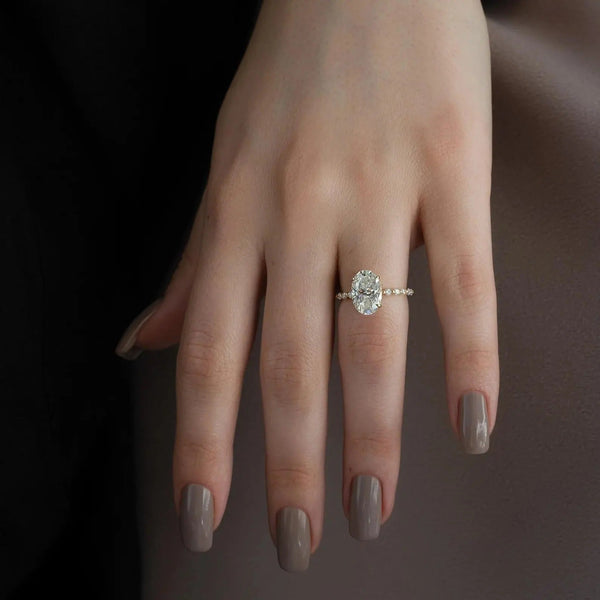
- Brilliant cuts — round, oval, pear, crushed-ice cushion. VS1 to SI1 is almost always eye-clean, because constant flashing breaks up anything small. Paying up to VVS buys a line on the report.
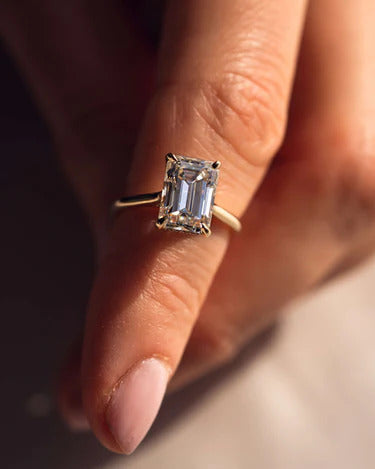
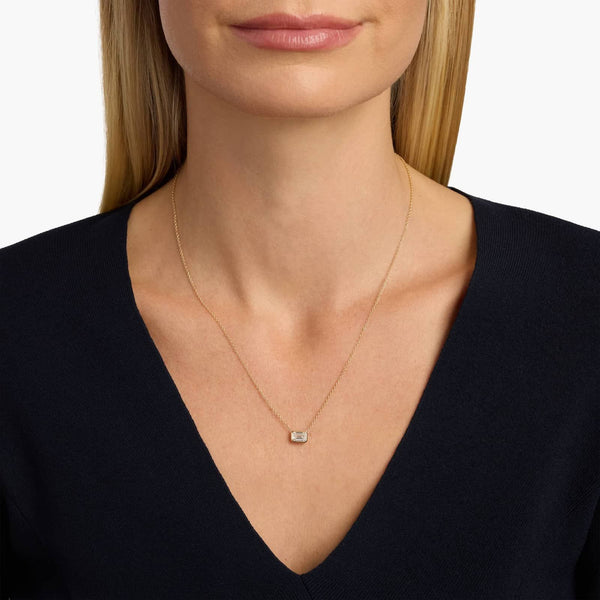
- Step cuts — emerald, Asscher. VS2 as a floor. The open table is a window and inclusions show.
- Chunky antique-style cushions — treat like step cuts. Larger facets mean clearer views in.
- Melee and accent stones — not individually graded anywhere, in any material. Ask for the parcel range instead.
Do inclusions affect durability?
Usually not, with one specific exception worth knowing.
Most inclusions are cosmetic and have no structural consequence. The exception is a large feather — a fracture within the stone — that reaches the surface, particularly near the girdle or a point. Under a sharp knock, that is a plausible failure line.
This is uncommon at VS and better grades, and it is exactly the kind of thing a grading report’s plot diagram shows. If you are looking at an SI-graded stone with a surface-reaching feather at a corner or point, that is a reason to look at a different stone — not because of how it looks, but because of where it is.
A note on “flawless” claims
Some sellers describe lab grown stones as flawless or perfect as a category. Treat this the way you would any absolute claim: ask for the report.
Flawless is a specific grade meaning no inclusions visible under 10× magnification to a trained grader. It exists in lab grown production, it is not the norm, and it commands a price. A seller using the word loosely across a whole catalogue is using it as marketing rather than as a grade.
And moissanite, for comparison
Moissanite is grown too, and it can contain inclusions — typically fine needle-like features visible under magnification. Because it is not graded on the diamond clarity scale by any major laboratory, you will not get an FL–I3 grade for it.
In practice, production quality is high enough that eye-visible inclusions in moissanite are uncommon. But the same rule applies: ask for video through the table, especially in a step cut where there is nowhere for anything to hide.
Keep reading
- CVD vs HPHT: does growth method matter?
- Certified vs uncertified lab grown diamonds
- Emerald cut engagement rings — where clarity matters most
Frequently asked questions
Are lab grown diamonds flawless?
No, not as a category. They are crystals and crystals grow with imperfections. Flawless is a specific grade meaning no inclusions visible under 10× magnification, it exists in lab grown production but is not the norm, and it commands a price. A seller applying the word across a whole catalogue is using it as marketing.
What kind of inclusions do lab grown diamonds have?
HPHT-grown stones often show metallic flux traces from the growth catalyst, sometimes magnetic. CVD stones tend toward non-metallic, graphitic or pinpoint inclusions. Mined diamonds instead contain mineral crystals and feathers from the surrounding rock. These differences help laboratories identify a stone’s origin.
Do inclusions weaken a diamond?
Usually not — most are purely cosmetic. The exception is a large feather, or internal fracture, that reaches the surface near the girdle or a point, which is a plausible failure line under a sharp knock. This is uncommon at VS grades and better, and the report’s plot diagram shows exactly where such features sit.
Does clarity grade tell me where the inclusions are?
No, and that is why position matters more than grade. An SI1 with its inclusion tucked under a prong is invisible forever, while a VS2 with a smaller one dead centre under the table is visible daily. Ask for the plot diagram on the report, or ask the seller directly where the main inclusion sits.
Ask us where the inclusion is.
Not just the grade. We will send the plot diagram and tell you honestly whether it will ever be visible.
Leave a comment