Diamond Anatomy: Facets, Sides & Cut Quality
What gives a stone its fire? A friendly tour of facets, anatomy, and why cut quality is king.
A diamond's sparkle isn't magic — it's geometry. Understanding a stone's anatomy explains why two diamonds of the same size can look so different.
What are facets?
Facets are the flat, polished surfaces cut into a stone. They act like tiny mirrors: light enters, bounces around inside, and returns to your eye as brilliance and fire. A standard round brilliant has 57 or 58 facets arranged in a precise pattern.
The main parts of a diamond
| Part | Where it is |
|---|---|
| Table | The large flat facet on top. |
| Crown | The angled top section above the girdle. |
| Girdle | The thin band around the widest point. |
| Pavilion | The lower section that reflects light back up. |
| Culet | The tiny point (or facet) at the very bottom. |
Why cut quality is king
When facets are cut at the right angles and proportions, light bounces back beautifully. Cut too shallow or too deep, and light leaks out the bottom, leaving the stone dull. That's why cut quality affects sparkle more than any other factor.
This is also where moissanite shines: it's precision-cut for brilliance, and its higher refractive index gives it even more fire than a diamond. Learn more in our 4Cs guide.
FAQs
How many facets does a diamond have?
A standard round brilliant has 57 or 58 facets; other shapes vary.
Why do some diamonds sparkle more than others?
Cut quality — the precision of the facet angles and proportions — is the main reason.
Brilliance by Design
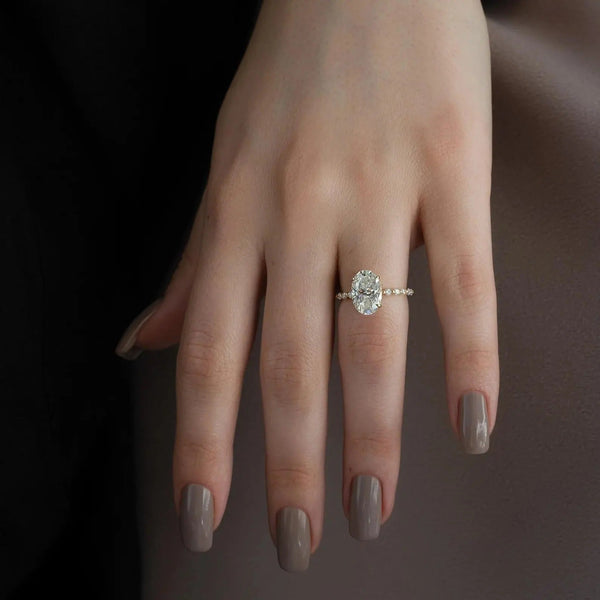
Precision-cut moissanite engineered for maximum fire and sparkle.
Shop the Collection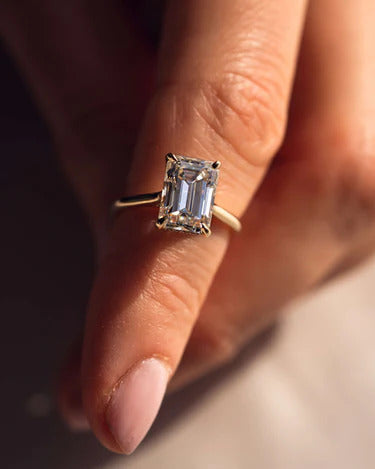

Leave a comment