Engagement Rings
The Gallery: The Part of the Ring You Never See
Underneath the stone is where light gets in, where dirt collects, and where good work shows.
Written by the Mapple Gems workshop, Surat · Updated 2 September 2026
Short answer
The gallery is the structure beneath the stone that connects the head to the shank. Open galleries let light in from underneath and are easy to clean; closed or solid-back galleries protect the stone but darken it and trap residue. The gallery also sets the profile height, decides whether a wedding band sits flush, and is where a maker’s standard of work is most visible — because it is the part nobody photographs.
Almost every ring conversation happens from above: the stone, the setting style, the shank. The gallery is the view from below, and it quietly determines several things people later care about.
What it actually is
Between the stone and the finger sits a small piece of architecture. The basket or head holds the stone; the gallery rail is the band of metal running around beneath the girdle; the prongs rise from it; and the whole assembly meets the shank at the shoulders.
How much metal is used there, and how it is shaped, is the gallery. Some are barely there. Some are elaborate pieces of decoration in their own right.
| Gallery type | Effect on the stone | Practical note |
|---|---|---|
| Open / minimal | Maximum light from below | Easiest to clean; lowest profile |
| Decorative / pierced | Good light, some obstruction | Vintage character; detail survives well down there |
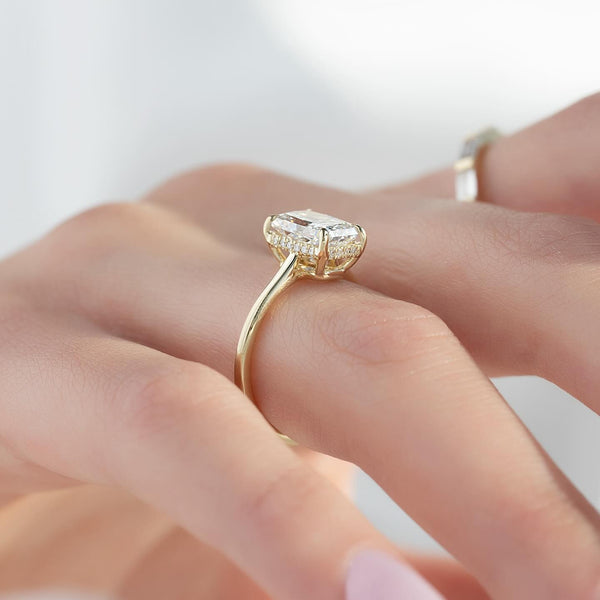
| Hidden halo | Adds sparkle from the side view | Raises height; complicates band fit |
| Solid / closed back | Blocks light — stone reads darker | Traps residue; hard to clean |
| Cathedral shoulders | Neutral | Elegant, but usually needs a contour band |
Ask for a photograph of the ring from underneath. This is the single most revealing image of any piece of jewellery and nobody publishes it, because it is not a selling angle. From below you can see whether the gallery rail is even, whether prongs are seated cleanly into it, whether solder joins are tidy or lumpy, and whether the metal has been finished at all or just left as cast. A workshop will send it without hesitation. A reseller usually cannot, because they have never had the piece in their hands.
Why open galleries matter more than people think
Three practical reasons, and only the first is about sparkle.
- Light. A faceted stone returns light entering from the sides and beneath, not only the top. A closed back removes that path, and the stone reads noticeably duller — particularly in a step cut, and particularly with moissanite, where side-entering light contributes to the fire.
- Cleaning. Soap, hand cream and skin oil collect directly under the stone. With an open gallery a soft brush reaches it in seconds. With a closed back, it accumulates where nothing can reach and the ring dulls permanently from beneath.
- Weight and height. Metal in the gallery adds height and grams without being visible. A lighter, more open gallery sits lower and costs less to make.
The main argument for a closed back is protecting a stone that is fragile or set very low — a real consideration for softer gemstones, and rarely necessary for moissanite or diamond, which are hard enough not to need it.
The gallery decides the band fit
Worth connecting explicitly, because people treat these as separate problems.
Whether a straight wedding band sits flush depends almost entirely on what the gallery does near the shank. A high basket, a hidden halo or cathedral shoulders all extend into the space beside the shank — which is exactly where the band wants to be.
So if you already know you want a plain straight band, say so before the ring is designed. A gallery can usually be lowered a millimetre or two at the wax stage without changing how the ring looks from above, and that solves the problem before it exists.
Where decoration belongs
An interesting quirk: the gallery is the best place to put fine detail, precisely because it is protected.
Milgrain on the outer edge of a band wears smooth within years. The same milgrain on a gallery rail, tucked under the head where nothing rubs it, stays crisp almost indefinitely. The same is true of engraving and pierced work.
So if you want a ring with vintage character that will still have it in twenty years, gallery detail is the durable version of that wish. It is also a private one — visible mainly to the wearer, which plenty of people prefer.
What to ask for
- Is the gallery open or closed-back? Choose open unless there is a specific reason not to.
- The side elevation of the render, showing how high the gallery sits.
- A view from underneath, on the finished piece.
- Whether it can be lowered, if band fit or profile height matters to you.
- Whether decoration can go there instead, if you want detail that lasts.
Keep reading
Frequently asked questions
What is the gallery on a ring?
The structure beneath the stone connecting the head to the shank — the basket, the gallery rail running under the girdle, and the shoulders where it meets the band. It determines how much light reaches the stone from below, the ring’s profile height, and whether a wedding band will sit flush.
Is an open or closed back better for a ring?
Open, in almost all cases. It lets light enter the stone from beneath, it can be cleaned with a soft brush where a closed back traps residue permanently, and it sits lower and weighs less. A closed back mainly helps with fragile softer gemstones, which moissanite and diamond are not.
How can I judge the quality of a ring’s construction?
Ask for a photograph from underneath. It is the most revealing image of any piece and nobody publishes it, because it is not a selling angle. From below you can see whether the gallery rail is even, whether prongs seat cleanly, whether solder joins are tidy, and whether the metal was finished or left as cast.
Where should decorative detail go on a ring?
On the gallery, if you want it to last. Milgrain or engraving on the outer edge of a band wears smooth within years, while the same detail on a gallery rail sits protected under the head and stays crisp almost indefinitely. It is also more private — visible mainly to the wearer.
Ask us for the view from underneath.
It is the angle nobody photographs, and the one that shows you how a ring is actually built.
Leave a comment