


 Step 1
Design & Selection
We finalise your design and hand-pick the certified center stone.
 Save 20%
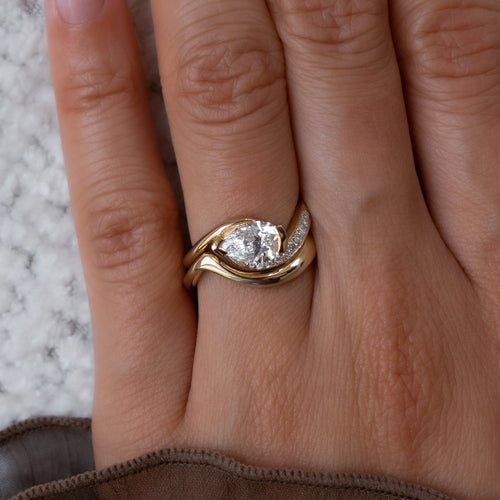
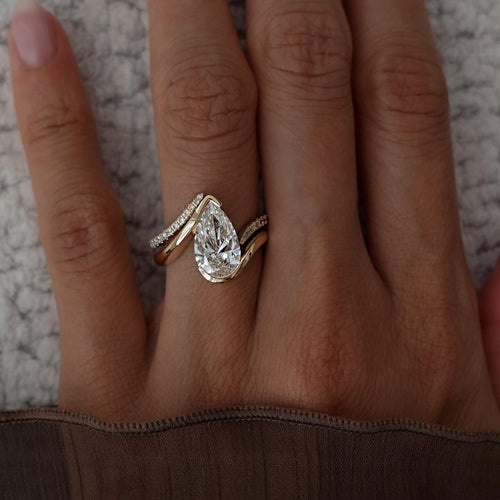
A large pear lab grown diamond in five claws, set on a crossover twist band where a diamond lined strand and a polished strand wrap around each other. With a bigger center, the slim twisted shank keeps the ring from looking heavy while the pear takes up most of the finger width.
Big pears look best on a light band. A thick shank competes with the stone, while a narrow one lets the diamond sit almost on its own. This ring uses two thin strands that cross over each other beneath the head, so the metal stays delicate even when the center is at the top of the size range.
The pear is held by five claws. The close front photograph shows them clearly: a pair at the shoulders of the rounded end, a pair at the widest point of the sides, and a single claw folded over the tip. The claws are rounded and polished, and they sit tight to the girdle so they do not snag. Underneath, an open basket lets light into the base of the stone.
One strand of the crossover band is set with a row of small round diamonds about a millimeter wide. The other is plain. They twist around each other along the top of the ring and cross under the head, which means the pave line approaches the pear from slightly different angles on each side. In the profile photograph you can see how high the head sits above the crossing and how the lower shank is left plain.
Four photographs show the ring on the hand, two against a red sleeve and two against lilac, which give a good sense of how much of the finger a large pear covers. The white and rose gold front views complete the set.
The pear cut is a teardrop that marries the brilliant faceting of a round with the tapered point of a marquise. Worn with the point toward the fingernail it makes the finger look longer and slimmer. It is one of the shapes we are asked for most often, and every pear we set is cut to excellent proportions and graded by IGI.
This is the same twisted pave pear design as our other pear twist listings, photographed with a noticeably larger center stone and extra on hand shots. The band, claws and pave strand are unchanged, so the difference you see here is the size of the pear, which shows how the design looks at the upper end of our carat range.
A lab grown diamond is a real diamond. It is pure crystallized carbon with the same cubic crystal structure as a mined diamond, grown above ground by one of two methods: chemical vapor deposition, known as CVD, or high pressure high temperature growth, known as HPHT. The Federal Trade Commission in the United States recognizes it as a diamond, and the gem laboratories grade it on the same color, clarity and cut scales used for mined stones.
Here is what that means for a ring you will wear every day:
It is not moissanite, not cubic zirconia and not a simulant. Those are different materials that only imitate the look of diamond. The difference between a lab grown diamond and a mined diamond is origin and price, not chemistry, optics or durability.
Every center diamond we set is graded E color and VVS2 clarity, on every metal and every carat weight. E sits in the colorless range, one step below D, and looks icy white to the eye in any metal, including yellow and rose gold. VVS2 means very very slightly included: any inclusions are so small that a trained grader has difficulty finding them under ten times magnification, and nothing can be seen with the naked eye. Cut, polish and symmetry are graded excellent. Accent diamonds are matched to the same E color and VVS2 clarity, so the whole ring reads as one even white.
The center diamond comes with a grading report from IGI, the International Gemological Institute, one of the largest independent diamond grading laboratories in the world, with laboratories in Antwerp, New York, Mumbai and Surat. There is no extra charge for it on any metal or any carat weight. The report records the shape and cutting style, the measurements, the carat weight, the color grade, the clarity grade, the cut, polish and symmetry, and it states in writing that the stone is laboratory grown. The report number is laser inscribed on the girdle of the diamond, so the certificate and the stone can always be matched, and it can be checked online on the IGI website at any time.
Keep the report with the ring. It is the document your insurer and any future valuer will ask for, and it is independent confirmation of exactly what you bought.
This ring is made to order in ten metals, so the version you choose is the version we build. There is no plating over a base metal and no filled or bonded gold anywhere in the range.
Yellow gold is gold alloyed with silver and copper. Rose gold takes more copper, which gives the warm pink tone and also makes it the hardest of the three colors. White gold is alloyed with palladium or nickel and then finished with rhodium plating, which is what gives it that bright white face. Rhodium wears thin over time and wants redoing roughly every one to two years, which any jeweler can do quickly and cheaply. Every gold ring is stamped with its karat mark.
This ring is offered with a 2, 3, 4 or 5 carat center diamond. Carat is a unit of weight, 0.2 grams, and the size across the face grows more slowly than the weight, so a 4 carat pear is noticeably larger than a 2 carat but not twice as wide. The photographs may show a different carat size from the one you choose. The version you select is the one we make.
Mapple Gems is a family run jewelry workshop in Surat, in Gujarat, India. Surat is where roughly nine out of every ten diamonds in the world are cut and polished, and it is also one of the main centers of lab grown diamond production. We are not a dropshipper and we do not hold finished stock. When your order comes in, a goldsmith casts your metal in your size, a setter places every diamond by hand under a microscope, and the piece is polished, checked against the IGI report and photographed before it leaves us.
Making takes ten to fourteen working days for most orders. Shipping is free worldwide and fully insured, and it is normally three to seven working days once the ring has left the bench. Buying direct from the bench is the reason a ring like this costs what it does here rather than several times more on a high street.
Diamond attracts skin oil and hand cream, and a film of it on the underside of the stone is the single most common reason a ring looks dull. Soak the ring for ten minutes in warm water with a drop of mild dish soap, brush gently behind and underneath the stones with a soft toothbrush, rinse and pat dry with a lint free cloth. Once every two weeks is plenty.
Take the ring off before the gym, gardening, swimming pools and hot tubs, and before using bleach or oven cleaner. Chlorine attacks the alloys in gold over time and it will do nothing good to sterling silver. Store it on its own, because diamond will scratch other jewelry. Have the claws checked by a jeweler once a year, which takes two minutes and is usually free. White gold will want its rhodium refreshed every one to two years.
Yes. The two strands join into a solid head and the claws are made thicker for bigger centers, so a 4 or 5 carat pear is held as securely as a 2 carat.
A pear needs a claw on its point. Four claws would leave the tip exposed, and the tip is where a pear diamond is most likely to chip.
Slightly, yes. A larger pear is deeper, so the basket is taller, but the ring still sits comfortably and a slim band can be worn beside it.
The front and hand photographs show the design with a larger pear, closest to our 3 carat option. Our 4 and 5 carat choices will look bolder still on the same band.
Yes. A lab grown diamond is chemically, physically and optically the same as a mined diamond: pure carbon, 10 on the Mohs scale, with the same brilliance and fire. The only difference is where it formed, which is why it is graded by the same laboratories on the same scales.
The center diamond is E color and VVS2 clarity on every metal and every carat size. E is in the colorless range and VVS2 means no inclusion is visible to the eye, and very hard to find even under ten times magnification.
Yes. The center diamond comes with an IGI grading report at no extra charge. It confirms the carat weight, color, clarity and cut, states that the diamond is lab grown, and matches the report number laser inscribed on the girdle.
Yes. A lab grown diamond tests as diamond on every standard tester because it is diamond. Telling lab grown from mined needs advanced laboratory equipment, and the IGI report already states the origin.
No. Moissanite is silicon carbide, a different gemstone with more rainbow fire and a lower hardness. This ring is set with lab grown diamond, which is carbon, grades on the diamond scale and tests as diamond.
We make sizes 1.5 to 13, including every half size. Choose your size at checkout. If you are unsure, measure a ring that already fits the correct finger, or ask a local jeweler to size you, and remember that fingers run slightly larger in hot weather and late in the day.
In most cases yes. Any jeweler can work on a plain section of shank. Resizing is harder where the band is set with stones all the way round, and moving more than about two sizes is better done by remaking the shank. Contact us first and we will tell you what is possible.
Every ring is made to order in our workshop in Surat. Allow ten to fourteen working days for making, plus three to seven working days for free insured worldwide shipping. If you have a proposal date, tell us when you order and we will confirm whether we can meet it.
It is solid throughout. 925 sterling silver is 92.5 percent pure silver, and the gold options are solid 10K, 14K or 18K alloy stamped with the karat mark. Nothing in this range is gold plated, gold filled or gold bonded. White gold carries a standard rhodium finish.
Yes, free of charge. Tell us the wording when you order and we will engrave the inside of the shank. Most people choose a date, initials or a short phrase of up to about twenty five characters.
Returns are accepted within thirty days of delivery on an unworn ring in its original packaging, with the IGI report. Because every piece is made to order, engraved rings are handled case by case. Write to us and we will sort it out.
Compare ring sizes across international standards — match your size from any region.
| USA · Canada | UK · Australia Ireland · NZ |
Japan · India China · S. Africa |
Spain · Italy Neth. · Switz. |
Inside Ø & Circumf. (mm) |
|---|---|---|---|---|
| 4 | H | 7 | 6.75 | 14.88 & 46.80 |
| 4.25 | H.5 | 7.5 | 15.09 & 47.40 | |
| 4.5 | I | 8 | 8 | 15.29 & 48.00 |
| 4.75 | J | 8.75 | 15.49 & 48.70 | |
| 5 | J 1/2 | 9 | 9.25 | 15.70 & 49.30 |
| 5.25 | K | 10 | 15.90 & 50.00 | |
| 5.5 | K 1/2 | 10 | 10.5 | 16.10 & 50.60 |
| 5.75 | L | 11.25 | 16.31 & 51.20 | |
| 6 | L 1/2 | 11 | 11.75 | 16.51 & 51.90 |
| 6.25 | M | 12 | 12.5 | 16.71 & 52.50 |
| 6.5 | M 1/2 | 13 | 13.25 | 16.92 & 53.10 |
| 6.75 | N | 13.75 | 17.12 & 53.80 | |
| 7 | N 1/2 | 14 | 14.5 | 17.32 & 54.40 |
| 7.25 | O | 15 | 17.53 & 55.10 | |
| 7.5 | O 1/2 | 15 | 15.75 | 17.73 & 55.70 |
| 7.75 | P | 16.25 | 17.93 & 56.30 | |
| 8 | P 1/2 | 16 | 17 | 18.14 & 57.00 |
| 8.25 | Q | 17.5 | 18.34 & 57.60 | |
| 8.5 | Q 1/2 | 17 | 18.25 | 18.54 & 58.30 |
| 8.75 | R | 19 | 18.75 & 58.90 | |
| 9 | R 1/2 | 18 | 19.5 | 18.95 & 59.50 |
| 9.25 | S | 20.25 | 19.15 & 60.20 | |
| 9.5 | S 1/2 | 19 | 20.75 | 19.35 & 60.80 |
| 9.75 | T | 21.5 | 19.56 & 61.40 | |
| 10 | T 1/2 | 20 | 22 | 19.76 & 62.10 |
| 10.25 | U | 21 | 22.75 | 19.96 & 62.70 |
| 10.5 | U 1/2 | 22 | 23.25 | 20.17 & 63.40 |
| 10.75 | V | 24 | 20.37 & 64.00 | |
| 11 | V 1/2 | 23 | 24.75 | 20.57 & 64.60 |
| 11.25 | W | 25.25 | 20.78 & 65.30 | |
| 11.5 | W 1/2 | 24 | 26 | 20.98 & 65.90 |
| 11.75 | X | 26.5 | 21.18 & 66.60 | |
| 12 | X 1/2 | 25 | 27.25 | 21.39 & 67.20 |
| 12.25 | Y | 27.75 | 21.59 & 67.80 | |
| 12.5 | Z | 26 | 28.5 | 21.79 & 68.50 |
| 12.75 | Z 1/2 | 29 | 22.00 & 69.10 | |
| 13 | 27 | 29.75 | 22.20 & 69.70 | |
| 13.25 | Z1 | 30.5 | 22.40 & 70.40 | |
| 13.5 | 31 | 22.61 & 71.00 | ||
| 13.75 | Z2 | 31.75 | 22.81 & 71.70 | |
| 14 | Z3 | 32.25 | 23.01 & 72.30 | |
| 14.25 | 33 | 23.22 & 72.90 | ||
| 14.5 | Z4 | 33.5 | 23.42 & 73.60 | |
| 14.75 | 34.25 | 23.62 & 74.20 | ||
| 15 | 34.75 | 24.23 & 76.10 |
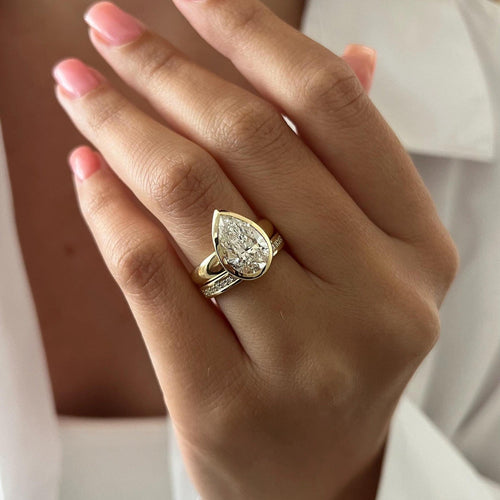 −20%Pear CutPear Cut Lab Grown Diamond Bezel Solitaire Bridal Ring Set with Wide Shank and Channel Set Band in Silver, 10K, 14K and 18K Gold
$775.98
−20%Pear CutPear Cut Lab Grown Diamond Bezel Solitaire Bridal Ring Set with Wide Shank and Channel Set Band in Silver, 10K, 14K and 18K Gold
$775.98
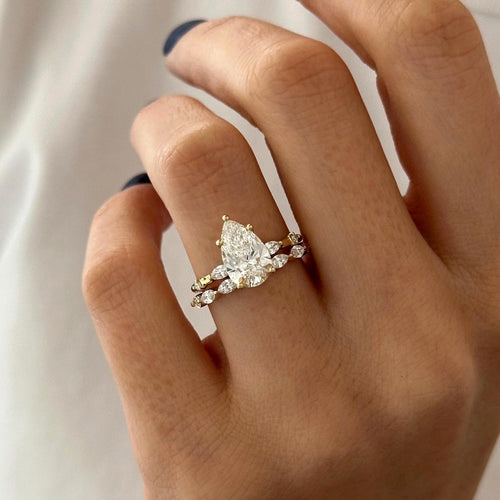 −20%Pear CutPear Cut Lab Grown Diamond Marquise Accent Bridal Ring Set with Marquise Station Band in Silver, 10K, 14K and 18K Gold
$764.34
−20%Pear CutPear Cut Lab Grown Diamond Marquise Accent Bridal Ring Set with Marquise Station Band in Silver, 10K, 14K and 18K Gold
$764.34
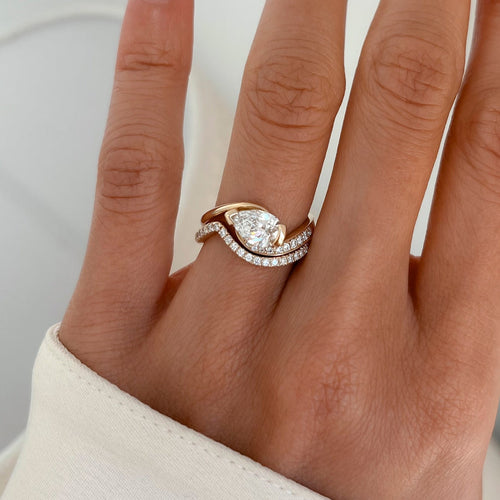 −20%Pear CutPear Cut Lab Grown Diamond East-West Half Pave Swirl Bridal Ring Set with Slim Curved Pave Band in Silver, 10K, 14K and 18K Gold
$792.72
−20%Pear CutPear Cut Lab Grown Diamond East-West Half Pave Swirl Bridal Ring Set with Slim Curved Pave Band in Silver, 10K, 14K and 18K Gold
$792.72
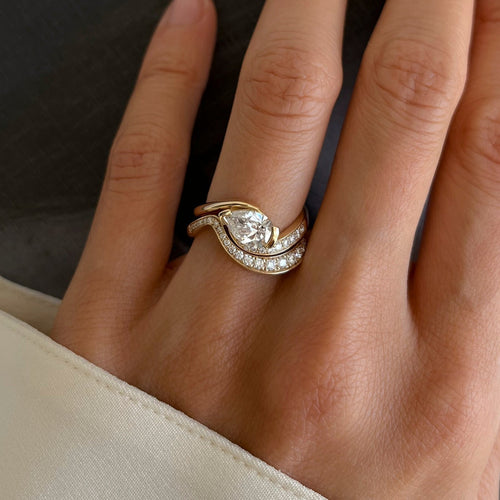 −20%Pear CutPear Cut Lab Grown Diamond East-West Half Pave Swirl Bridal Ring Set with Bold Graduated Pave Band in Silver, 10K, 14K and 18K Gold
$782.15
−20%Pear CutPear Cut Lab Grown Diamond East-West Half Pave Swirl Bridal Ring Set with Bold Graduated Pave Band in Silver, 10K, 14K and 18K Gold
$782.15
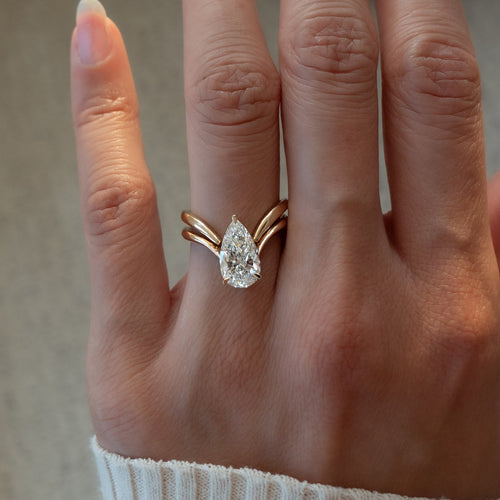 −20%Pear CutPear Cut Lab Grown Diamond V Shank Solitaire Bridal Ring Set with Plain Gold Chevron Band in Silver, 10K, 14K and 18K Gold
$769.34
−20%Pear CutPear Cut Lab Grown Diamond V Shank Solitaire Bridal Ring Set with Plain Gold Chevron Band in Silver, 10K, 14K and 18K Gold
$769.34
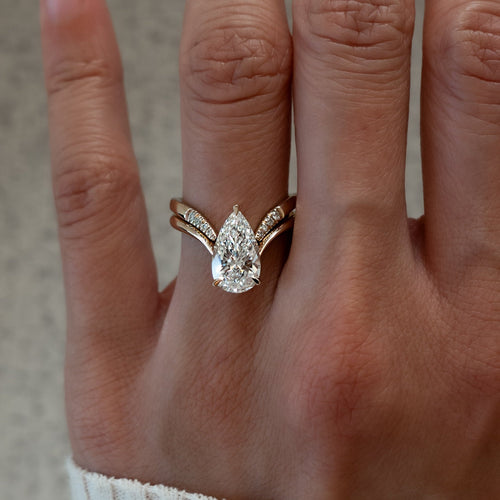 −20%Pear CutPear Cut Lab Grown Diamond V Shank Solitaire Bridal Ring Set with Pave Tip Chevron Band in Silver, 10K, 14K and 18K Gold
$790.01
−20%Pear CutPear Cut Lab Grown Diamond V Shank Solitaire Bridal Ring Set with Pave Tip Chevron Band in Silver, 10K, 14K and 18K Gold
$790.01
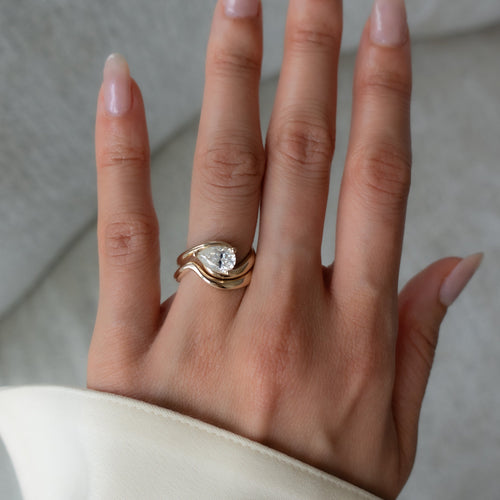 −20%Pear CutPear Cut Lab Grown Diamond East-West Swirl Bypass Bridal Ring Set with Plain Wave Gold Band in Silver, 10K, 14K and 18K Gold
$775.25
−20%Pear CutPear Cut Lab Grown Diamond East-West Swirl Bypass Bridal Ring Set with Plain Wave Gold Band in Silver, 10K, 14K and 18K Gold
$775.25
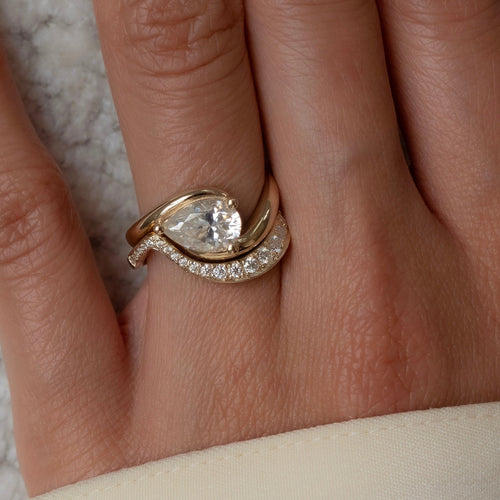 −20%Pear CutPear Cut Lab Grown Diamond East-West Swirl Bypass Bridal Ring Set with Graduated Pave Wave Band in Silver, 10K, 14K and 18K Gold
$770.29
−20%Pear CutPear Cut Lab Grown Diamond East-West Swirl Bypass Bridal Ring Set with Graduated Pave Wave Band in Silver, 10K, 14K and 18K Gold
$770.29
 −20%Pear CutPear Cut Lab Grown Diamond East-West Half Pave Swirl Bridal Ring Set with Plain Wave Band in Silver, 10K, 14K and 18K Gold
$781.92
−20%Pear CutPear Cut Lab Grown Diamond East-West Half Pave Swirl Bridal Ring Set with Plain Wave Band in Silver, 10K, 14K and 18K Gold
$781.92
 −20%Pear CutPear Cut Lab Grown Diamond Swirl Bypass Bridal Ring Set with Peaked Chevron Pave Band in Silver, 10K, 14K and 18K Gold
$773.01
−20%Pear CutPear Cut Lab Grown Diamond Swirl Bypass Bridal Ring Set with Peaked Chevron Pave Band in Silver, 10K, 14K and 18K Gold
$773.01
Every piece is made to order — from first sketch to the final polish.
Step 1
We finalise your design and hand-pick the certified center stone.
 Step 2
Master jewelers cast and shape the band to exact specifications.
 Step 3
Each stone is hand-set and the piece is polished to a mirror finish.
 Step 4
Final inspection, certification, and luxury gift packaging.
Real diamonds grown in a lab — chemically and optically identical to mined diamonds, graded on the same 4Cs, at a lower price and conflict-free.
All metal is solid (10K/14K/18K gold or platinum), never plated.
Yes — share your idea and we'll craft it with a CAD preview before production.
Yes, an IGI certificate ships with every lab-grown diamond centre stone. Moissanite pieces do not come with a grading certificate.
Made-to-order pieces ship in about 7–8 business days with insured tracking. Free worldwide.
Yes, we ship worldwide. Import duties may apply by country.
We accept PayPal, plus major credit and debit cards through PayPal's secure checkout — no PayPal account needed.
30-day return or exchange on eligible items. Custom/engraved pieces are non-returnable except for defects. Refunds issued ~2 days after inspection.
Yes — one complimentary resize after delivery; contact us with your new size.
The Mapple Gems Promise
Free Shipping Worldwide
24/7 Customer Service
100% Money Back Guarantee
Unbeatable Market Price