How Is Moissanite Made?
From a meteorite discovery to today's labs — the fascinating story of how moissanite is created.
Almost all moissanite in jewelry is created in a laboratory. Here's how it's made, and why lab creation is exactly what makes it so brilliant, ethical, and affordable.
Why it's lab-created
Natural moissanite was first found in a meteorite crater and is extraordinarily rare — far too scarce for jewelry. So scientists developed a way to grow it in controlled lab conditions, producing beautiful, consistent gemstones.
The creation process
Moissanite (silicon carbide) is grown using high heat and precise conditions that encourage crystals to form. The rough crystal is then expertly cut and polished into the brilliant gemstones used in rings and earrings.
Why lab creation is a good thing
Because it's grown rather than mined, moissanite is conflict-free, has no mining footprint, and costs far less than a mined gem — all while being just as real and durable. It's the same principle behind lab grown diamonds.
Consistent quality
Lab creation means each stone can be grown to a high, consistent standard of clarity and brilliance — so you get reliable beauty every time.
FAQs
Is moissanite natural or lab-made?
Natural moissanite is extremely rare, so virtually all jewelry moissanite is lab-created — which makes it affordable and ethical.
Does lab-created mean lower quality?
No — lab creation produces real, durable, high-quality gemstones with consistent brilliance and clarity.
Lab-Born Brilliance
Explore handcrafted moissanite rings — ethical and dazzling.
Shop Moissanite Rings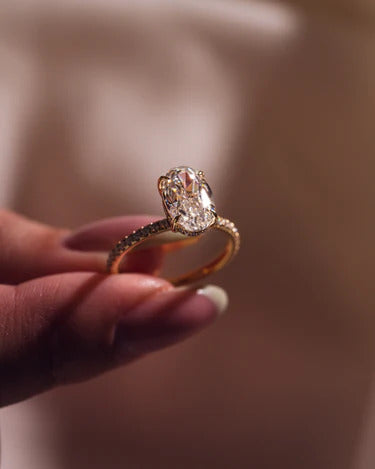
Leave a comment