What Is a CVD Diamond?
How a real diamond is grown from a wisp of gas — explained simply, step by step.
CVD stands for Chemical Vapor Deposition, one of the two main ways lab grown diamonds are made (the other is HPHT). It sounds high-tech — and it is — but the idea behind it is surprisingly simple: take a tiny slice of diamond, surround it with carbon-rich gas, and let new diamond build up on top of it, atom by atom. The result is a 100% real diamond.
In one line: A CVD diamond is a genuine diamond grown in a lab by depositing carbon from a heated gas onto a diamond seed.
How a CVD Diamond Is Grown
1 |
Place the seed. A thin slice of diamond (the “seed”) is set inside a sealed vacuum chamber. |
2 |
Add carbon gas. The chamber is filled with a carbon-rich gas, usually methane mixed with hydrogen. |
3 |
Heat it up. Energy (microwaves or heated filaments) raises the temperature until the gas breaks apart and releases pure carbon atoms. |
4 |
Build, layer by layer. Those carbon atoms settle onto the seed and bond to its lattice, growing the crystal upward over several weeks. |
5 |
Cut and polish. The rough diamond is removed, then cut and polished by master cutters — exactly like a mined diamond. |
Yes — completely. It has the same chemical makeup, the same 10/10 hardness, and the same brilliance as a mined diamond, and it's graded on the same 4Cs by labs like IGI and GIA. The only difference is origin. We cover this in detail in Lab Grown Diamonds: Busting the Myths.
CVD vs HPHT: What's the Difference?
|
CVD
Grows diamond from heated carbon gas at relatively low pressure. Favored for producing high-clarity, colorless stones and gives growers fine control over the result. |
HPHT
Recreates the extreme heat and pressure found deep underground to crystallize carbon. It's the older method and mimics nature's own process most directly. |
Both produce real, gem-quality diamonds. Neither is “better” across the board — the final quality depends on the grower's skill and the individual stone, not just the method.
CVD Diamond vs Moissanite
A CVD diamond is pure carbon and a true diamond. Moissanite is silicon carbide — a different gemstone that looks similar, ranks 9.25 on the Mohs scale, and actually throws more rainbow fire than a diamond, usually at the lowest price of any option. If you want a certified diamond, CVD is the way; if you want maximum sparkle and value, moissanite is the choice. See the full breakdown in Moissanite vs Lab Grown Diamond vs Diamond.
FAQs
What does CVD stand for?
Chemical Vapor Deposition — the process of depositing carbon from a heated gas onto a diamond seed.
How long does it take to grow a CVD diamond?
Typically a few weeks, depending on the size and quality being grown.
Are CVD diamonds graded and certified?
Yes — by the same labs (IGI, GIA) and on the same 4Cs as mined diamonds, and most carry a laser inscription noting their lab origin.
Is a CVD diamond cheaper than a mined diamond?
Generally yes — lab grown diamonds usually cost 30–50% less than comparable mined stones.
Prefer Sparkle & Value?
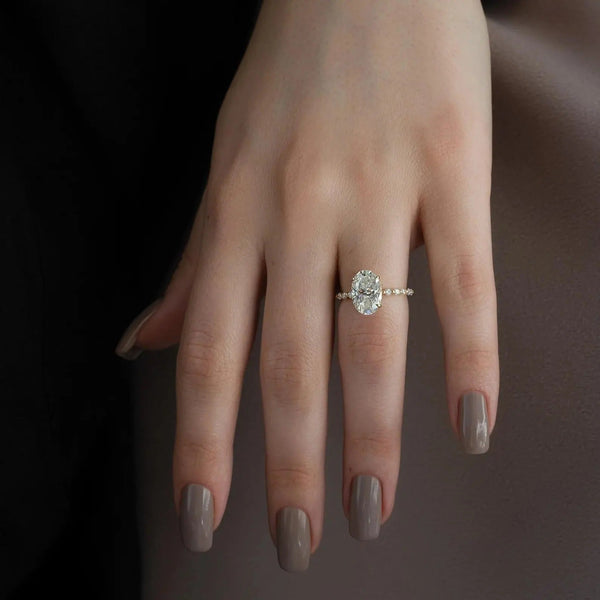
Discover handcrafted, conflict-free moissanite rings — brilliant fire at a price that leaves room for everything else.
Shop the Collection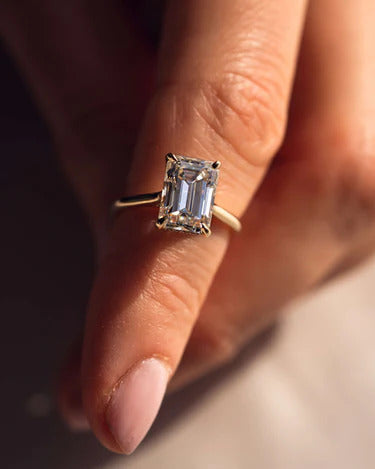

Leave a comment