Lab Grown Diamond Clarity & Inclusions Explained
What inclusions are, why most don't matter, and how to find an eye-clean stone.
Clarity is one of the 4 Cs, and it's where many shoppers worry unnecessarily. Here's a clear, friendly explanation of lab grown diamond clarity and inclusions — and how to choose smartly.
What inclusions are
Inclusions are tiny natural characteristics inside a stone — like nature's (or the lab's) fingerprints. Almost every diamond has some; they're part of how a stone forms.
The clarity scale
Clarity grades run from flawless down through very slight and slight inclusions to included. The key concept for buyers is “eye-clean.” See the broader system in Understanding the 4 Cs.
Aim for “eye-clean”
An eye-clean stone has no inclusions visible to the naked eye — only under magnification. You don't need flawless; eye-clean looks perfect in wear and costs far less. This is the smart sweet spot.
How moissanite compares
Quality moissanite is eye-clean as standard, so you reliably get a bright, clear stone. See Moissanite Clarity Explained, and browse engagement rings.
FAQs
Do lab grown diamonds have inclusions?
Most do — tiny internal characteristics are normal. The goal is an eye-clean stone, where none are visible to the naked eye.
Do I need a flawless diamond?
No — an eye-clean stone looks perfect in everyday wear and costs far less than flawless, making it the smart choice.
Clear, Brilliant Sparkle
Explore handcrafted moissanite engagement rings — eye-clean as standard.
Shop Engagement Rings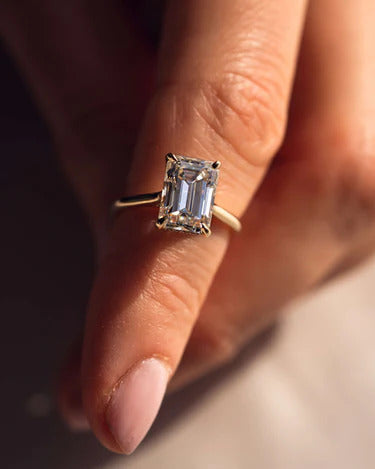
Leave a comment