Lab Grown Diamonds
Buying the Stone and the Setting Separately
More control and a real saving — provided you understand who is responsible for what when two suppliers become one ring.
Written by the Mapple Gems workshop, Surat · Updated 30 September 2026
Short answer
It works well and it splits the responsibility, which is the thing to plan for. Send the workshop the report number and the exact measurements before the setting is made, because a head is built to a stone rather than to a carat figure. Check the girdle inscription matches the report on arrival. And agree in writing who carries the risk while setting — if the stone is damaged in someone else’s bench, that conversation is far better had beforehand.
Buying a loose stone and having it set is a legitimate route with real advantages, and it introduces one structural difference: two parties, one object, and a handover in the middle.
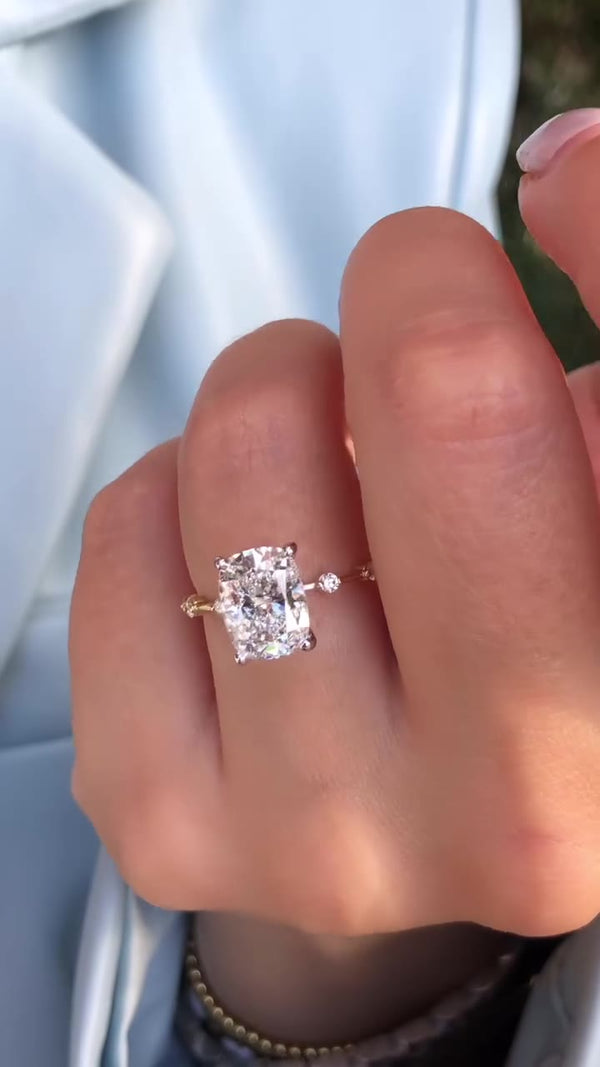
A setting is not built to a carat weight — it is built to a specific stone’s actual measurements, and that is why the report has to arrive before the ring is made. A setter cuts a seat into each prong, a notch that the girdle sits inside, and those seats are cut to the stone in front of them: its diameter, its depth, its girdle thickness, whether the outline is perfectly symmetrical. Two 1.00 ct rounds can differ by a tenth of a millimetre and in girdle thickness, and a head cut for one will hold the other badly — sitting slightly high, slightly tilted, or gripping unevenly. So “I’ve bought a one carat round, please make a setting” is not enough information. Send the report number and the measurements line, and ideally have the stone in the workshop’s hands before final finishing. On fancy shapes this matters more still, since outline proportions vary between stones of the same nominal shape and every point and corner needs a prong cut to fit it.
What each side needs from the other
| Send the workshop | Ask the workshop for |
|---|---|
| Report number and full report | Shank width and thickness in mm |
| Measurements line (mm and depth) | Profile height and a side elevation |
| Girdle thickness | Prong count and shape |
| Any known damage or chips | Finished gram weight |
| Ring size, as inner diameter in mm | Who insures the stone while setting |
The handover: risk and shipping
The part people skip and later wish they had not. Setting involves heat, pressure and hand tools, and while damage is rare, rare is not never — particularly on stones with a thin girdle or an existing chip.
Three things to establish in writing: who insures the stone in transit each way (shipment cover ends at a signature, and the return leg is rarely automatic), who carries the risk while it is on the bench, and what happens if damage occurs. A good workshop answers all three without hesitation and may ask to inspect and photograph the stone before starting — which is a good sign, not a suspicious one.
If the stone is being shipped internationally, remember duties and customs apply to a loose stone as much as to a finished ring, and it will cross a border twice.
Checking the stone before it goes
- Match the girdle inscription to the report number under magnification. That inscription is the only thing tying the paper to the stone.
- Verify the report on the laboratory’s own website using the number, rather than trusting a supplied PDF.
- Compare the measurements against standard — a 1.00 ct round should be about 6.5 mm. Larger means cut shallow.
- Open the plot diagram and note where the inclusions sit, so a prong can be oriented over any near the girdle.
- Photograph it loose, from several angles, before it leaves your hands.
Where the saving actually comes from
Being straightforward about it: buying separately can save money, and it is worth knowing why so you can tell whether it is happening.
You are unbundling two margins and shopping each on its own merits — a stone from wherever it is best priced, a setting from whoever builds well. That is real. What it does not do is remove work: the setting still takes bench time, the seats still have to be cut to your stone, and a workshop setting someone else’s stone carries risk it is not being paid a stone margin to absorb.
So expect a setting fee on top of the setting price, and treat a workshop that charges one as normal rather than opportunistic.
When buying together is better
Three situations where one supplier is genuinely the stronger choice.
If there is a deadline. Two suppliers means two lead times, a transfer in the middle, and any delay compounding. A single commission is materially faster and far easier to chase.
If accent stones need matching. Melee under about 0.20 ct is never individually certified, so matching pavé or side stones to a centre is a parcel question the workshop handles best when it owns both.
If anything goes wrong later. One party who supplied both stone and setting cannot point at the other. Split responsibility is fine while everything works and awkward when it does not.
Keep reading
Frequently asked questions
Can I buy a diamond and have it set elsewhere?
Yes, and it can save money by unbundling two margins. Send the workshop the report number and measurements before the setting is made, since a head is built to a stone’s actual dimensions rather than to a carat figure, and agree in writing who carries the risk while it is on the bench.
Why does the workshop need the report before making the setting?
Because a setter cuts seats into each prong to fit that specific girdle. Two stones of the same carat weight can differ in diameter and girdle thickness, and a head cut for one holds the other badly — sitting high, tilted, or gripping unevenly. On fancy shapes the outline varies more still.
Who is responsible if my stone is damaged during setting?
Agree it in writing beforehand — who insures each transit leg, who carries the risk on the bench, and what happens if damage occurs. A workshop that asks to inspect and photograph the stone before starting is behaving well, not suspiciously.
When is buying stone and setting together better?
When there is a deadline, since two suppliers means two lead times and a transfer in the middle; when accent stones need matching, because melee is never individually certified and matching is a parcel question; and if anything goes wrong later, since one supplier cannot point at the other.
Send us the report before the setting is designed.
We will set a stone we did not supply — and we will tell you what the measurements say about it first.


Leave a comment