A Brief History of Lab Grown Diamonds
From a 1950s laboratory breakthrough to the engagement ring of choice — how lab grown diamonds went mainstream.
Lab grown diamonds can feel like a brand-new trend, but the science behind them is over half a century old. Here's the short story of how they came to be.
1950s |
The first breakthrough. Scientists successfully produced the first diamonds in a lab using the high-pressure, high-temperature (HPHT) method — initially for industrial use. |
1980s |
CVD emerges. The chemical vapor deposition method matured, opening the door to higher-purity, gem-quality crystals. |
2000s |
Gem quality arrives. Advances made it possible to grow diamonds beautiful enough for jewelry, not just industry. |
2018 |
Official recognition. The U.S. FTC updated its definition of a diamond to include lab grown stones — a turning point for consumer trust. |
Today |
Mainstream. Better technology and lower prices have made lab grown diamonds one of the most popular choices for engagement rings worldwide. |
And moissanite's story
Interestingly, moissanite has an origin story of its own: it was first discovered in a meteor crater in the 1890s by scientist Henri Moissan — which is why it's sometimes called the “stardust” gem. Natural moissanite is incredibly rare, so today's gemstones are lab-created to be flawless and brilliant. It's the stone we build every Mapple Gems ring around.
FAQs
When were the first lab grown diamonds made?
The first reproducible lab diamonds were produced in the 1950s using the HPHT method, initially for industrial purposes.
Why did they become popular only recently?
Gem-quality growth and falling prices in the 2000s–2010s, plus official recognition, brought them into the mainstream.
Where does moissanite come from?
It was first found in a meteorite. Because natural moissanite is so rare, jewelry moissanite is lab-created today.
A Modern Classic
Wear a piece of stardust — handcrafted moissanite rings with timeless brilliance.
Explore the Collection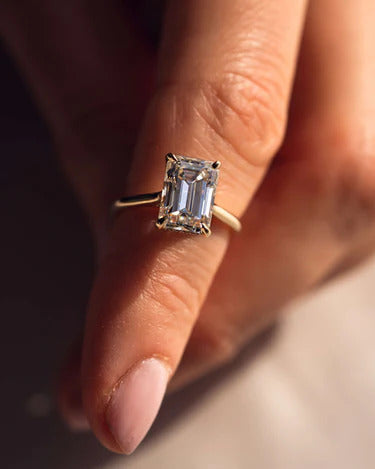
Leave a comment