Metals · UK
Why UK Buyers Choose Yellow Gold or Platinum — and the 18ct Alternative
British taste has settled on two metals. Here is what each one does on the hand, and the gold option that covers most of what platinum offers.
Written by the Mapple Gems workshop, Surat · Updated 18 November 2026
Short answer
UK engagement rings are now mostly yellow gold or platinum, with rose gold close to disappearing. Platinum is the heaviest and most hard-wearing white metal and needs no plating, but costs more because the same ring uses roughly 35–40% more metal by weight. 18ct yellow gold is the traditional British bridal standard; 18ct white gold gives a platinum look for less, with rhodium replating every few years. 9ct and 14K are harder-wearing, lower-cost options.
Ten years ago a British engagement ring was most likely white gold or platinum. Today the pattern has changed. One London bespoke jeweller reported that in 2026 yellow gold made up well over half of its engagement rings and platinum most of the rest, with rose gold under one percent. Other UK retailers describe the same shift.
Why yellow gold came back
- Fashion has turned warm. Vintage-inspired shapes, bezels and chunkier bands all suit yellow gold.
- Cheaper stones freed the budget. With lab grown and moissanite costing far less than mined diamonds, more of the money goes into the metal, and a solid 18ct band shows it.
- It hides tone in the stone. A warm setting makes a slightly warm stone look intentional.
Why platinum stays popular
Platinum is the British choice for people who want white metal that never needs replating. It is naturally white, so there is no rhodium to wear off. It is dense, which makes a ring feel substantial. And when it is scratched, metal tends to move rather than wear away, so it develops a soft patina instead of thinning. UK platinum is usually hallmarked 950.
How the metals compare
| Metal | UK fineness mark | On the hand | Upkeep |
|---|---|---|---|
| Platinum | 950 | Heaviest; naturally white | Polish occasionally; no plating |
| 18ct yellow gold | 750 | Rich colour; softer than 14K | Prongs checked every year or two |
| 18ct white gold | 750 | Platinum look, lighter | Rhodium replating every few years |
| 14K gold | 585 | Harder-wearing; slightly paler yellow | Low |
| 9ct gold | 375 | Most affordable UK gold; hard | Low; colour is paler |
Why platinum costs more than its price per gram suggests. Platinum is about 21.4 grams per cubic centimetre; 18ct gold is roughly 15–16. So the same ring, in the same size and design, weighs around 35–40% more in platinum. You pay for every extra gram, plus the higher labour of working a harder-to-cast metal. When you compare quotes, compare finished weights, not just metal names.
The 18ct alternative — and what we offer
We do not work in platinum, so we will not pretend it is a bad choice. If you want platinum, buy platinum. If you want the platinum look for less, 18ct white gold gets you most of the way, with occasional rhodium replating. If you have chosen yellow, 18ct yellow gold is the traditional British bridal standard and the richest colour.
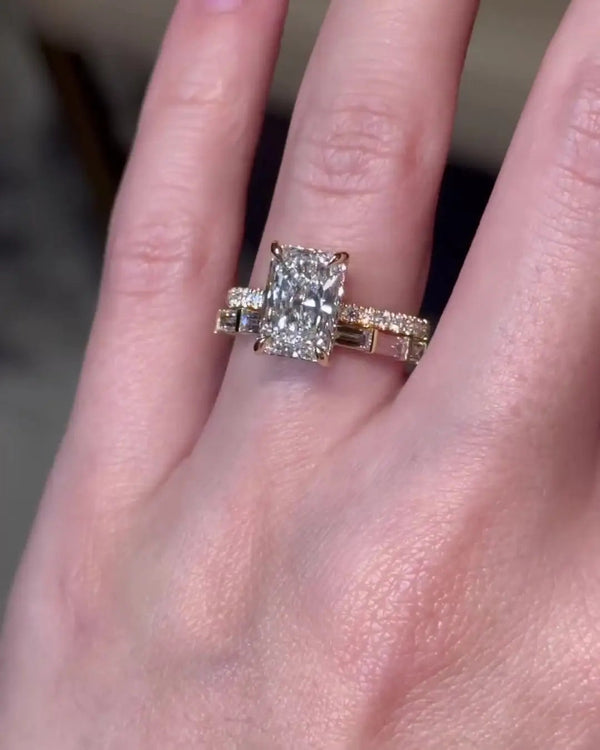
For a large, colourless stone in a yellow ring, consider a white gold head on a yellow gold band: the prongs stay white and keep the stone looking icy, while the band gives you the warmth.
One UK-specific note: UK hallmarking recognises 9ct, 14K (585) and 18ct among its gold standards. 10K is not a UK fineness, so read our guide below before choosing it for a ring you may want hallmarked.
Keep reading
Frequently asked questions
What is the most popular engagement ring metal in the UK?
In 2026, yellow gold and platinum. UK jewellers report yellow gold as the leading choice, platinum close behind, and rose gold now very rare.
Is platinum better than 18ct white gold?
Platinum is naturally white, denser and needs no plating, so it is lower-maintenance over decades. 18ct white gold looks very similar, is lighter and costs less, but needs rhodium replating every few years.
Why is a platinum ring more expensive?
Mainly because it is much denser. The same design weighs roughly 35–40% more in platinum than in 18ct gold, so it uses more metal, and platinum also takes more labour to cast and finish.
Is 18ct gold too soft for an engagement ring?
No. It is the traditional British bridal standard and wears well for decades. It is softer than 14K or 9ct, so have the prongs checked every year or two.
Solid 18ct, 14K or 10K gold, in yellow, white or rose.
Engagement rings made to order in our Surat workshop.
Leave a comment