


 Step 1
Design & Selection
We finalise your design and hand-pick the certified center stone.
 Save 20%
An asscher held in a half bezel between two triangular trillion cut stones, each pointing outward down the shoulder. The collar runs along the two vertical sides of the asscher only, so the trillions sit directly against the bare top and bottom edges of the centre stone.
A trillion is a triangular brilliant, usually cut with slightly curved sides so it sits against a square or round centre without a gap. Beside an asscher it does the obvious geometric thing: three straight sided shapes in a row, a square flanked by two triangles, with no curve anywhere on the head.
The half bezel is what makes it read cleanly. A claw at each corner of the asscher would put metal exactly where the trillions want to sit. Collaring the two vertical sides instead leaves the horizontal edges bare, so each trillion can be set right up against the centre stone.
An asscher is a square step cut with clipped corners, developed by the Asscher brothers in Amsterdam in 1902, and the concentric squares you see looking into it are what jewellers call the hall of mirrors. Trillions are brilliants and sparkle fast, so the still centre sits between two bright sides.
The asscher cut is a square step cut with deeply cropped corners, first cut in 1902 and the defining shape of art deco jewellery. Looking into one is like looking down a bright well. It is one of the shapes we are asked for most often, and it is cut here to the same proportions we would use for a diamond of the same outline.
Our other asscher rings set the stone alone, in a signet band, on a spiral or turned on point. This is the only three stone asscher we make, and the only ring in the range with trillion cut sides.
Moissanite is silicon carbide, a crystal first identified by the French chemist Henri Moissan in 1893 in fragments of the Canyon Diablo meteorite in Arizona. He won the Nobel Prize in Chemistry in 1906, and the mineral was named after him. Natural moissanite is vanishingly rare, so every moissanite sold as a gemstone today is grown in a laboratory.
Here is what that means for a ring you will wear every day:
Moissanite is not cubic zirconia and it is not glass. Cubic zirconia is far softer at 8 to 8.5 on the Mohs scale, it clouds and abrades within a few years of daily wear, and it has little resale value. Moissanite keeps its polish and its brightness indefinitely. It is also not a diamond, laboratory grown or mined, and we never describe it as one. It is its own gemstone with its own optical signature, and it is chosen by people who want maximum presence on the hand for a fraction of the cost of a diamond of the same size.
Every stone we set is graded colourless, the top colour band for moissanite, and VVS clarity, which means any inclusions are extremely difficult to find even under ten times magnification. Nothing is visible to the naked eye.
This ring is made to order in ten metals, so the version you choose is the version we build. There is no plating over a base metal and no filled or bonded gold anywhere in the range.
Yellow gold is gold alloyed with silver and copper. Rose gold takes more copper, which gives the warm pink tone and also makes it the hardest of the three colours. White gold is alloyed with palladium or nickel and then finished with rhodium plating, which is what gives it that bright white face. Rhodium wears thin over time and wants redoing roughly every one to two years, which any jeweller can do quickly and cheaply. Every gold ring is stamped with its karat mark.
This ring is offered in 2, 3, 4 and 5 carat centre stones. Carat is a unit of weight, not of width, so here is roughly what each one measures across the face of a asscher cut:
If you are between sizes, order the smaller centre stone in a richer metal rather than the larger stone in the cheapest one. A well made ring in 14K or 18K gold ages far better than an oversized stone on a thin shank.
Mapple Gems is a family run jewellery workshop in Surat, in Gujarat, India. Surat is where roughly nine out of every ten diamonds in the world are cut and polished, and the bench skills that grew up around that trade are what this ring is built on. We are not a dropshipper and we do not hold finished stock. When your order comes in, a goldsmith casts your metal in your size, a setter places every stone by hand under a microscope, and the piece is polished, checked and photographed before it leaves us.
Making takes ten to fourteen working days for most orders. Shipping is free worldwide and fully insured, and it is normally three to seven working days once the ring has left the bench. Buying direct from the bench is the reason a ring like this costs what it does here rather than several times more on a high street.
Moissanite attracts skin oil and hand cream the same way diamond does, and a film of it is the single most common reason a ring looks dull. Soak the ring for ten minutes in warm water with a drop of washing up liquid, brush gently behind and underneath the stone with a soft toothbrush, rinse and pat dry with a lint free cloth. Once a fortnight is plenty.
Take the ring off before the gym, gardening, swimming pools and hot tubs, and before using bleach or oven cleaner. Chlorine attacks the alloys in gold over time and it will do nothing good to sterling silver. Store it on its own rather than loose in a box with other pieces. Have the claws checked by a jeweller once a year, which takes two minutes and is usually free. White gold will want its rhodium refreshed every one to two years.
The three corners are the vulnerable part of any trillion, which is why each one sits under its own claw. The outward facing point is also set below the line of the shoulder rather than standing proud of it.
Both the asscher and the trillions have large open facets. Ours are VVS, which is what makes it safe to set three step and near step cuts together where every one of them is visible.
Every centre stone is graded colourless with VVS clarity. Colourless is the top colour band for moissanite, and VVS means inclusions are extremely difficult to see even under ten times magnification. The grades are the same on every metal and every carat weight, and on every ring we cut and set in our own workshop.
Not by looking. Both stones are colourless and brilliantly cut, and at arm length they read the same. In direct sunlight moissanite throws more rainbow coloured fire than a diamond does, which some people love and which is the only tell most people would ever notice. Telling the two apart with any certainty needs a thermal or electrical conductivity tester, or a loupe and the training to read facet doubling.
No. At 9.25 on the Mohs scale it is one of the hardest gem materials there is, and it does not abrade, cloud or dull with wear the way cubic zirconia does. What makes any ring look dull is a film of skin oil, soap and hand cream on the underside of the stone. A few minutes in warm soapy water with a soft brush restores it completely.
We make sizes 1.5 to 13, including every half size. Choose your size at checkout. If you are unsure, measure a ring that already fits the correct finger, or ask a local jeweller to size you, and remember that fingers run slightly larger in hot weather and late in the day.
In most cases yes. Any jeweller can work on a plain section of shank. Resizing is harder where the band is set with stones all the way round, and moving more than about two sizes in either direction is better done by remaking the shank. Contact us first and we will tell you exactly what is possible for your ring.
Every ring is made to order in our workshop in Surat. Allow ten to fourteen working days for making, plus three to seven working days for insured worldwide shipping. If you have a proposal date, tell us when you order and we will confirm whether we can meet it.
It is solid throughout. 925 sterling silver is 92.5 per cent pure silver, and the gold options are solid 10K, 14K or 18K alloy stamped with the karat mark. Nothing in this range is gold plated, gold filled or gold bonded. White gold carries a rhodium finish on the surface, which is standard for all white gold everywhere and is refreshed every year or two.
Yes, and there is no charge for it. Tell us the wording when you order and we will engrave the inside of the shank. Most people choose a date, a set of initials or a short phrase. Allow up to about twenty five characters.
Returns are accepted within thirty days of delivery on an unworn ring in its original packaging. Because every piece is cut, cast and set to order, engraved rings and rings made to a non standard specification are handled case by case. Write to us and we will sort it out.
Compare ring sizes across international standards — match your size from any region.
| USA · Canada | UK · Australia Ireland · NZ |
Japan · India China · S. Africa |
Spain · Italy Neth. · Switz. |
Inside Ø & Circumf. (mm) |
|---|---|---|---|---|
| 4 | H | 7 | 6.75 | 14.88 & 46.80 |
| 4.25 | H.5 | 7.5 | 15.09 & 47.40 | |
| 4.5 | I | 8 | 8 | 15.29 & 48.00 |
| 4.75 | J | 8.75 | 15.49 & 48.70 | |
| 5 | J 1/2 | 9 | 9.25 | 15.70 & 49.30 |
| 5.25 | K | 10 | 15.90 & 50.00 | |
| 5.5 | K 1/2 | 10 | 10.5 | 16.10 & 50.60 |
| 5.75 | L | 11.25 | 16.31 & 51.20 | |
| 6 | L 1/2 | 11 | 11.75 | 16.51 & 51.90 |
| 6.25 | M | 12 | 12.5 | 16.71 & 52.50 |
| 6.5 | M 1/2 | 13 | 13.25 | 16.92 & 53.10 |
| 6.75 | N | 13.75 | 17.12 & 53.80 | |
| 7 | N 1/2 | 14 | 14.5 | 17.32 & 54.40 |
| 7.25 | O | 15 | 17.53 & 55.10 | |
| 7.5 | O 1/2 | 15 | 15.75 | 17.73 & 55.70 |
| 7.75 | P | 16.25 | 17.93 & 56.30 | |
| 8 | P 1/2 | 16 | 17 | 18.14 & 57.00 |
| 8.25 | Q | 17.5 | 18.34 & 57.60 | |
| 8.5 | Q 1/2 | 17 | 18.25 | 18.54 & 58.30 |
| 8.75 | R | 19 | 18.75 & 58.90 | |
| 9 | R 1/2 | 18 | 19.5 | 18.95 & 59.50 |
| 9.25 | S | 20.25 | 19.15 & 60.20 | |
| 9.5 | S 1/2 | 19 | 20.75 | 19.35 & 60.80 |
| 9.75 | T | 21.5 | 19.56 & 61.40 | |
| 10 | T 1/2 | 20 | 22 | 19.76 & 62.10 |
| 10.25 | U | 21 | 22.75 | 19.96 & 62.70 |
| 10.5 | U 1/2 | 22 | 23.25 | 20.17 & 63.40 |
| 10.75 | V | 24 | 20.37 & 64.00 | |
| 11 | V 1/2 | 23 | 24.75 | 20.57 & 64.60 |
| 11.25 | W | 25.25 | 20.78 & 65.30 | |
| 11.5 | W 1/2 | 24 | 26 | 20.98 & 65.90 |
| 11.75 | X | 26.5 | 21.18 & 66.60 | |
| 12 | X 1/2 | 25 | 27.25 | 21.39 & 67.20 |
| 12.25 | Y | 27.75 | 21.59 & 67.80 | |
| 12.5 | Z | 26 | 28.5 | 21.79 & 68.50 |
| 12.75 | Z 1/2 | 29 | 22.00 & 69.10 | |
| 13 | 27 | 29.75 | 22.20 & 69.70 | |
| 13.25 | Z1 | 30.5 | 22.40 & 70.40 | |
| 13.5 | 31 | 22.61 & 71.00 | ||
| 13.75 | Z2 | 31.75 | 22.81 & 71.70 | |
| 14 | Z3 | 32.25 | 23.01 & 72.30 | |
| 14.25 | 33 | 23.22 & 72.90 | ||
| 14.5 | Z4 | 33.5 | 23.42 & 73.60 | |
| 14.75 | 34.25 | 23.62 & 74.20 | ||
| 15 | 34.75 | 24.23 & 76.10 |
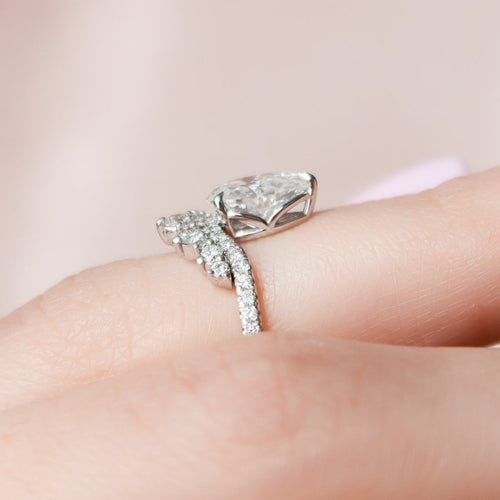 −20%Pear CutPear Cut Lab Grown Diamond Bridal Ring Set with a Contoured Crown Band
$787.00
−20%Pear CutPear Cut Lab Grown Diamond Bridal Ring Set with a Contoured Crown Band
$787.00
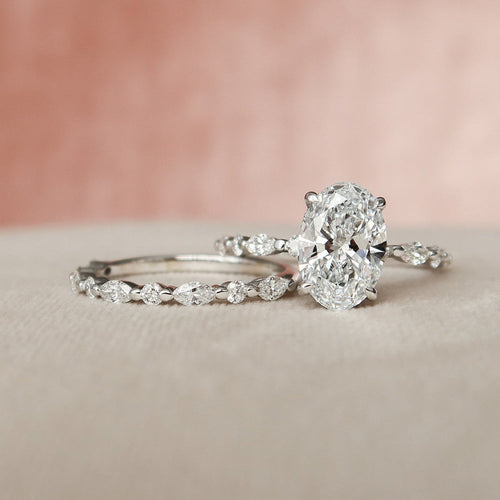 −20%Oval CutOval Cut Lab Grown Diamond Bridal Ring Set on Matching Marquise Station Bands
$781.40
−20%Oval CutOval Cut Lab Grown Diamond Bridal Ring Set on Matching Marquise Station Bands
$781.40
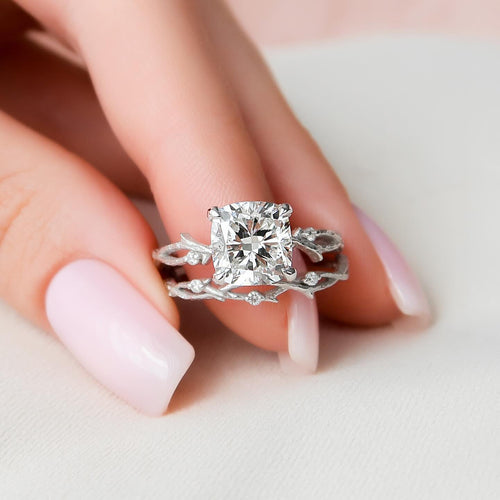 −20%Cushion CutCushion Cut Lab Grown Diamond Bridal Ring Set on Matching Carved Twig Bands
$792.40
−20%Cushion CutCushion Cut Lab Grown Diamond Bridal Ring Set on Matching Carved Twig Bands
$792.40
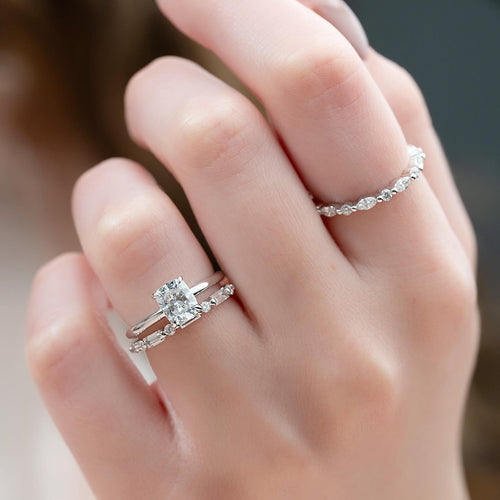 −20%Cushion CutCushion Cut Lab Grown Diamond Bridal Ring Set with a Plain Shank and a Baguette Accent Band
$790.40
−20%Cushion CutCushion Cut Lab Grown Diamond Bridal Ring Set with a Plain Shank and a Baguette Accent Band
$790.40
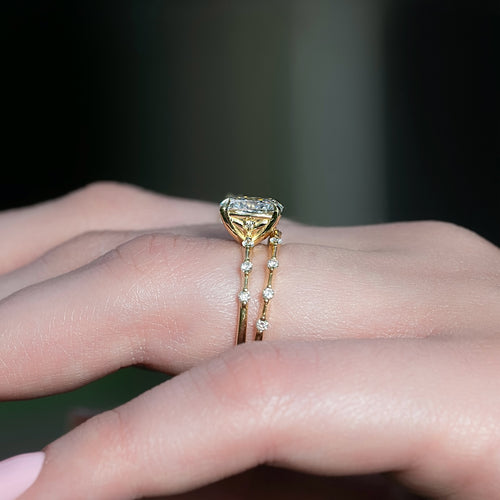 −20%Cushion CutCushion Cut Lab Grown Diamond Bridal Ring Set with Matching Spaced Accent Bands
$788.40
−20%Cushion CutCushion Cut Lab Grown Diamond Bridal Ring Set with Matching Spaced Accent Bands
$788.40
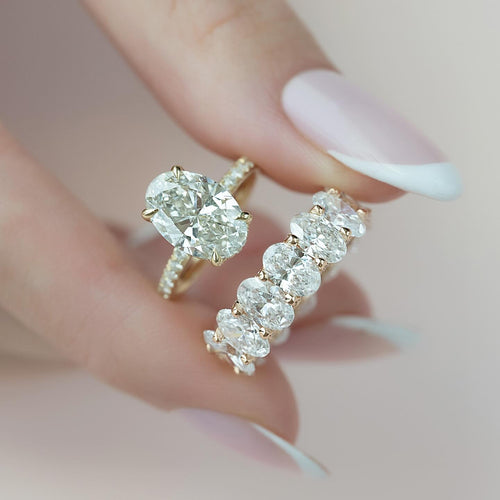 −20%Oval CutOval Cut Lab Grown Diamond Bridal Ring Set with a Pave Shank and an Oval Cut Eternity Band
$786.40
−20%Oval CutOval Cut Lab Grown Diamond Bridal Ring Set with a Pave Shank and an Oval Cut Eternity Band
$786.40
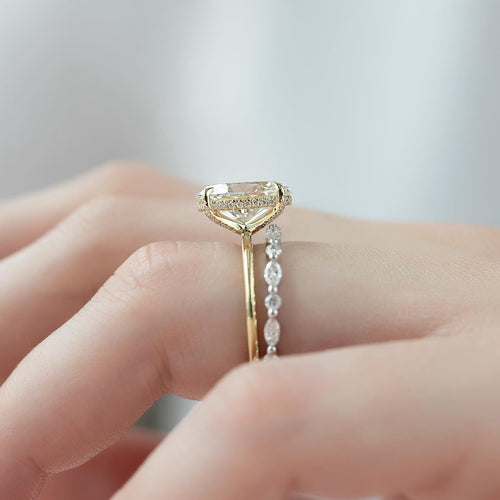 −20%Oval CutOval Cut Lab Grown Diamond Bridal Ring Set with a Hidden Halo and a Marquise Accent Wedding Band
$781.60
−20%Oval CutOval Cut Lab Grown Diamond Bridal Ring Set with a Hidden Halo and a Marquise Accent Wedding Band
$781.60
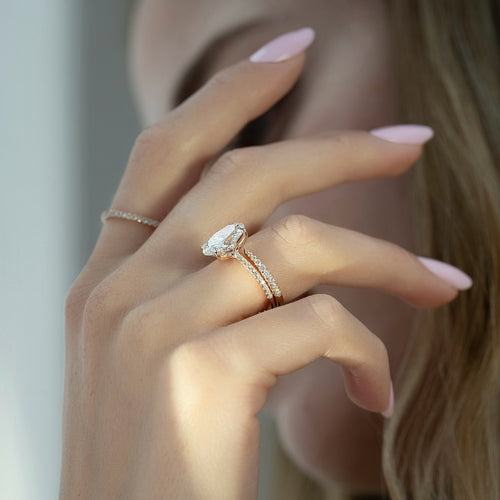 −20%Oval CutOval Cut Lab Grown Diamond Bridal Ring Set with Matching Pave Bands
$774.40
−20%Oval CutOval Cut Lab Grown Diamond Bridal Ring Set with Matching Pave Bands
$774.40
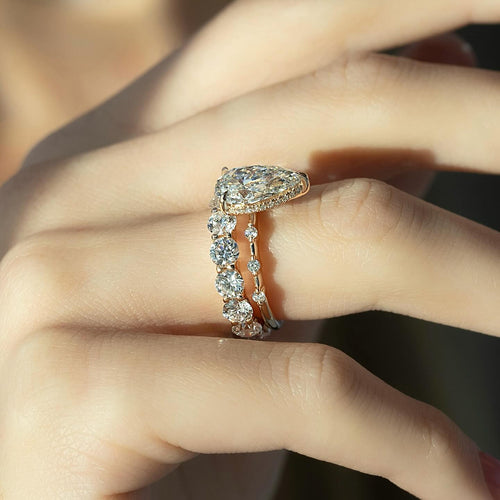 −20%Pear CutEast West Pear Cut Lab Grown Diamond Bridal Ring Set with a Shared Prong Diamond Band
$769.40
−20%Pear CutEast West Pear Cut Lab Grown Diamond Bridal Ring Set with a Shared Prong Diamond Band
$769.40
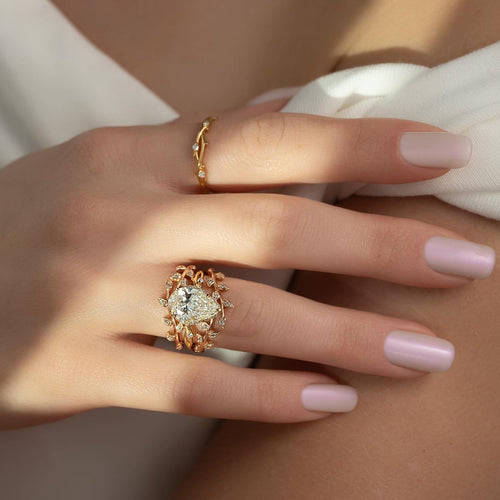 −20%Pear CutPear Cut Lab Grown Diamond Leaf Wreath Bridal Ring Set
$789.80
−20%Pear CutPear Cut Lab Grown Diamond Leaf Wreath Bridal Ring Set
$789.80
Every piece is made to order — from first sketch to the final polish.
Step 1
We finalise your design and hand-pick the certified center stone.
 Step 2
Master jewelers cast and shape the band to exact specifications.
 Step 3
Each stone is hand-set and the piece is polished to a mirror finish.
 Step 4
Final inspection, certification, and luxury gift packaging.
Real diamonds grown in a lab — chemically and optically identical to mined diamonds, graded on the same 4Cs, at a lower price and conflict-free.
All metal is solid (10K/14K/18K gold or platinum), never plated.
Yes — share your idea and we'll craft it with a CAD preview before production.
Yes, IGI/GIA certificates ship with every lab-grown diamond.
Made-to-order pieces ship in about 7–8 business days with insured tracking. Free worldwide.
Yes, we ship worldwide. Import duties may apply by country.
We accept PayPal, plus major credit and debit cards through PayPal's secure checkout — no PayPal account needed.
30-day return or exchange on eligible items. Custom/engraved pieces are non-returnable except for defects. Refunds issued ~2 days after inspection.
Yes — one complimentary resize after delivery; contact us with your new size.
The Mapple Gems Promise
Free Shipping Worldwide
24/7 Customer Service
100% Money Back Guarantee
Unbeatable Market Price