Diamond Simulants & “Fake” Diamonds Explained
Moissanite, cubic zirconia, white sapphire and more — what the alternatives really are.
“Fake diamond” is a loaded phrase. Some stones are genuine diamonds made in a lab; others are different materials that imitate a diamond's look, called simulants. Knowing the difference helps you shop smart.
Two very different things
A lab grown diamond IS a real diamond — same carbon, same hardness. A simulant only looks like a diamond but is a different material with different properties. Neither is a “scam” — they're just different options.
The main simulants
| Stone | Hardness (Mohs) | Notes |
|---|---|---|
| Moissanite | 9.25 | Extremely durable, more fire than diamond. The top choice. |
| Cubic zirconia | 8–8.5 | Inexpensive but scratches and clouds over time. |
| White sapphire | 9 | Durable but less sparkly, slightly cloudy look. |
Why moissanite stands out
Among simulants, moissanite is in a league of its own: nearly as hard as diamond, more fiery, and built to last a lifetime — not to be confused with cheap, short-lived CZ. See how it compares to a real diamond in this guide.
FAQs
Is moissanite a fake diamond?
It's not a diamond — it's its own gemstone (a simulant in looks), and a superb one, but it isn't an imitation in quality.
What's the best diamond alternative?
For durability and sparkle, moissanite is widely considered the best simulant; a lab grown diamond is best if you want an actual diamond.
The Best of the Alternatives
Explore handcrafted moissanite rings — the diamond alternative that lasts.
Shop the Collection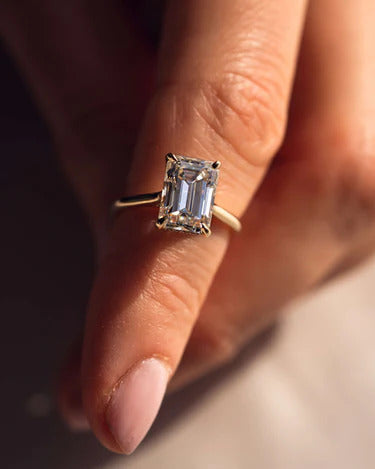
Leave a comment