Pear-Shaped Engagement Rings: A Complete Guide
Part round, part marquise, all elegance. Everything to know about the teardrop cut.
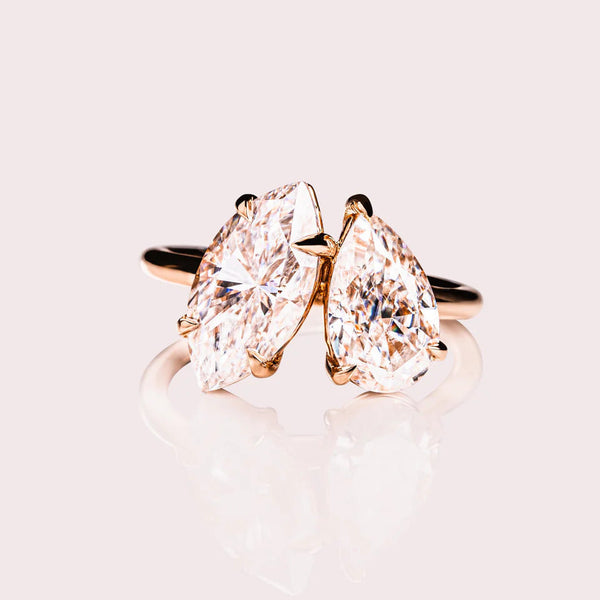
The pear shape — a brilliant round blended with a single point — is distinctive, flattering, and increasingly popular. Here's what makes it special and how to wear it.
Why the pear is so flattering
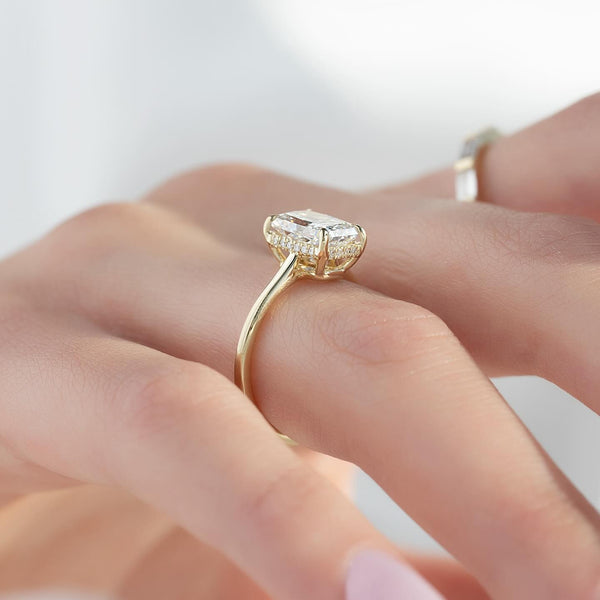
Its elongated outline makes fingers look longer and slimmer, and it tends to look larger per carat than a round — great presence for your budget. Shop pear cut rings.
Which way should the point face?
Traditionally the point faces toward the fingertip, which enhances the lengthening effect. Ultimately it's personal preference — wear it whichever way feels right to you.
Settings that suit it
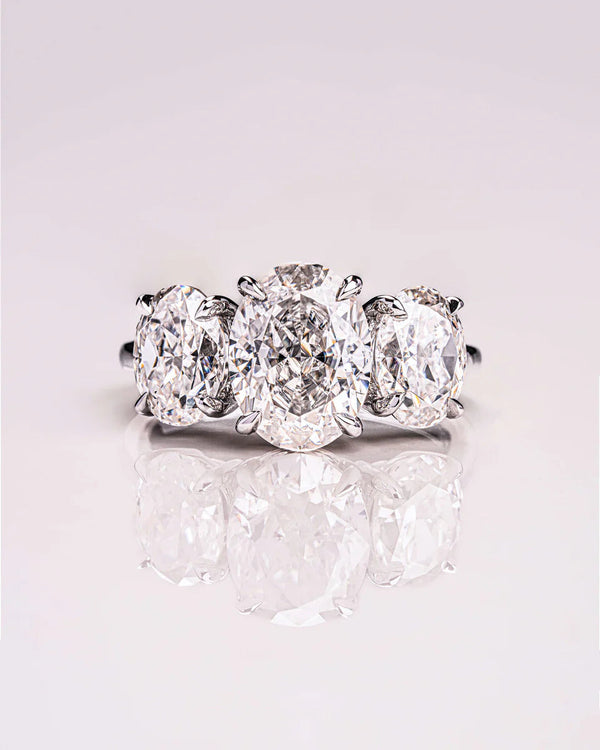
A solitaire shows off the silhouette; a halo adds sparkle and protects the delicate point; three-stone designs frame it beautifully. A protective tip-prong (a V-prong) is ideal for guarding the point.
A note on the “bowtie”
Elongated cuts can show a faint dark band across the center called a bowtie. A well-cut pear minimizes it — another reason cut quality matters most. See Diamond Anatomy & Cut Quality.
FAQs
Are pear-shaped rings hard to wear?
Not at all — a V-prong protects the point, and many people find the elongated shape especially comfortable and flattering.
Do pear shapes look bigger?
Yes — like other elongated cuts, a pear typically looks larger than a round of the same carat weight.
Leave a comment