Lab-Created vs Natural Gemstones
What “lab-created” really means — and why it isn't the same as “fake.”
“Lab-created” is everywhere in modern jewelry, but it is widely misunderstood. Here is a clear, jargon-free look at how lab-created and natural gemstones differ — and why one is not better than the other.

How they form
Natural gemstones form over long periods in the earth. Lab-created stones are grown in controlled conditions that recreate those same processes — the difference is where they grew, not whether they are real.
Lab-created is not the same as imitation
This is the key point people miss. Some lab-grown stones share the exact properties of their natural counterparts. A stone like moissanite, meanwhile, is its own distinct gemstone — not an imitation of anything. None of these are “fakes.” Learn more about stone quality in The 4 Cs of Gemstone Quality.
Why people choose lab-created
Lab-created stones are typically more affordable, more consistent in quality, and avoid mining — an appealing combination for ethical and budget-conscious buyers alike.
Where moissanite fits
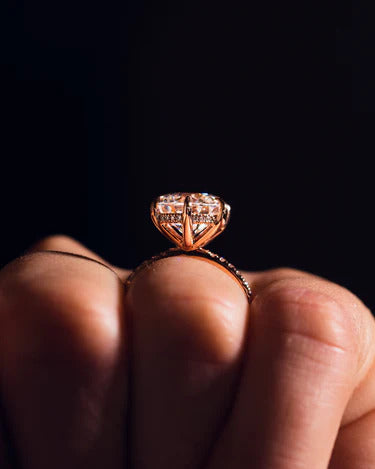
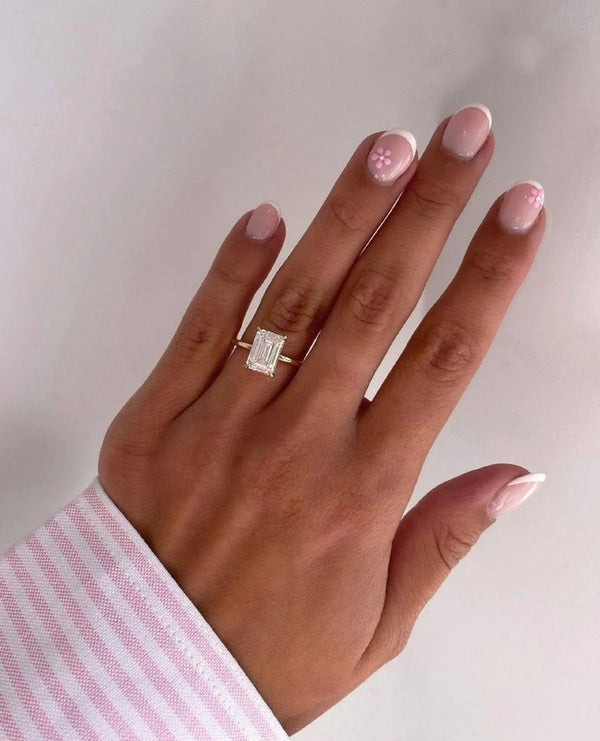
Moissanite is a lab-created gemstone prized in its own right for its exceptional fire and durability — not a substitute, but a brilliant choice on its own terms. It tends to be very clean too; see What Is a Gemstone Inclusion?
FAQs
Are lab-created gemstones fake?
No — they are real gemstones grown in controlled conditions rather than the earth. “Lab-created” describes origin, not authenticity.
Why choose a lab-created stone?
They are usually more affordable, more consistent, and avoid mining — appealing for value and ethics.
Real, Brilliant, Affordable
Explore handcrafted moissanite rings — a brilliant lab-created gem.
Shop Moissanite Rings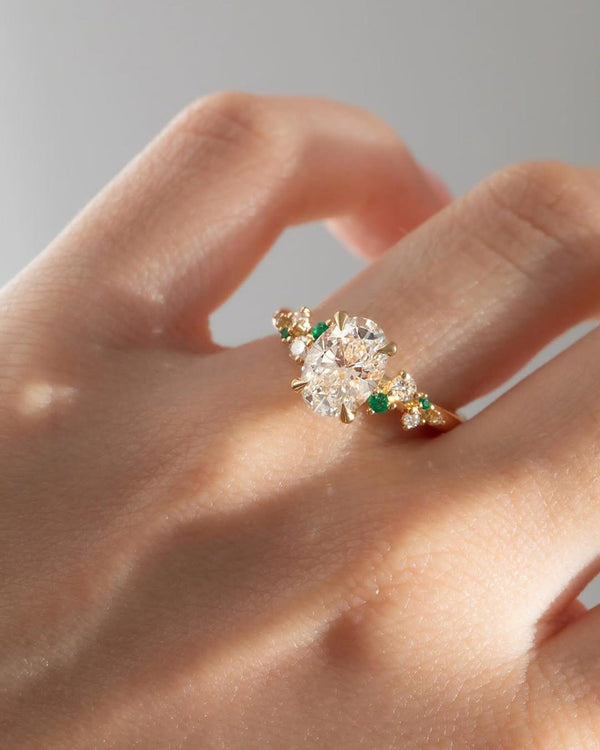
Leave a comment