Carat Weight vs Size: Why They're Not the Same
Two stones, same carat, different sizes — here's how that happens.
It surprises many shoppers: two stones of identical carat weight can look like different sizes on the finger. Understanding why helps you choose a stone that looks as big as possible for the weight. Here is the key.

Carat is weight, not size
Carat measures how much a stone weighs, not how large it looks. Two one-carat stones can differ in face-up size depending on how they are cut and what shape they are. For the carat-vs-karat mix-up, see Karat vs Carat.
Why face-up size varies
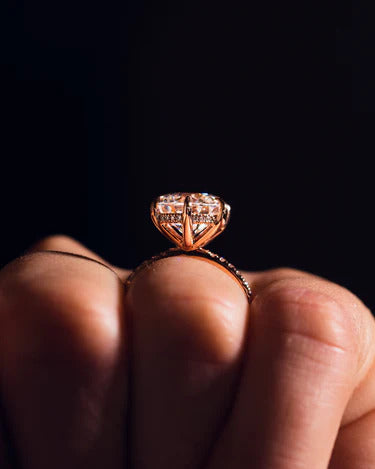
A stone cut deep carries more of its weight below the surface, so it looks smaller from above. A well-proportioned stone spreads its weight nicely, looking larger for the same carat. The millimeter measurement tells you the true face-up size.
Shape changes the impression too
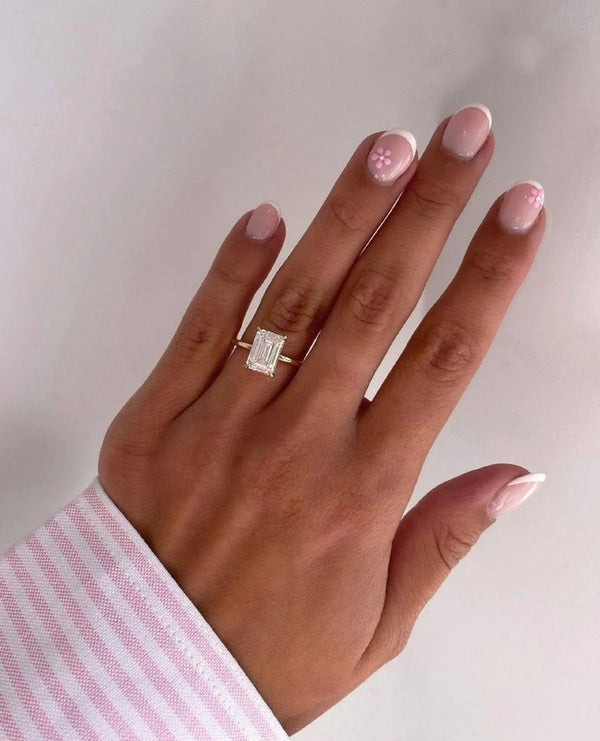
Elongated shapes like oval, marquise, and pear often look larger than a round stone of the same carat because they cover more finger. So shape is a smart lever if you want maximum presence.
The takeaway when shopping
Check the millimeter size, not just carat, and favor a good cut — it makes a stone both sparklier and larger-looking. Because moissanite is affordable, you can choose a generous, well-cut size with ease. More in The 4 Cs.
FAQs
Does a higher carat always mean a bigger stone?
No — carat is weight. Cut and shape determine how large a stone actually looks from the top.
How do I get the biggest look for the carat?
Choose a well-proportioned cut and consider an elongated shape — both make a stone look larger for the same weight.
Big Look, Smart Value
Explore handcrafted moissanite rings in generous, well-cut sizes.
Shop Moissanite Rings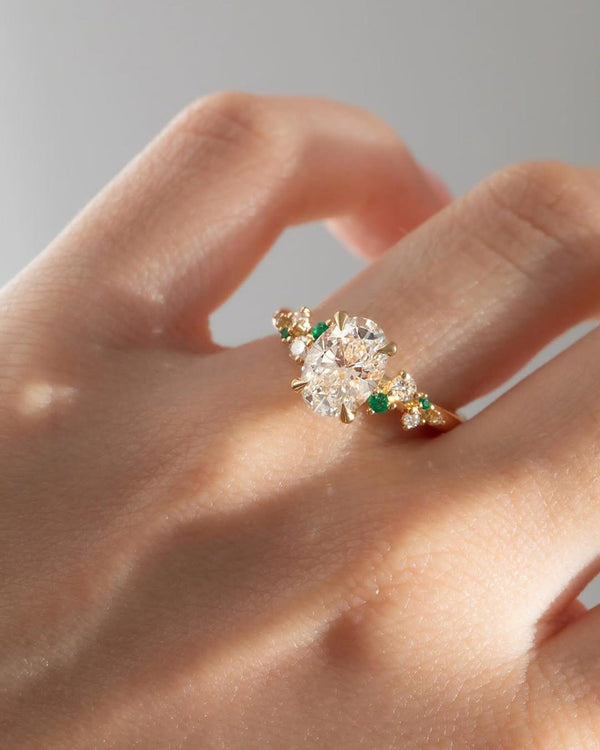
Leave a comment